
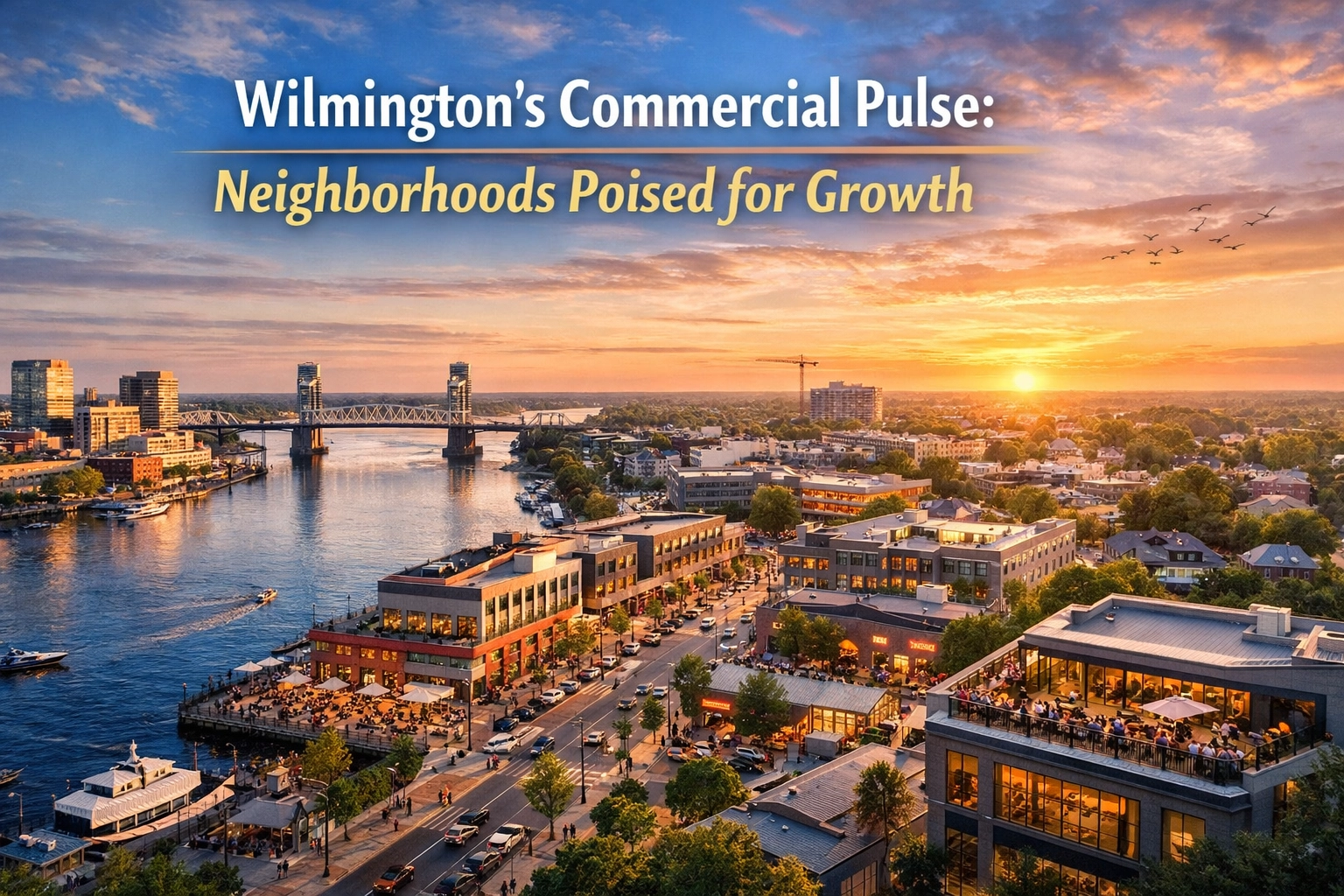
Wilmington's commercial landscape is shifting.
Smart investors are watching specific corridors. Development patterns are evolving. Opportunities are concentrating in select neighborhoods across New Hanover County, Brunswick County, and northern Pender County: and the window is open right now.
If you're evaluating commercial real estate investment, renovation, or ground-up development in the Wilmington region, understanding where growth is happening: and why: determines whether your project captures value or chases it.
The Geography of Growth: Where Investors Are Moving
The commercial real estate story in 2026 isn't about downtown Wilmington alone. It's about emerging corridors where residential expansion is creating commercial demand.
Leland. Hampstead. Northern Brunswick County.
These aren't future markets: they're current opportunities. Population growth in these areas is attracting retailers, healthcare providers, distribution users, and service-based businesses at an accelerating pace.
Within Wilmington proper, Carolina Beach Road and the northern Hampstead corridor are concentrating retail demand as new residential development expands southward into Brunswick County and northward along Highway 17.
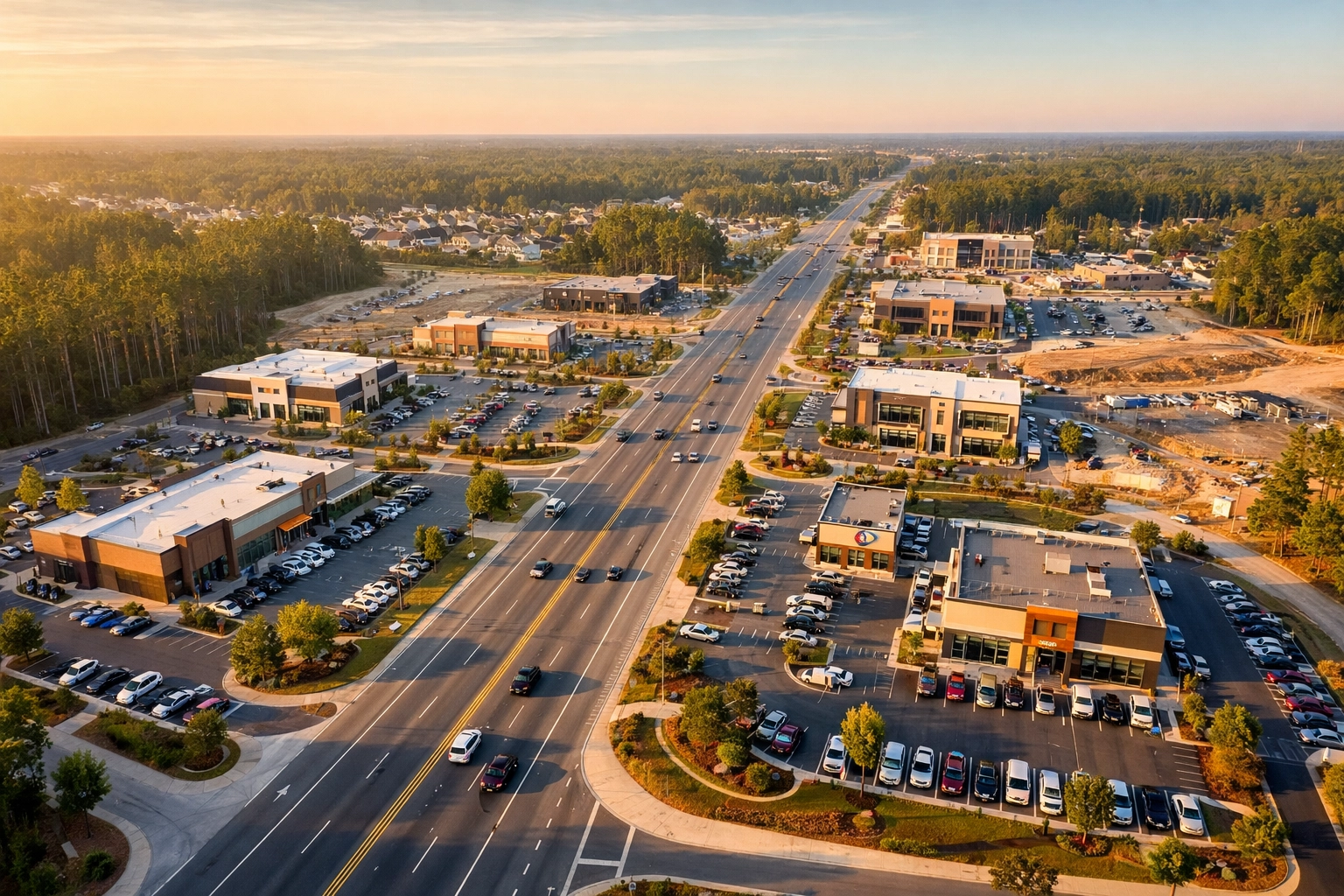
The pattern is clear: residential growth creates commercial necessity. The neighborhoods adding families today need medical offices, retail centers, flex space, and service providers tomorrow. Investors who position assets in these corridors today capture demand cycles that mature over the next three to five years.
Sector-Specific Opportunities: Where Capital Is Flowing
Not all commercial property types perform equally in this market. Medical office and small-bay industrial are predicted to see the strongest leasing velocity through 2026 and beyond.
Medical Office: Consistent Demand, Stable Returns
Healthcare doesn't follow economic cycles the way retail does. Medical office space remains one of the most resilient commercial property classes: especially in aging markets and growing suburban corridors.
Wilmington's demographics support this demand. An expanding retiree population combined with young families moving to Leland, Hampstead, and Carolina Beach Road creates consistent need for primary care, specialty practices, urgent care, physical therapy, and outpatient services.
Medical office projects benefit from long-term leases, creditworthy tenants, and predictable cash flows. For investors seeking stability, this sector delivers.
Industrial and Flex Space: Port Proximity Drives Value
Wilmington's industrial market remains one of the region's strongest performers. Warehouse, distribution, and flex space benefit from proximity to the Port of Wilmington: one of the East Coast's most strategically positioned deepwater ports.
Below-average vacancy rates signal tight supply. Companies need space for last-mile distribution, light manufacturing, marine services, contractor operations, and hybrid office-warehouse functionality.
Flex space: blending office, storage, and light industrial use: continues rising in popularity among small businesses and service providers who need operational flexibility without separate lease agreements.
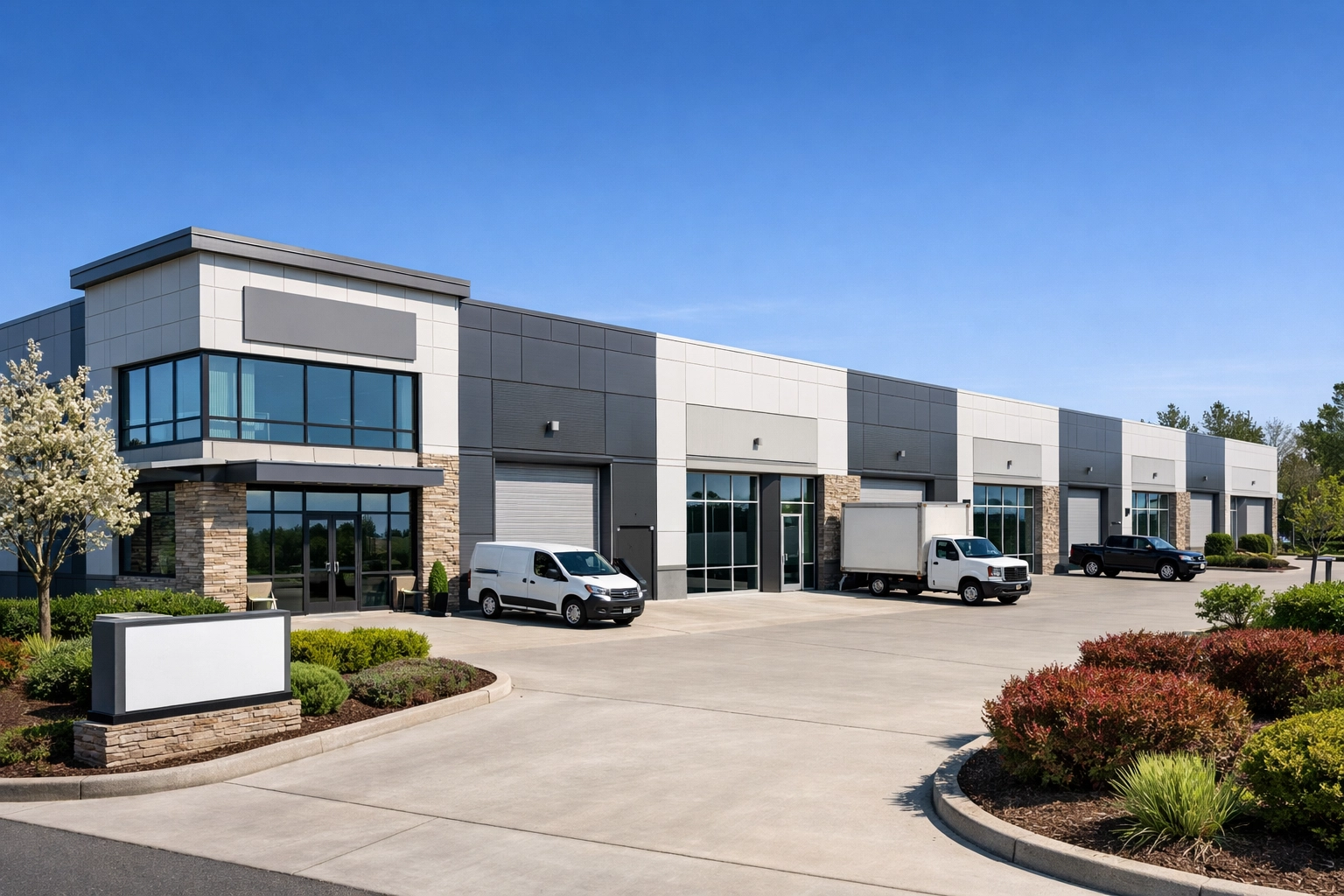
This is a build-to-suit and adaptive reuse opportunity. Older properties can be repositioned. New construction can be designed for multi-tenant flexibility. The demand exists: the question is who captures it first.
Retail: Selective Growth in Residential Corridors
Traditional big-box retail faces headwinds. But neighborhood retail supported by residential growth remains viable: especially in underserved corridors where new housing outpaces commercial development.
Carolina Beach Road, Leland's northern expansion zones, and Hampstead's Highway 17 corridor are examples where retail follows rooftops. Grocery-anchored centers, service retail, restaurants, fitness concepts, and convenience-based tenants perform well in these locations.
Investors evaluating retail should prioritize location over size. Smaller format, high-traffic, residential-adjacent sites outperform larger footprints in secondary locations.
The Land Constraint Reality: Adaptive Reuse Becomes Strategic
New Hanover County is running out of easily developable land. This scarcity is forcing innovation.
Adaptive reuse and redevelopment projects are no longer niche strategies: they're becoming one of Wilmington's most active development categories. Older office buildings, underperforming retail centers, and obsolete warehouse space are being repositioned into medical offices, service-based retail, flex space, and mixed-use concepts.
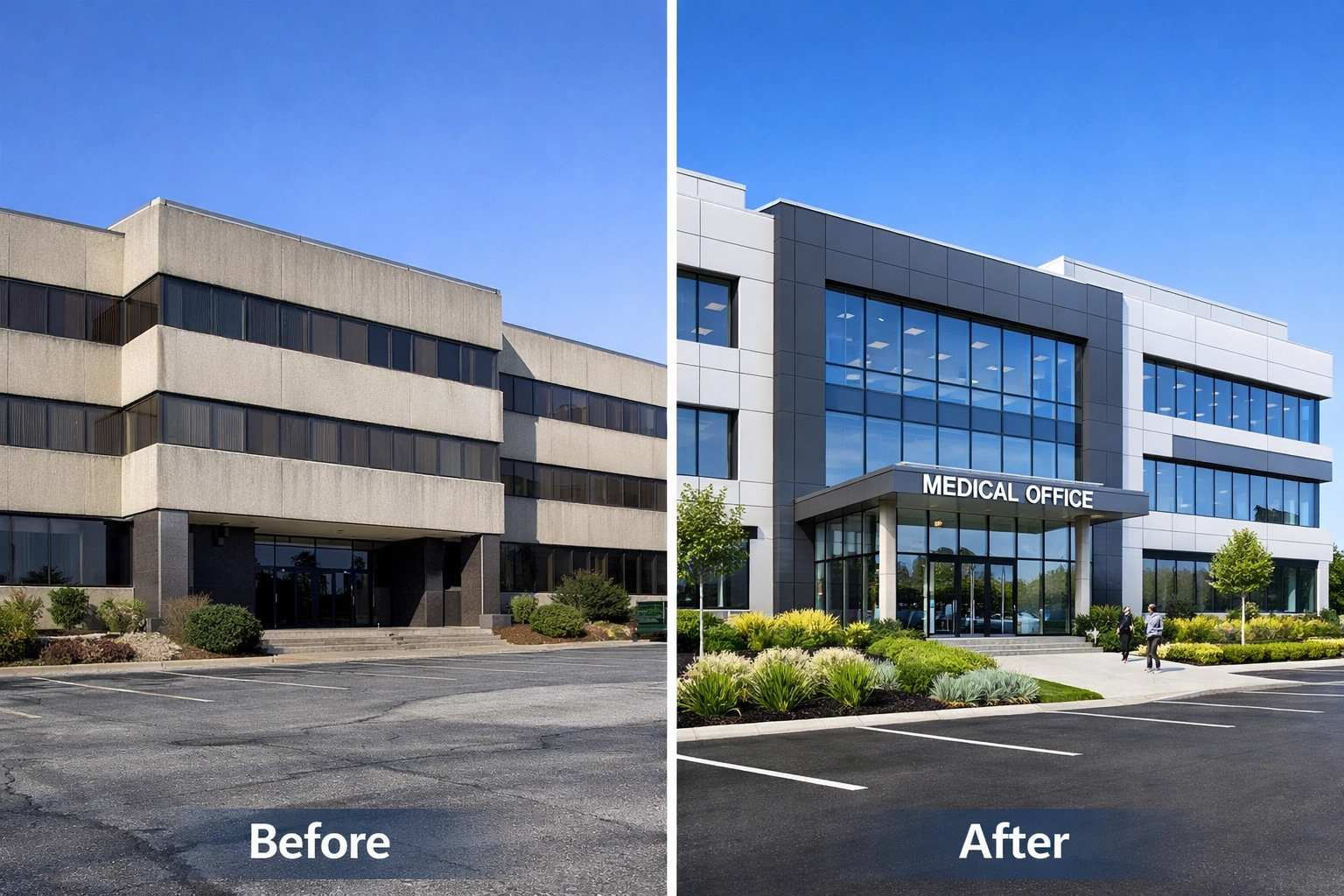
This trend creates opportunity for investors who understand commercial renovation as value creation, not just capital preservation. A dated office building in a strong location can be transformed into Class A medical space. An aging strip center can become a mixed-use asset with retail, office, and residential components.
Adaptive reuse projects require specialized expertise: zoning knowledge, design-build capabilities, commercial renovation experience, and construction management that balances budget with building performance.
This is where the right commercial renovation contractor and design build commercial contractor become critical partners. Repositioning existing assets isn't cosmetic work: it's strategic redevelopment that maximizes ROI while navigating regulatory, structural, and market constraints.
Why a Design-Build Approach Matters for Commercial Investors
Commercial projects live or die on execution. Budget overruns, scheduling delays, and scope misalignment destroy margins.
A design-build commercial contractor integrates architecture, engineering, permitting, and construction under one roof. This eliminates the fragmented communication, finger-pointing, and cost creep that plague traditional design-bid-build projects.
For investors, design-build means:
Faster delivery. Overlapping design and construction phases compresses timelines: critical when lease agreements and financing windows are time-sensitive.
Cost certainty. Single-source accountability and value engineering from day one reduce change orders and budget surprises.
Alignment. The team designing your project is the team building it. Vision translates directly to execution without translation losses.
Flexibility. Mid-project adjustments don't require renegotiating contracts between separate architects and contractors.
Whether you're ground-up building in Leland, repositioning office space in Wilmington, or developing flex space in Hampstead, the contractor you choose determines whether your investment performs as modeled.

The Veteran-Owned Difference: Discipline Meets Delivery
At Mill Creek Development Group, we bring the same principles to commercial construction that built our reputation in custom residential work.
Precision. Accountability. Communication.
We've served military families, private investors, and business owners across Eastern North Carolina with the understanding that construction is a fiduciary responsibility: not just a building process.
Every commercial project starts with the same question: What does success look like for this investment?
We don't build what's easy. We build what delivers value. That means understanding market positioning, tenant needs, lifecycle costs, and exit strategies: not just square footage and finish schedules.
Our design-build approach eliminates the coordination chaos that derails timelines and budgets. We manage architectural design, permitting, subcontracting, scheduling, and quality control under one unified team.
Our commercial renovation experience allows us to see potential where others see problems. Older buildings aren't liabilities: they're opportunities when approached with the right expertise.
Our local knowledge means we understand Wilmington's permitting processes, zoning complexities, contractor availability, and market timing. We don't just build in this region: we're invested in it.
Your Next Step: The Project Questionnaire
If you're evaluating a commercial development, renovation, or adaptive reuse project in the Wilmington area, the first step is clarity.
What are your goals? What's your timeline? What constraints exist?
Our Project Questionnaire helps us understand your vision, budget, and priorities before we ever put pen to paper. It's a strategic planning conversation: not a sales pitch.
Complete the questionnaire here: https://linktr.ee/MillCreekDevelopmentGroup
Once we understand your objectives, we'll outline our approach, timeline, and process. No surprises. No pressure. Just clear information that helps you make confident decisions.
Wilmington's commercial market is moving. The question isn't whether opportunity exists: it's whether you're positioned to capture it.
Let's talk about your project.
: AJ, President | Mill Creek Development Group
Leave a Reply