
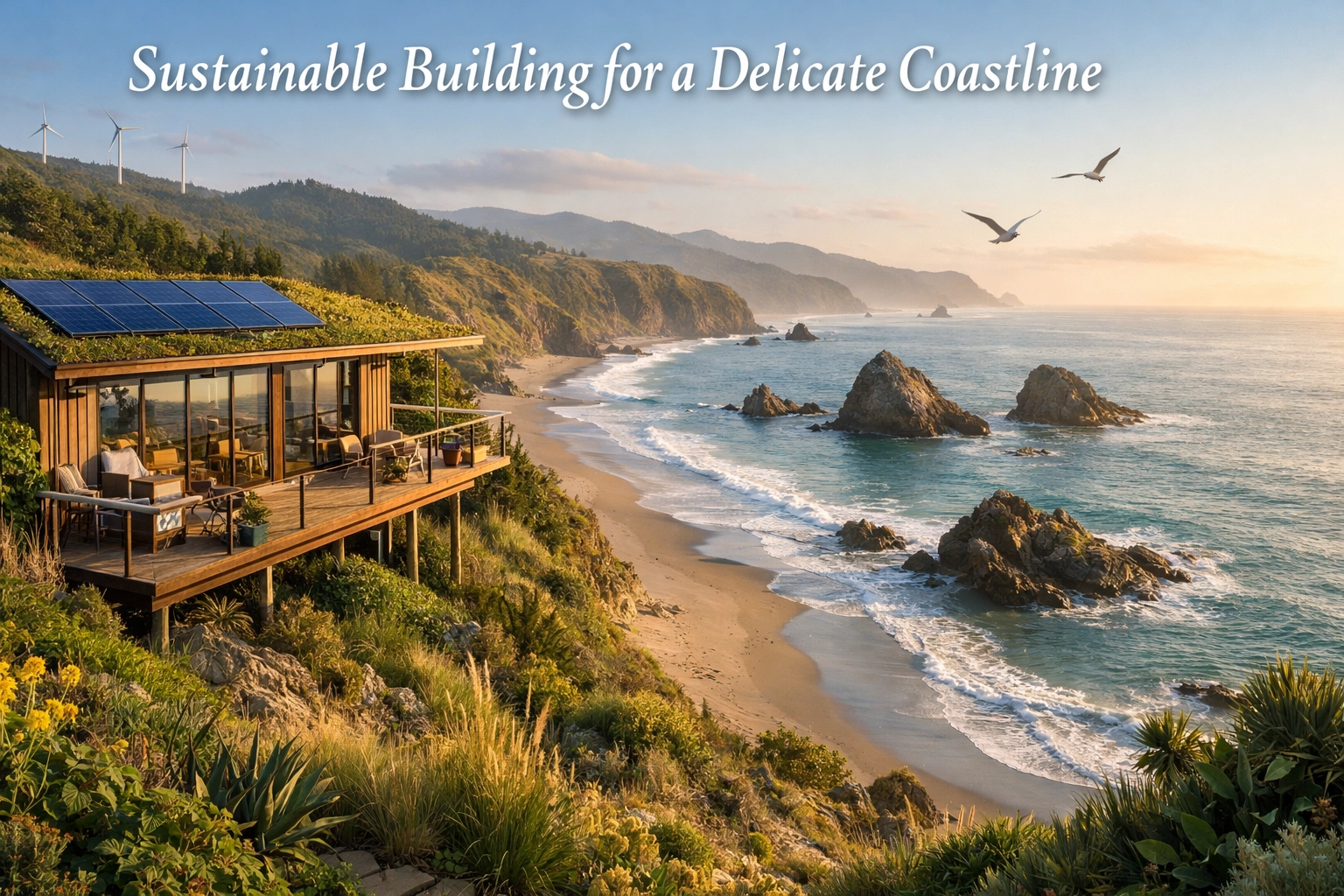
The North Carolina coast is extraordinary. Salt marshes. Maritime forests. Barrier islands shaped by wind and water. Building here requires respect: respect for the environment that makes this region worth calling home, and respect for the forces that test every structure we create.
Sustainable coastal building isn't just about being environmentally conscious. It's about building homes that last. Homes that protect families. Homes that honor the fragile ecosystems that define coastal North Carolina.
As a custom home builder in Wilmington NC and Leland NC, we've learned that the most sustainable approach is also the most practical one. Build it right the first time. Choose materials that endure. Design systems that work with nature, not against it.
The Coastal Reality: Why Standard Building Doesn't Work Here
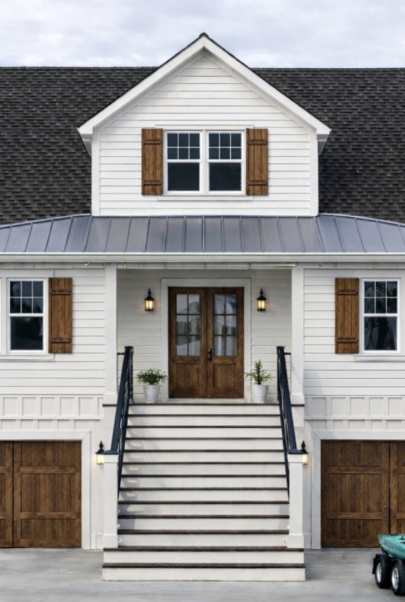
Standard construction methods fail on the coast. Salt air corrodes. Humidity penetrates. Storm surge threatens. Temperature swings stress materials. What works inland becomes a maintenance nightmare within sight of the ocean.
Sustainable coastal building addresses three core challenges simultaneously:
Environmental Protection. Preserving natural buffers. Managing stormwater responsibly. Minimizing site disturbance.
Structural Resilience. Designing for storm events. Accounting for sea-level rise. Building to last 50-100 years.
Resource Efficiency. Reducing water consumption. Maximizing passive climate control. Minimizing long-term operating costs.
These aren't separate goals. They're interconnected strategies that define intelligent coastal development.
Design Principles That Protect Both Home and Habitat
Every coastal project begins with understanding regional risks. Storm surge patterns. Prevailing winds. Flood zones. Soil composition. Native vegetation.
This assessment informs every decision that follows.
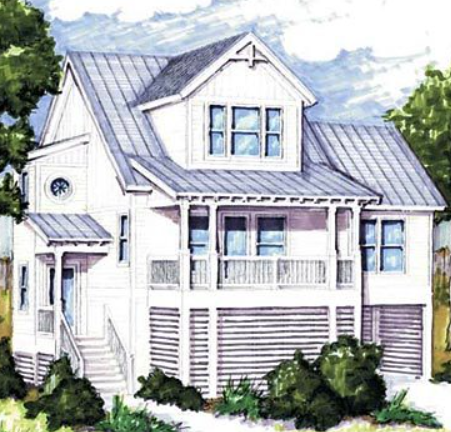
Elevation matters. Raising structures on properly engineered foundations accounts for current flood risk and projected sea-level rise. This isn't defensive building: it's responsible planning.
Orientation matters. Strategic positioning captures prevailing breezes for natural ventilation. Window placement maximizes daylighting while minimizing heat gain. Roof overhangs provide passive cooling.
Site preservation matters. Native plants stabilize soil. Maritime forests provide natural windbreaks. Disturbing as little ground as possible maintains ecosystem integrity and natural drainage patterns.
We approach each site as a collaboration with the landscape: not a conquest of it.
Materials Built for Salt, Wind, and Time
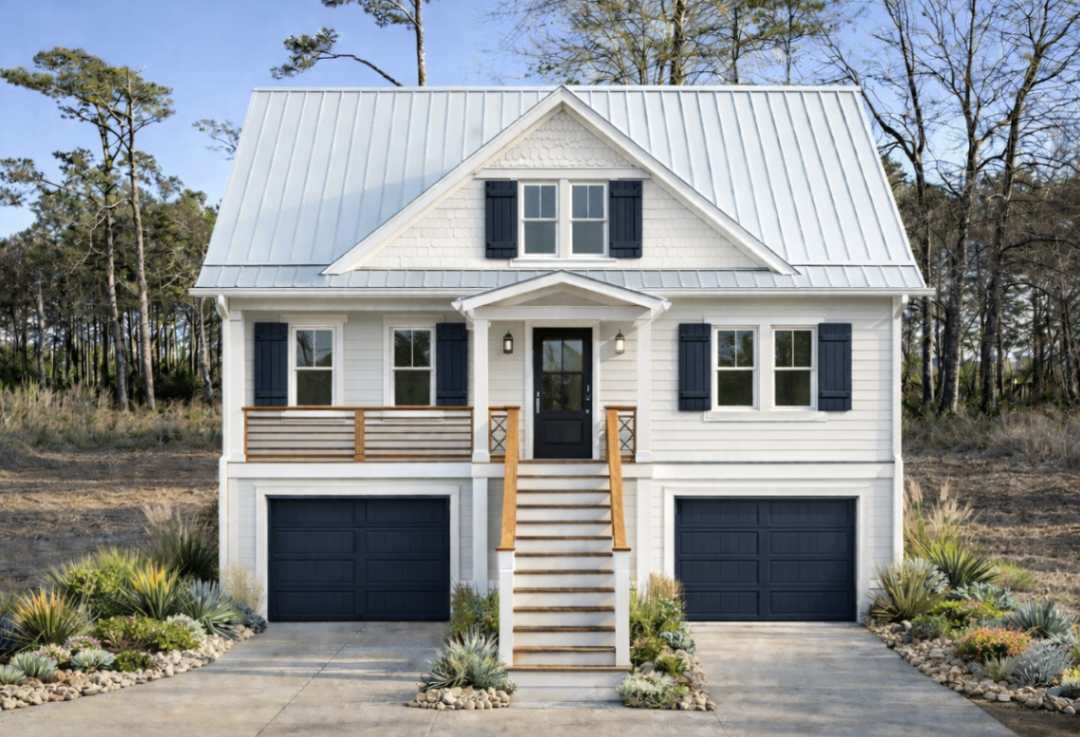
Material selection separates coastal homes that endure from those that deteriorate.
Fiber-cement siding resists moisture, salt, and wind-driven rain without the maintenance demands of wood or the thermal expansion issues of vinyl. It won't rot. It won't corrode. It performs.
Metal roofing sheds water efficiently, reflects solar heat, and withstands high winds. When properly installed with corrosion-resistant fasteners, metal roofs outlast asphalt by decades.
Treated hardwoods for exterior applications: decks, railings, trim: resist moisture degradation and insect damage without constant refinishing.
Insulated Concrete Forms provide structural strength, excellent insulation values, and resistance to moisture intrusion. ICF construction creates thermal mass that moderates interior temperatures naturally.
Corrosion-resistant fasteners and hardware throughout the structure prevent the hidden failures that compromise long-term integrity.
Every material we specify must answer one question: Will this perform in salt air, high humidity, and extreme weather for decades?
Water Systems That Work With the Environment
Coastal environments require thoughtful water management. The same storms that threaten structures also present opportunities for intelligent water use.
Rainwater collection systems capture precipitation for irrigation and non-potable uses. In a region with abundant rainfall, this reduces demand on municipal supplies and lowers operating costs.
Stormwater management goes beyond code minimums. Bioretention areas filter runoff naturally while providing habitat. Permeable surfaces allow infiltration. Strategic grading directs water away from structures while maintaining natural flow patterns.
Graywater systems reuse water from sinks and showers for landscape irrigation. When properly designed, these systems can reduce household water consumption by 30-40 percent.
On-site wastewater treatment using advanced septic systems protects sensitive coastal waters while providing reliable performance in areas without municipal sewer access.
Comprehensive water management achieves measurable reductions: 75 percent compared to conventional approaches: while protecting the waterways that define coastal living.
Energy Efficiency Through Intelligent Design
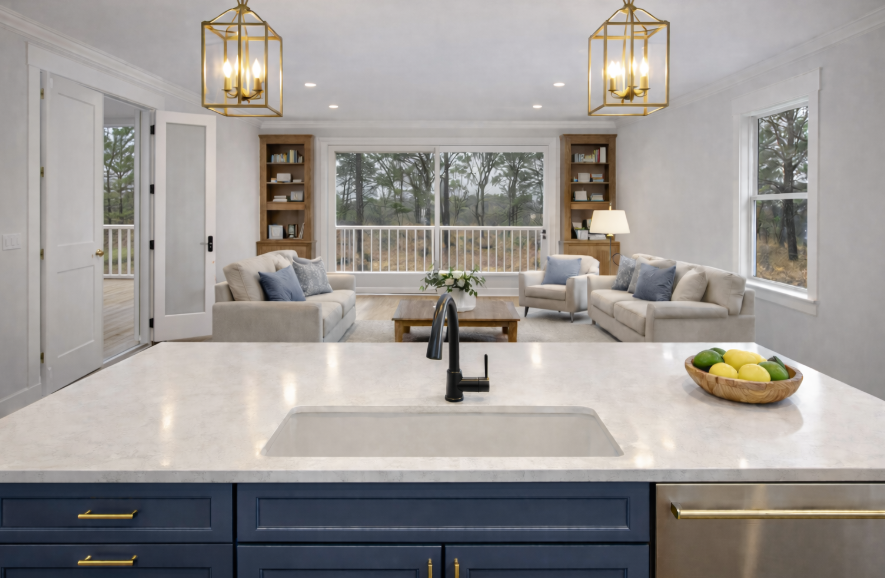
The most sustainable energy is the energy you never need to use.
Passive design strategies reduce mechanical system demands through natural physics. Cross-ventilation captures coastal breezes. High-performance windows and insulation create effective thermal barriers. Properly sealed building envelopes prevent conditioned air loss.
Strategic window placement balances daylighting with solar heat gain. South-facing glazing with appropriate overhangs captures winter warmth while blocking summer sun. East and west exposures stay minimal to reduce afternoon heat loads.
Renewable energy integration makes sense in coastal locations with excellent solar exposure. Roof-mounted solar arrays generate substantial power while complying with local design standards. Battery storage systems provide backup during storm-related outages.
High-efficiency mechanical systems sized correctly for well-designed thermal envelopes operate at peak efficiency with minimal runtime. Properly specified HVAC systems reduce energy consumption while improving comfort and indoor air quality.
Every efficiency measure reduces both environmental impact and long-term operating costs: a double return that defines genuine sustainability.
Building Envelopes That Protect and Perform
The building envelope: roof, walls, foundation: controls everything that happens inside your home. On the coast, envelope performance determines durability.
Vapor barriers prevent moisture intrusion from humidity-laden air. Proper installation techniques ensure continuity across all building elements.
Roof ventilation systems regulate attic temperatures and remove moisture before it condenses. This extends roof life while reducing cooling loads.
Air sealing eliminates the infiltration that drives up energy costs and introduces moisture problems. Detailed attention to joints, penetrations, and transitions creates airtight construction that performs year-round.
Moisture management details at windows, doors, and transitions prevent water entry during wind-driven rain events. Proper flashing, drainage planes, and sealant application matter more on the coast than anywhere else.
A properly designed and executed building envelope extends structural lifespan while maintaining energy efficiency and interior comfort in the demanding coastal climate.
Long-Term Thinking for Changing Conditions
Sustainable coastal building requires acknowledging uncertainty. Sea levels change. Storm patterns evolve. Coastal dynamics shift.
Designing for adaptability means creating homes with flexible foundations: figuratively and literally. Structures that can accommodate changing uses. Systems that can integrate emerging technologies. Spaces that serve multiple functions.
This approach maintains value and utility as conditions evolve. It protects families' investments while supporting community resilience.
Building with a 50-100 year perspective changes every decision. Materials. Systems. Site planning. Design flexibility. Everything aligns toward longevity and adaptation rather than short-term convenience.
Building Coastal Homes That Honor Place
The most sustainable coastal home respects the environment that surrounds it. It performs efficiently. It endures storms. It requires minimal maintenance. It protects natural systems.
This isn't luxury building: it's responsible building. It's the approach that makes sense for families investing in coastal property, whether as a primary residence, a beach retreat, or a legacy for future generations.
As a custom home builder in Leland NC serving the entire coastal region, we've seen firsthand how proper planning, material selection, and construction techniques create homes that last while protecting the delicate environments that make this region extraordinary.
If you're considering building on the North Carolina coast, start with the right questions. Understand your site. Consider long-term performance. Design for durability and efficiency from the beginning.
Ready to explore sustainable coastal building for your project? Complete our Project Questionnaire and let's discuss how to build a home that respects both your vision and the remarkable coastline we're privileged to call home.
: AJ, President | Mill Creek Development Group
Leave a Reply