
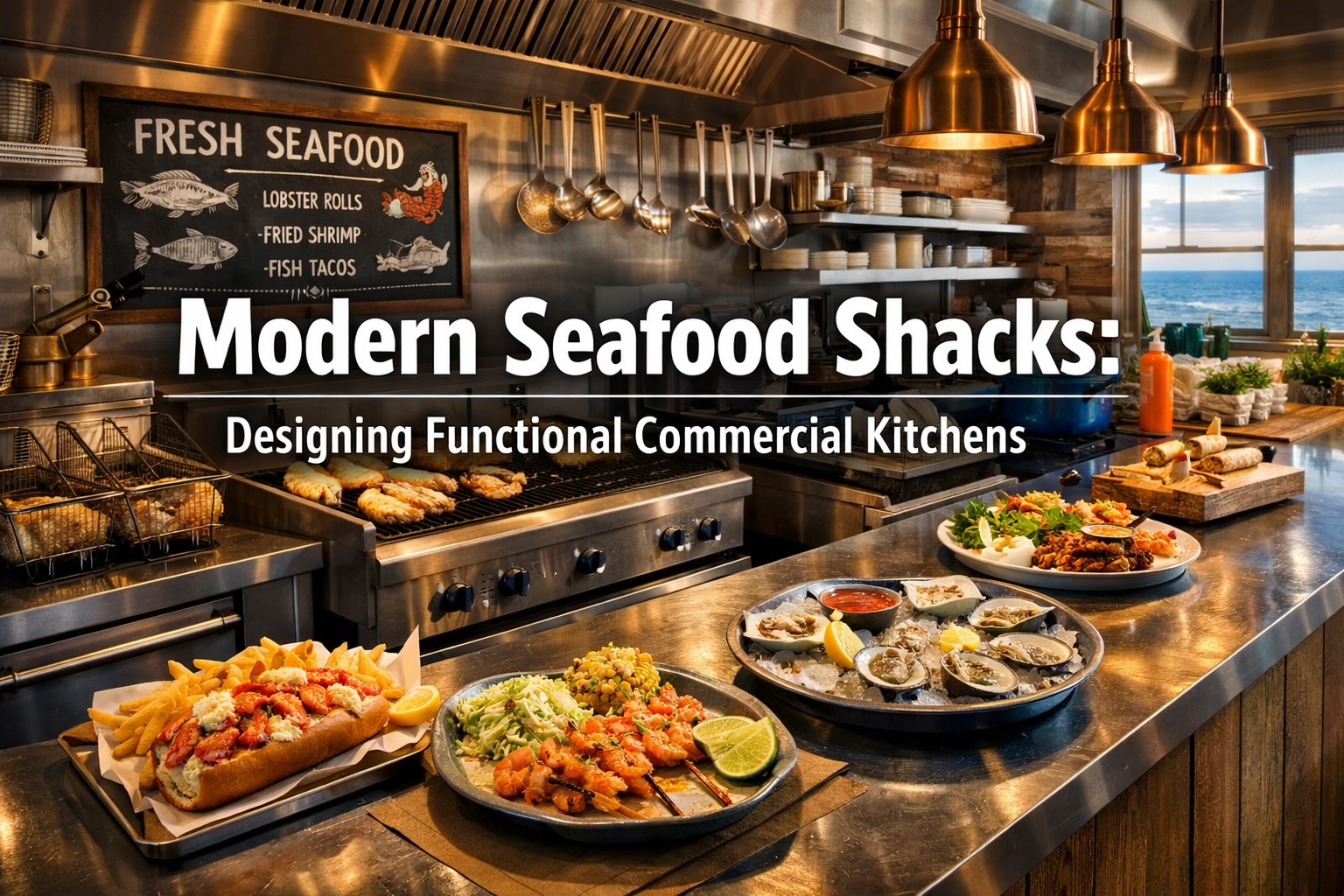
Fresh catch. Local flavor. Functional design.
If you're opening a seafood restaurant or market in coastal North Carolina, your kitchen isn't just a workspace: it's the engine that drives your entire operation. From raw bars serving Sneads Ferry shrimp to casual shacks frying Calabash-style seafood, the commercial kitchen design determines whether your business thrives or struggles.
We specialize in commercial fit outs that transform empty shells into profitable, food-safe operations. As a commercial contractor in Wilmington, NC, we've seen firsthand how proper kitchen design separates successful seafood establishments from those that close within the first year.
Here's what every seafood business owner needs to know before breaking ground.
Why Seafood Kitchens Demand Specialized Design
Seafood preparation creates unique challenges.
Salt water. Fish scales. Constant moisture. Strong odors. High volume during peak season. These factors destroy poorly designed kitchens within months: corroding equipment, creating health code violations, and slowing service to a crawl.
A production kitchen designed for burgers and pizza won't survive the demands of processing fresh seafood. You need purpose-built infrastructure that accounts for seafood-specific workflow, equipment durability, and health code requirements from day one.
The investment in proper design pays for itself through reduced equipment replacement, lower labor costs, faster service times, and zero failed health inspections.
Workflow Zones: The Foundation of Kitchen Efficiency
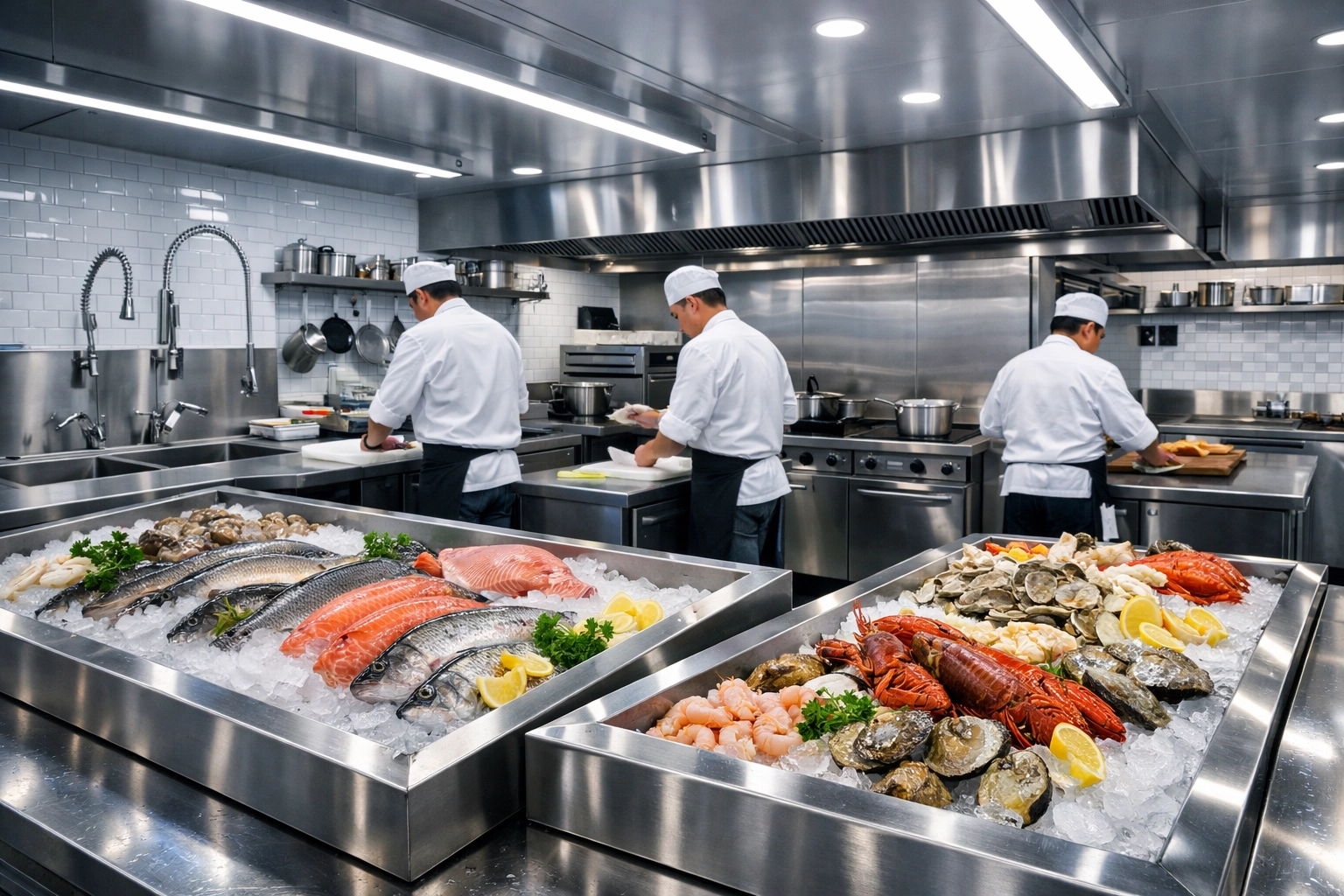
Every functional commercial kitchen follows the same principle: linear workflow from receiving to plating.
For seafood operations, this means five distinct zones:
Receiving and Cold Storage. Fresh seafood arrives daily. Your receiving area needs immediate access to walk-in refrigeration and ice machines. No bottlenecks. No cross-contamination with dry storage. Commercial-grade refrigeration units sized for your volume: not residential units that can't maintain proper temperatures.
Prep Stations. Dedicated space for cleaning, filleting, and portioning. Stainless steel work surfaces. Multiple sinks meeting three-compartment requirements. Anti-fatigue flooring to support staff working long shifts. Adequate lighting for detailed knife work. Storage for sharp tools within arm's reach: not across the kitchen.
Cooking Line. High-BTU ranges. Commercial fryers sized for volume. Char grills for blackened preparations. Steamers for shellfish. Each piece of equipment positioned according to menu flow: the order dishes appear on tickets determines equipment placement.
Plating and Expediting. Hot holding equipment. Pass-through windows. Sufficient counter space for simultaneous orders during dinner rush. This zone bridges kitchen and front-of-house: design it for speed and communication.
Dish and Sanitation. Commercial dishwashers that complete cycles in minutes, not hours. Three-compartment sinks for manual washing. Separate hand-washing stations throughout the kitchen. Chemical storage away from food prep areas.
Poor workflow creates chaos. Proper zoning creates profit.
Built to Withstand Salt Water and Scale
Coastal seafood operations face corrosion residential kitchens never encounter.
Salt water from rinsing shellfish. Brine from pickle barrels. Fish blood and scales. Constant moisture. Standard materials fail: rusting, pitting, and harboring bacteria within months.
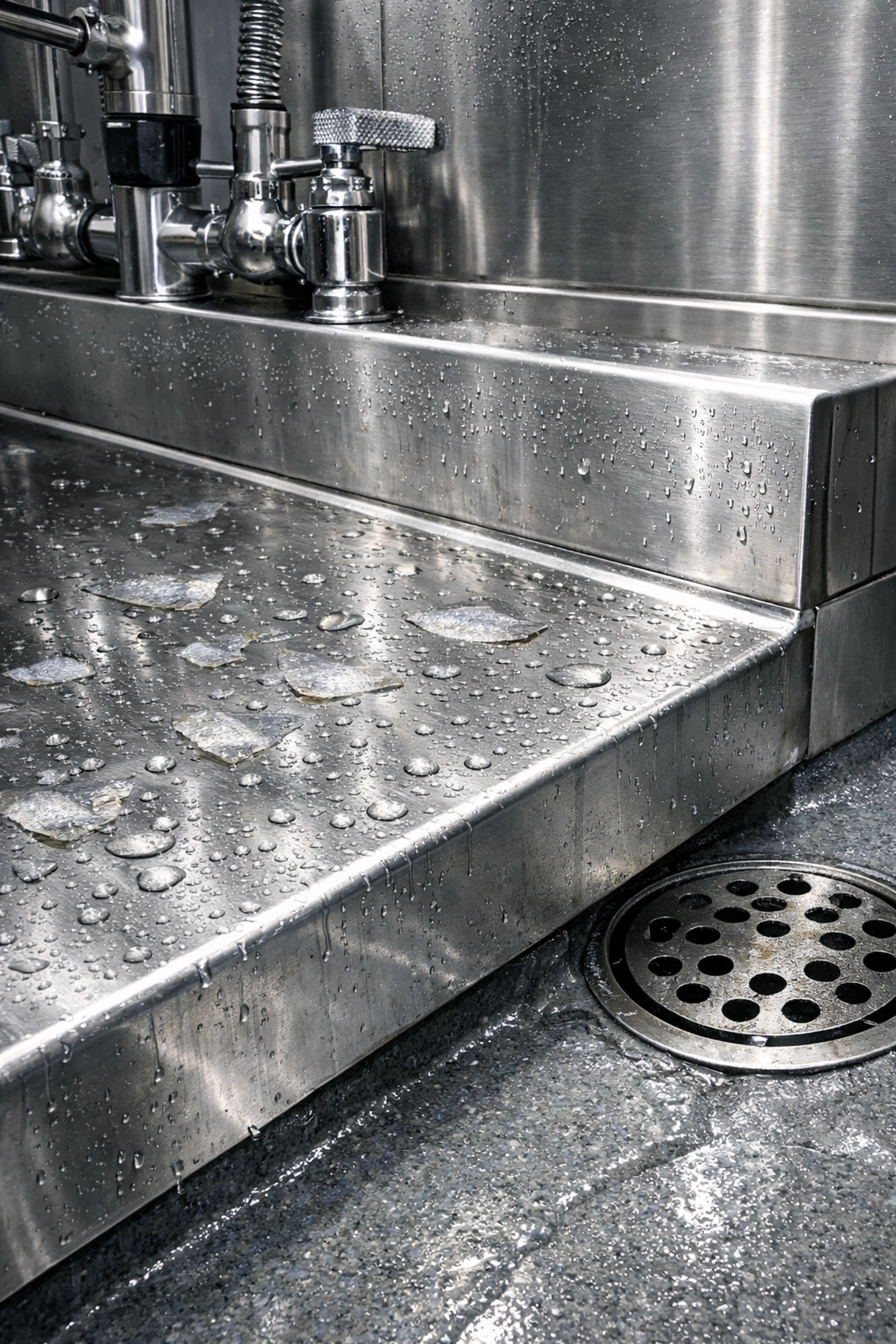
Specify commercial-grade stainless steel throughout. Not just countertops: backsplashes, shelving, wall panels, and equipment housings. Type 304 stainless steel minimum. Type 316 for areas with constant salt water exposure.
Floors require epoxy coating or commercial-grade tile with proper slope to floor drains. Standing water creates slip hazards and bacterial growth. Every square foot should drain to a floor sink: not pool in corners.
Equipment rated for marine environments lasts decades. Consumer-grade equipment fails in months. The upfront cost difference disappears when you're not replacing corroded refrigeration units every two years.
Ventilation: Non-Negotiable for Seafood Operations
Frying whole flounder creates different exhaust requirements than grilling steaks.
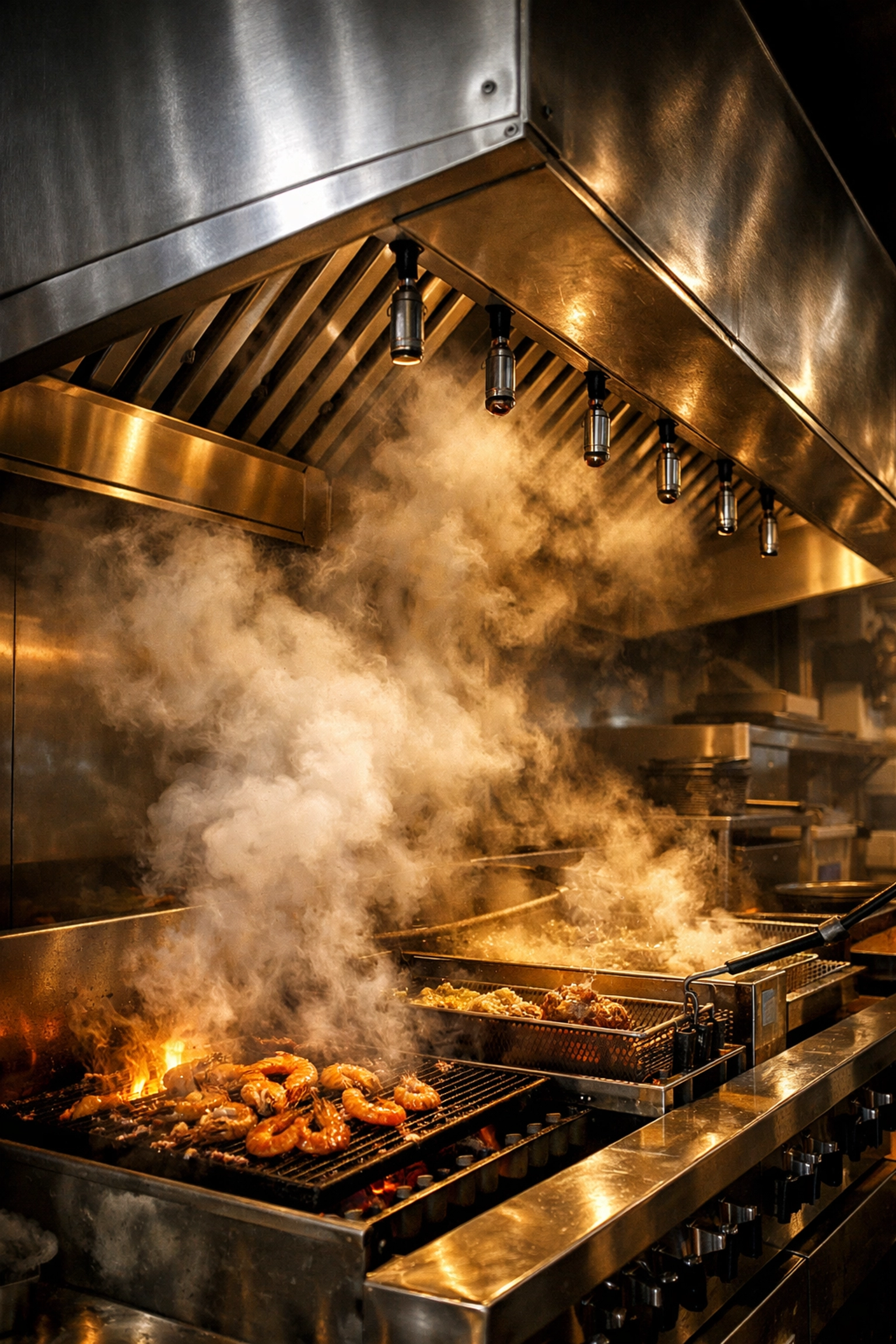
Seafood cooking produces intense steam, aerosolized oils, and strong odors that standard ventilation systems can't handle. Undersized hoods create greasy buildup, health code violations, and dining rooms that smell like yesterday's fish fry.
Type I hoods with fire suppression systems over all cooking equipment. Exhaust capacity calculated based on equipment BTU output and cooking method: not guesswork. Make-up air systems that replace exhausted air without creating negative pressure that slams doors and pulls odors into dining areas.
Commercial kitchen ventilation isn't a DIY project. It requires mechanical, electrical, and fire suppression coordination during construction: not as an afterthought when the health inspector fails your opening inspection.
We coordinate with specialized hood vendors and HVAC contractors to ensure your system meets code and functions properly from day one.
Refrigeration: Where Most Seafood Operations Fail
Fresh seafood demands precise temperature control and adequate capacity.
Walk-in coolers sized for receiving entire deliveries: not forcing staff to cram product into undersized units. Reach-in refrigeration at every prep station. Ice machines producing enough volume for raw bars, beverage service, and seafood displays simultaneously.
Backup refrigeration capacity for equipment failure. When your primary walk-in goes down during Memorial Day weekend, you need somewhere to store $10,000 worth of fresh catch: not garbage bags full of spoiled product.
Remote condensers extend equipment life in coastal environments. Salt air destroys condenser coils. Locating condensers outside: away from kitchen heat and cooking moisture: reduces maintenance and prevents mid-service breakdowns.
Temperature monitoring systems with remote alerts prevent overnight failures from destroying inventory. Modern refrigeration systems text you when temperatures rise: giving you time to respond before losing product.
The Coastal North Carolina Seafood Context
Our region built its identity on seafood.
Calabash-style frying. Shrimp boats docking in Southport. Oyster roasts in Topsail. Flounder tournaments. The Azalea Festival seafood vendors. These traditions represent more than cuisine: they're cultural touchstones and economic engines for coastal communities.
When you design a seafood restaurant or market, you're joining this heritage. Your kitchen design should honor it: built to handle local catch, accommodate seasonal volume swings, and support the relationships with local fishermen who supply your operation.
We understand these dynamics because we're part of this community. We've built commercial kitchens for operators serving tourists in Wrightsville Beach and locals in Jacksonville. We know the difference between designing for year-round operations versus seasonal businesses that do 70% of annual revenue between Memorial Day and Labor Day.
Equipment Selection: Commercial-Grade Only
Restaurant supply store catalogs feature attractive pricing on "commercial-style" equipment.
Don't fall for it.
True commercial equipment carries NSF certification, UL approval, and manufacturer warranties designed for continuous use. Consumer equipment marketed to restaurants fails under professional demands: voiding warranties and creating liability when food safety is compromised.
Commercial fryers cycle oil properly and maintain temperature when dropping 50 pounds of shrimp. Consumer fryers can't recover. Commercial refrigeration holds 38°F when opened 100 times per shift. Residential units can't. Commercial dishwashers sanitize at proper temperatures and complete cycles fast enough for service demands. Consumer dishwashers don't.
The cost difference between commercial and consumer equipment represents insurance against equipment failure, health code violations, and liability claims. Cut costs elsewhere: never on kitchen equipment.
Health Codes and Permitting: Built-In Compliance
Health departments don't grant extensions for poor planning.
Your commercial kitchen must meet state and local health codes before receiving operating permits. Hand-washing sinks in proper locations. Adequate spacing between equipment. Proper food storage. Grease trap sizing. Fire suppression certification. Backflow prevention devices.
Violations discovered during final inspection delay opening: sometimes by weeks. Every day closed costs money in lost revenue and staff wages. Designing code compliance from the beginning prevents these delays.
We coordinate health department plan reviews during design: identifying issues before construction begins, not when you're trying to open. Our commercial fit out projects pass health inspections on first attempt because we build compliance into every detail.
Working With the Right Commercial Contractor
Your kitchen design impacts every aspect of your seafood business.
Choosing a commercial contractor who understands food service operations makes the difference between smooth opening and expensive delays. We bring expertise in commercial kitchen workflow, equipment coordination, health code compliance, and vendor relationships that streamline construction.
Veteran-owned. Locally operated. Committed to quality that lasts.
We build commercial kitchens throughout coastal North Carolina: from Wilmington to Jacksonville to the Crystal Coast. Each project receives the same meticulous attention to detail, clear communication, and commitment to delivering functional spaces on schedule.
Our process begins with understanding your concept, menu, and operational goals: not just square footage and equipment lists. We design kitchens that support your specific business model, whether that's high-volume casual dining, upscale seafood restaurants, or retail fish markets with prepared foods.
Ready to discuss your seafood establishment? Start with our Project Questionnaire to share your vision and timeline. We'll schedule a consultation to review your concept and provide guidance on transforming your idea into a profitable reality.
Complete our Project Questionnaire
Your commercial kitchen represents the foundation of your seafood business. Design it right from the start.
: AJ, President | Mill Creek Development Group
Leave a Reply