
Wilmington. Leland. Southport. Brunswick County. New Hanover County. The Cape Fear region.
Thoughtful planning. Coastal design. Disciplined project management.
Building in coastal North Carolina brings remarkable opportunities : and important decisions. Your lot, flood zone, roof system, local approvals, budget, and long-term goals all shape the project.
Mill Creek Development Group helps homeowners, investors, and business owners move forward with Confidence, Clarity, and Consistency. We combine coastal architectural style with hands-on planning and dependable communication from the first conversation through the final walkthrough.
Here are eight things Wilmington, Leland, and Southport owners should know before they build.
1. Your Lot Shapes the Entire Project
A beautiful plan does not automatically fit every coastal property.
Your lot review should address:
- Flood zone classification
- Base Flood Elevation, when applicable
- Local setbacks
- Utilities and access
- Soil and drainage
- Topography
- HOA or design review requirements
- Coastal or environmental approvals
- Site-specific wind conditions
Zone X and Zone AE properties can carry different requirements. A property in Zone X may face lower mapped flood risk, but local rules and site conditions still matter. A property in Zone AE typically includes a mapped Base Flood Elevation and requires more detailed floodplain coordination.
North Carolina property owners can use the Flood Risk Information System to review available flood hazard data. Brunswick County also provides a Know Your Flood Hazard resource.
Early feasibility work protects your budget. It also helps your design team create a home or commercial space that fits the property from the beginning.
2. Zone X and Zone AE Require Different Conversations
Flood compliance does not begin when construction starts. It begins during site selection and design.
Zone AE represents a 1% annual-chance floodplain with published BFEs. Local officials may require elevation certificates, floodplain development permits, elevated utilities, flood-resistant materials, and additional freeboard above the BFE.
Zone X generally represents lower mapped flood risk. Unshaded Zone X and shaded Zone X carry different meanings, and local requirements can vary. Lower mapped risk does not eliminate the value of resilient design or flood insurance.
Your project team should coordinate with the applicable floodplain administrator before you finalize plans. North Carolina guidance explains that local ordinances control specific requirements. The North Carolina Floodplain Management Quick Guide provides helpful background.
A coastal builder should help you ask practical questions:
- What elevation applies to this site?
- Does the town or county require freeboard?
- Where should mechanical and electrical equipment sit?
- Does the project need a floodplain development permit?
- Does the work trigger substantial improvement requirements?
- Do CAMA or other approvals apply?
Good planning creates fewer surprises. It also gives your family or business a stronger foundation for the future.
3. Coastal Architecture Must Balance Beauty and Performance
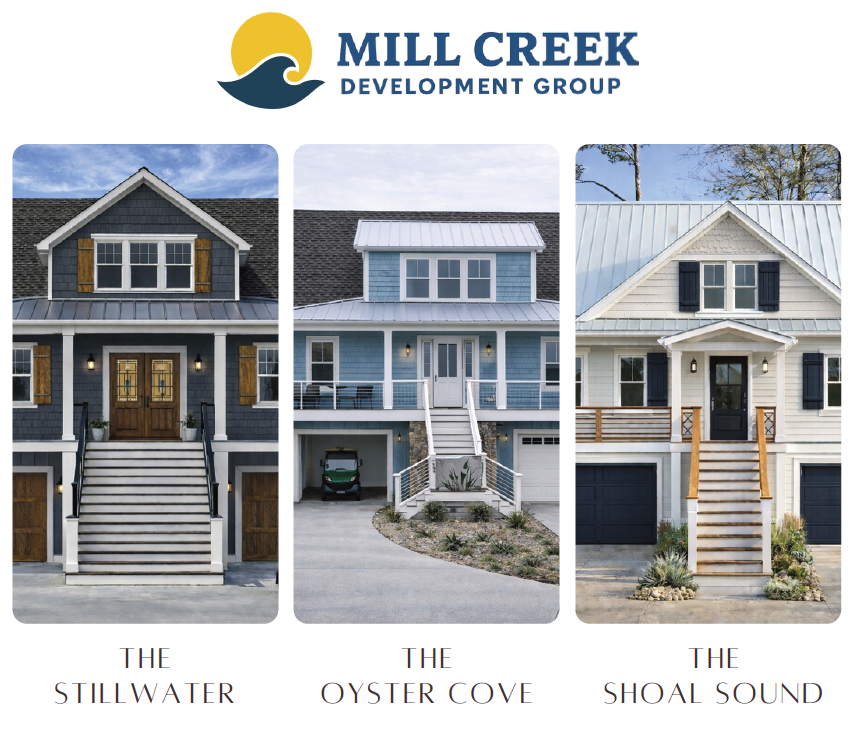
Contemporary coastal architecture does more than create curb appeal. It supports the way coastal North Carolina families live.
Effective design often includes:
- Elevated living spaces
- Covered porches and outdoor rooms
- Durable siding and trim
- Metal or high-performance roofing
- Large windows placed with purpose
- Flexible entertaining areas
- Practical storage for outdoor gear
- Strong transitions between indoor and outdoor living
The best coastal homes feel open, comfortable, and personal. They also respect wind, rain, salt air, sunlight, and changing weather.
A custom home builder in Wilmington, NC should connect design decisions to your lifestyle and your property. A custom home builder in Leland, NC should also account for neighborhood requirements, lot conditions, and growth patterns across Brunswick and New Hanover counties.
Remarkable quality starts with practical design. We create homes that feel personal today and remain useful for years to come.
4. A FORTIFIED Roof Adds a Separate Layer of Resilience
A FORTIFIED Roof is not the same as flood compliance. The two systems address different hazards.
Floodplain rules address water, elevation, foundations, utilities, and allowable use below the required protection level. The FORTIFIED Home program addresses wind, wind-driven rain, and hail.
The 2025 FORTIFIED Home Standard includes measures such as:
- Enhanced roof deck attachment
- Ring-shank nails at tighter spacing
- A sealed roof deck
- Corrosion-resistant fasteners and connectors
- Stronger drip-edge and flashing details
- Tested roof coverings and accessories
- Site-specific wind pressure considerations
- Required installation documentation
A FORTIFIED Roof can support a new home or re-roofing project. FORTIFIED Silver and Gold add further protection for openings, attached structures, and continuous load paths.
The process also includes verification. A qualified FORTIFIED roofing contractor installs the required components. A certified FORTIFIED evaluator gathers documentation and submits the project for review. The Insurance Institute for Business & Home Safety then issues the designation when the home meets the standard.
North Carolina homeowners can review potential insurance credits through the North Carolina Department of Insurance. Ask your insurance agent about eligibility, documentation, and current policy requirements.
A fortified roof creates confidence above your head. Your builder should coordinate the roof strategy with your architect, engineer, roofer, evaluator, and insurance professional early.
5. Your Budget Needs More Than a Construction Number
A responsible budget includes the full development picture.
For a custom home, consider:
- Land preparation
- Surveying and engineering
- Design fees
- Permits and approvals
- Utility connections
- Driveways and drainage
- Elevation requirements
- Insurance considerations
- Allowances and finish selections
- Contingency planning
Coastal conditions can affect foundation design, site work, materials, and scheduling. Early decisions create better cost clarity.
Mill Creek uses a structured process that begins with a pre-build questionnaire and consultation. The process continues through site review, proposal alignment, design selections, permitting, construction, progress updates, and final orientation. Review the Mill Creek building process.
Clarity protects relationships. We discuss scope, budget, decisions, and expectations before construction moves forward.
6. Commercial Upfits Require Business-Minded Planning
Commercial upfits can help local business owners open sooner, improve operations, and create more valuable spaces for tenants.
A commercial project may include:
- Demolition
- Interior layout changes
- New partitions
- Electrical and lighting work
- Plumbing modifications
- HVAC coordination
- Flooring and finish installation
- Accessibility improvements
- Exterior updates
- Permit and inspection coordination
A business owner needs more than a contractor who can complete the physical work. You need a team that understands schedule pressure, tenant needs, customer access, and operating costs.
Investors also need clear scope control. A strong commercial upfit plan helps define the work before tenant turnover begins. It supports better conversations with designers, landlords, tenants, inspectors, and lenders.
If you search for a commercial upfit contractor Wilmington NC or a tenant improvement contractor Wilmington, look for experience with planning, coordination, and communication : not only installation.
Mill Creek provides commercial construction services for local business districts and investment properties. Practical planning supports profitable, usable spaces.
7. Veteran-Led Management Creates Accountability
Veteran-led project management brings a disciplined approach to complex work.
That approach includes:
- Clear objectives
- Defined responsibilities
- Organized schedules
- Consistent documentation
- Direct communication
- Proactive risk management
- Strong follow-through
- Respect for every project partner
Coastal construction includes many moving parts. Designers, engineers, surveyors, suppliers, trade partners, inspectors, officials, owners, and lenders all influence the schedule.
Veteran-Owned leadership turns coordination into a commitment. Locally Operated service keeps decisions connected to the communities we serve.
Mill Creek focuses on Confidence, Clarity, and Consistency throughout the project. We keep communication direct. We manage details carefully. We stay engaged from ground break to move-in.
8. The Right Builder Starts With the Right Questions
Your first conversation should create direction.
Before you select a builder, prepare questions about:
- Experience in Wilmington, Leland, Southport, and nearby communities
- Custom home design and construction
- Coastal site planning
- Zone X and Zone AE coordination
- FORTIFIED Roof planning
- Commercial upfit experience
- Communication practices
- Schedule management
- Allowances and change orders
- Warranty and final walkthrough procedures
Mill Creek begins with the Project Questionnaire. Step 1 helps us understand your goals, budget range, timeline, property, and vision before our first consultation.
Complete the Mill Creek Project Questionnaire
You can also learn more at http://www.millcreekdev.com and follow @MillCreekDev for company updates, coastal design inspiration, and project information.
Build With Confidence Across Coastal North Carolina
Custom building requires more than a floor plan. It requires local knowledge, careful preparation, quality craftsmanship, and dependable leadership.
Whether you need a custom home builder Southport NC, a custom home builder coastal NC, or a disciplined partner for a commercial upfit, Mill Creek Development Group brings thoughtful planning and hands-on project management to the work.
Quality + consistency. Integrity + trust. Homes + relationships.
We build for the way coastal North Carolina families and businesses live, work, and grow.
: AJ, President | Mill Creek Development Group
Leave a Reply