
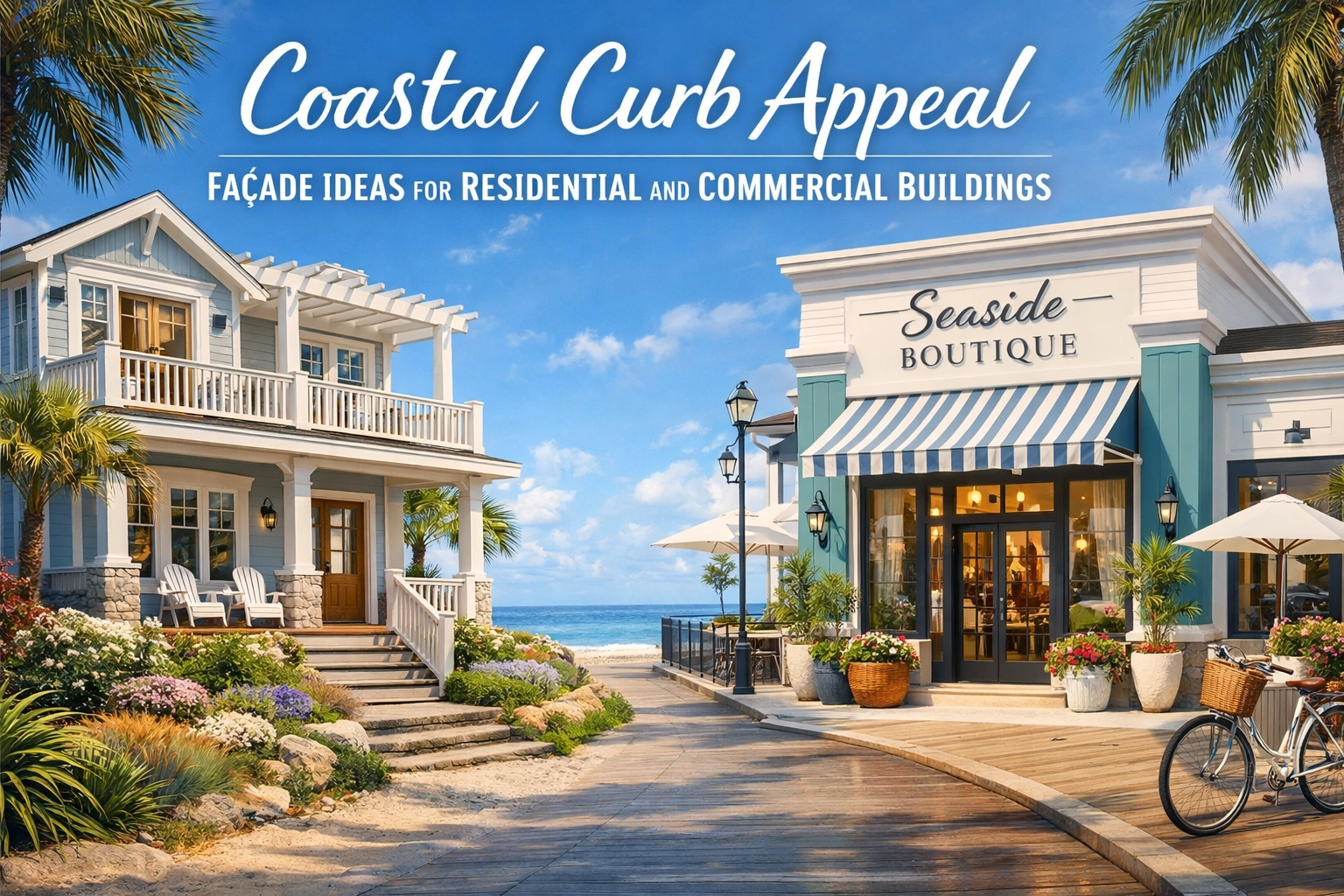
First impressions matter. Double when you're building along the North Carolina coast.
Your façade isn't just an exterior: it's your introduction, your value statement, your first handshake with every person who drives by. Whether you're designing a custom home in Wilmington, upfitting a commercial storefront in Southport, or developing rental properties near Wrightsville Beach, curb appeal directly impacts marketability, property value, and community perception.
But coastal curb appeal requires different thinking than inland projects.
Salt air. High winds. Intense UV exposure. Humidity that never quits.
Your façade must balance beauty with battlefield-grade durability. It must welcome visitors while standing firm against Category 2 hurricanes. It must turn heads and turn away corrosion.
Here's how we approach façade design for coastal residential and commercial buildings: from material selection to lighting strategy to the finishing details that separate good construction from remarkable craftsmanship.
Residential Façade Strategies That Work in Coastal North Carolina
Modern Coastal Minimalism
Clean lines. Large windows. Light-colored finishes that reflect heat and amplify natural light.
Modern coastal homes prioritize open visual flow between interior and exterior spaces. Think floor-to-ceiling windows, covered porches with unobstructed views, and horizontal siding that emphasizes width rather than height.
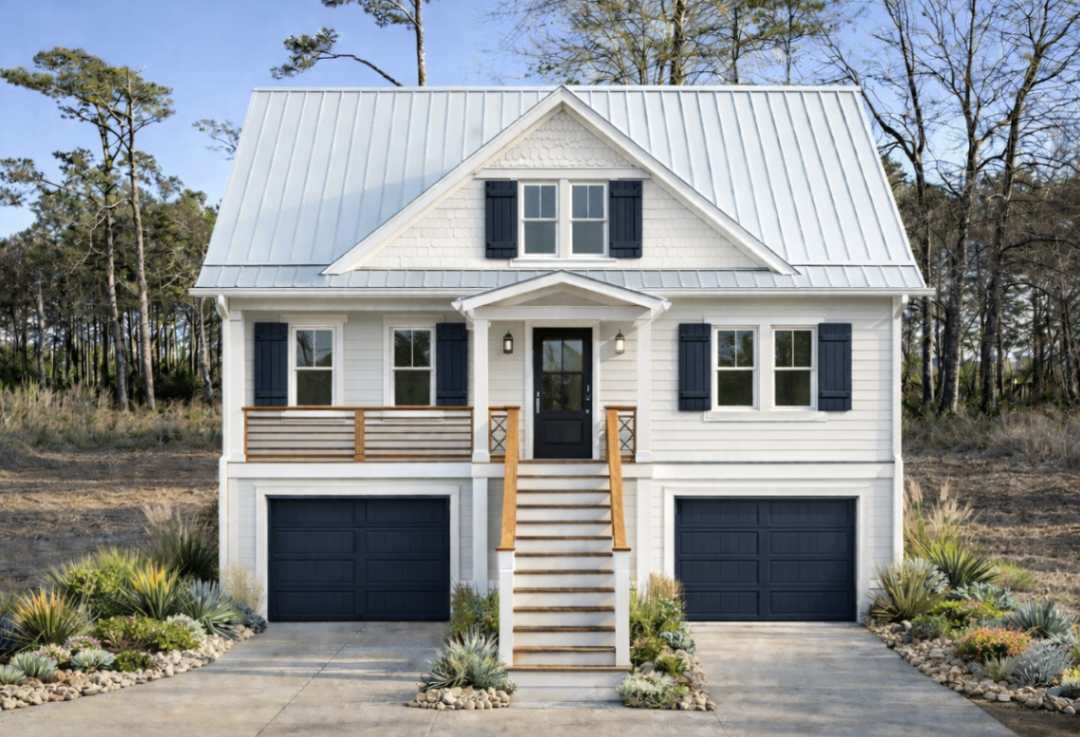
Color palettes: Crisp whites. Sandy beiges. Soft greys. Occasionally navy or charcoal for contrast, particularly on shutters, doors, or accent panels.
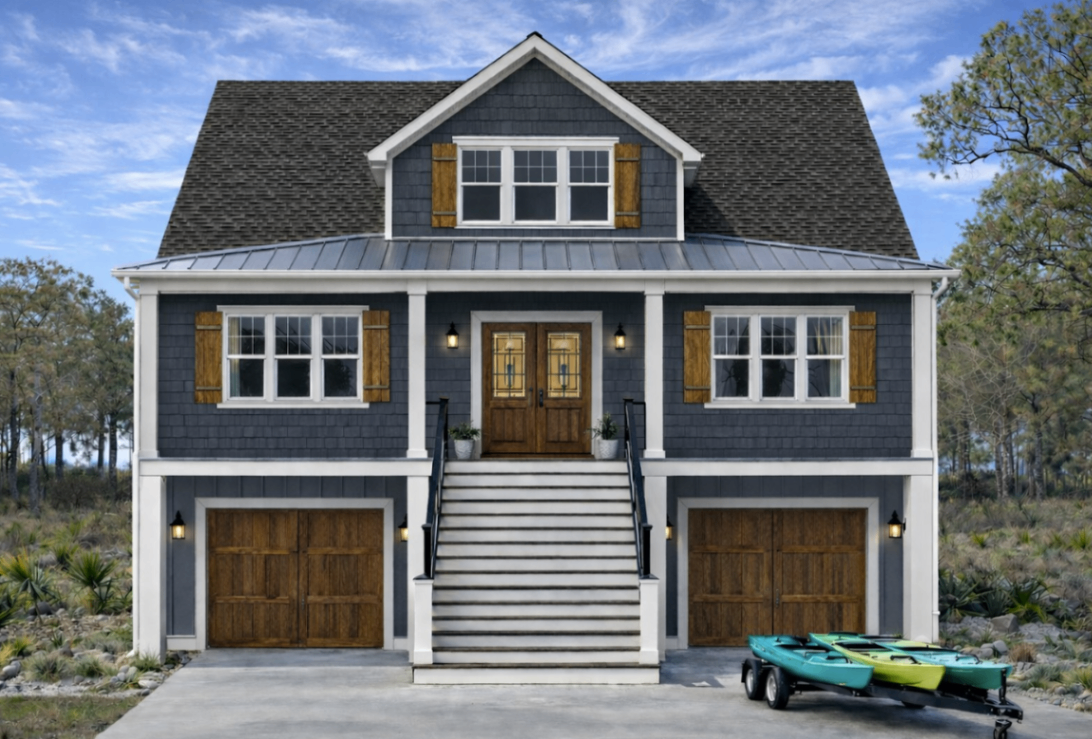
This approach works beautifully for primary residences and high-end vacation properties. Buyers expect contemporary finishes. Renters want Instagram-worthy exteriors. Modern coastal design delivers both.
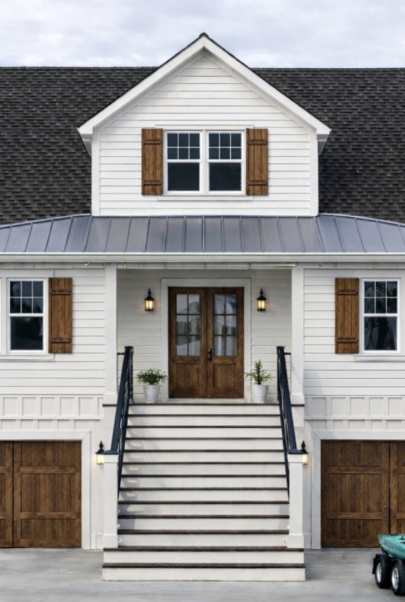
Hamptons-Inspired Classic Coastal
White cladding. Pitched roofs. Wide verandas with decorative trims.
This style combines relaxed elegance with timeless appeal: ideal for family homes, multi-generational properties, and investment homes targeting traditional buyers.
Key elements include plantation shutters, contrasting trim work (usually in darker tones), symmetrical window placement, and board-and-batten accents. The goal: sophisticated without feeling stuffy, coastal without feeling themed.
We see strong demand for this style in Sunset Beach, Ocean Isle, and Holden Beach: communities where buyers value classic architecture with lasting market appeal.
Elevated Coastal Construction
Functionality meets design requirement in Eastern North Carolina.
Elevated foundations aren't optional: they're code in flood zones and smart planning everywhere else. But elevation creates design opportunities: dramatic front staircases, covered parking below living spaces, and enhanced curb presence.
Successful elevated homes incorporate natural wood railings, wide landings, and seamless transitions from ground level to entry. The staircase becomes a focal point, not an afterthought.
Pair elevation with metal roofing, impact-resistant windows, and storm-rated doors: durability features that double as design upgrades.
Commercial Façade Design: First Impressions That Convert
Commercial curb appeal operates under different pressures than residential design.
You need visibility. Brand consistency. ADA compliance. Parking flow. Customer confidence.
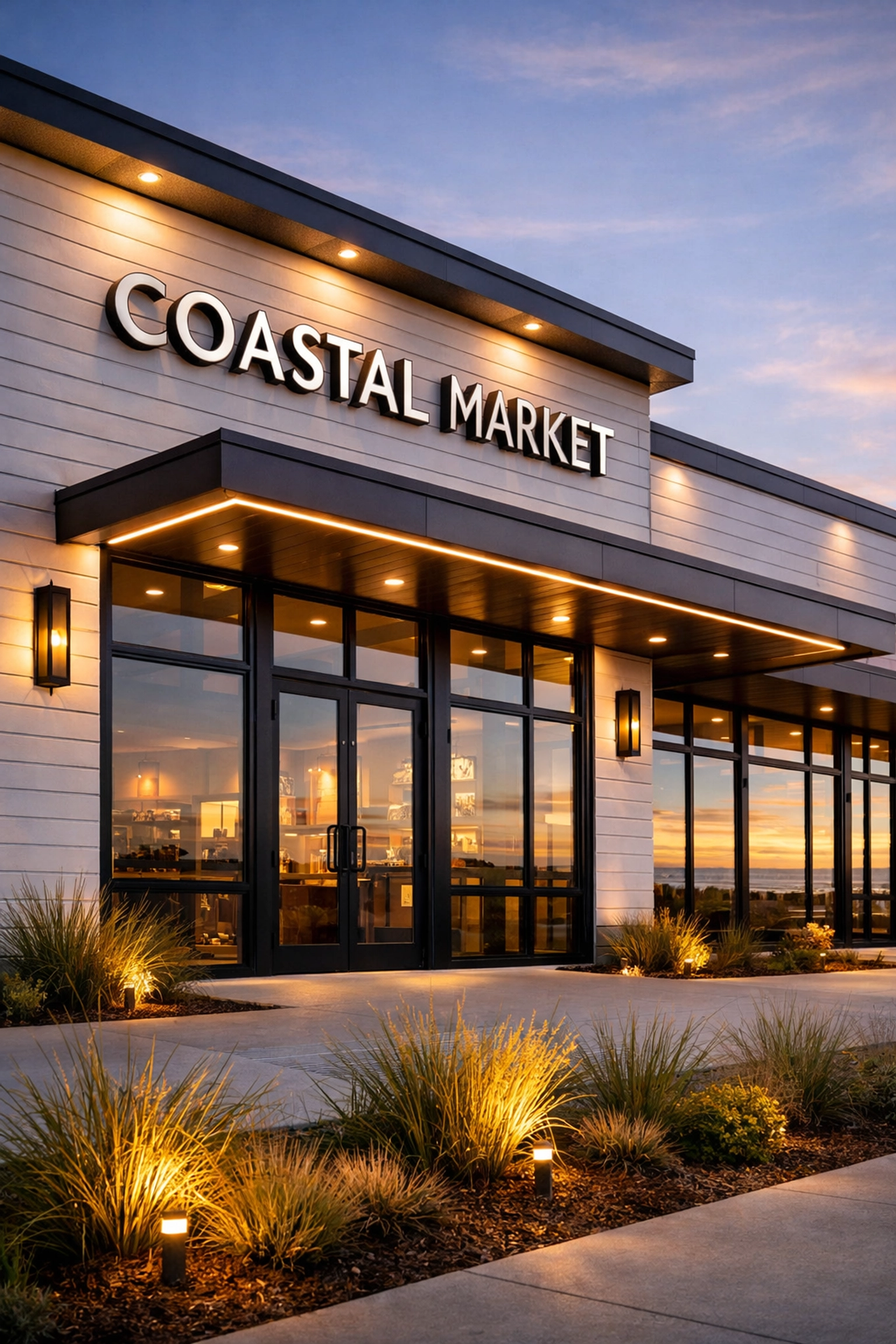
Your façade must communicate professionalism while fitting the coastal context. A law office in downtown Wilmington requires different exterior treatment than a surf shop in Carolina Beach: but both need materials that withstand marine conditions.
Signage That Works in Coastal Light
Coastal sunlight is intense and unforgiving.
Backlit signage, dimensional letters with LED backlighting, and monument signs with weather-resistant finishes perform better than flat vinyl or painted wood. Choose materials rated for marine environments: powder-coated aluminum, marine-grade stainless steel, HDU (high-density urethane) with UV-stable coatings.
Position signage to remain visible during afternoon glare. Test sightlines from multiple approach angles. Ensure illumination meets local ordinances while providing after-dark visibility.
As a general contractor Wilmington NC business owners trust for commercial renovations, we coordinate signage installation with electrical, permitting, and façade finishing: no aftermarket add-ons that compromise building aesthetics.
Commercial Lighting: Safety Meets Sophistication
Proper exterior lighting serves three purposes: security, accessibility, code compliance.
For commercial properties, we recommend:
- Wall-mounted sconces flanking entries: choose corrosion-resistant finishes like powder-coated bronze or marine-grade brass
- Overhead canopy lighting for covered walkways and storefront overhangs: LED panels or recessed cans with sealed housings
- Landscape uplighting on architectural features, signage, or landscaping: low-voltage systems with stainless steel fixtures
- Parking lot illumination meeting minimum footcandle requirements: pole-mounted LEDs with salt-spray ratings
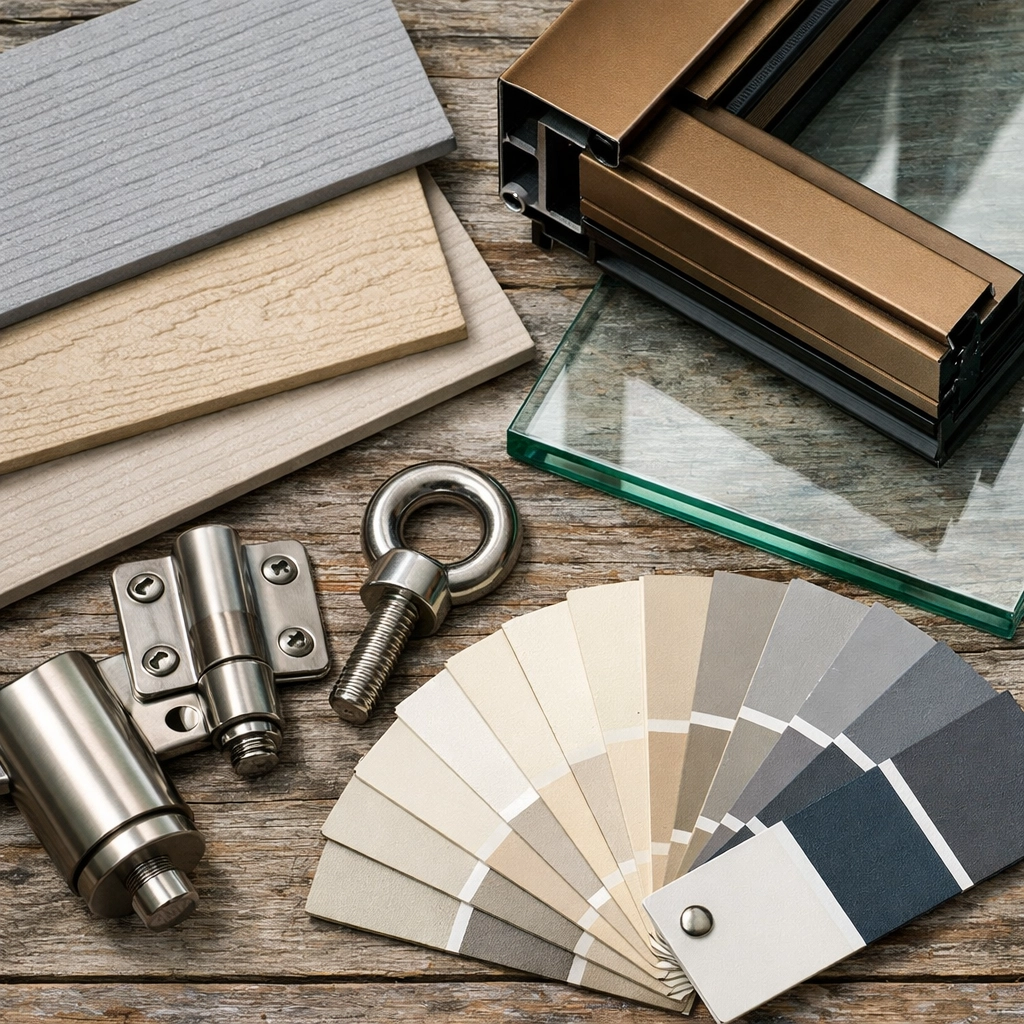
Avoid exposed hardware, unsealed junction boxes, and fixtures without corrosion warranties. Coastal humidity accelerates electrical failure: plan for it.
Material Selection for Commercial Durability
Storefronts and office buildings face constant exposure.
High-traffic entries. Salt-laden wind. UV bombardment that fades paint and degrades sealants.
Fiber cement siding outperforms vinyl and wood in coastal applications: it won't warp, won't rot, and holds paint longer. Metal panel systems in aluminum or galvanized steel provide modern aesthetics with minimal maintenance. Brick and stone veneer adds permanence and thermal mass, though mortar joints require proper sealing against moisture intrusion.
For window and door systems, specify impact-rated aluminum frames with anodized or powder-coated finishes. Avoid raw steel, untreated wood, and economy vinyl: they fail quickly in marine air.
As a commercial renovation contractor focused on coastal North Carolina, we've seen which materials last and which require replacement within five years. Invest upfront in corrosion-resistant systems. You'll recover costs through reduced maintenance and extended lifecycle.
Coastal Finishes That Last
Texture and Color
Smooth finishes show salt residue, pollen, and dirt immediately.
Textured finishes: whether stucco, brushed fiber cement, or wood-look panels: hide minor imperfections and reduce visible weathering. They're practical choices for high-exposure locations.
Color selection impacts heat absorption and fade rates. Light neutrals reflect heat and maintain color longer than dark tones. If you want deep blues, greens, or grays, specify premium exterior paints with UV inhibitors and mildew resistance.
Protective Coatings and Sealants
Bare materials fail faster than sealed systems.
Apply penetrating sealers to brick, concrete, and natural stone. Use marine-grade varnish on wood elements. Refresh caulking and sealants every 3-5 years: joints are the first point of water intrusion.
For metal components, ensure complete powder coating coverage including edges, fastener points, and connection zones. Uncoated spots corrode quickly.
Bringing It Together: Curb Appeal That Builds Value
Effective façade design balances aesthetics, durability, and market positioning.
For residential projects, that means choosing finishes your target buyer expects: whether that's young families seeking modern coastal homes, retirees wanting low-maintenance beach properties, or investors building vacation rentals with strong booking appeal.
For commercial properties, façade design must support business goals: attracting foot traffic, projecting brand identity, and maintaining professional appearance through years of coastal exposure.
We approach every project: custom homes, commercial upfits, investment properties: with the same commitment: materials that perform, design that resonates, craftsmanship that lasts.
Ready to Enhance Your Property's Curb Appeal?
Whether you're planning a custom coastal home, upfitting commercial space, or developing investment properties in Eastern North Carolina, façade design decisions impact long-term value and immediate market perception.
Start with the right foundation: experienced guidance, quality materials, and construction standards that protect your investment.
Complete our Project Questionnaire to discuss your vision, timeline, and specific façade requirements: https://linktr.ee/MillCreekDevelopmentGroup
We'll walk through material options, design considerations, and coastal durability strategies specific to your project goals.
Quality. Integrity. Results.
: AJ, President | Mill Creek Development Group
Leave a Reply