
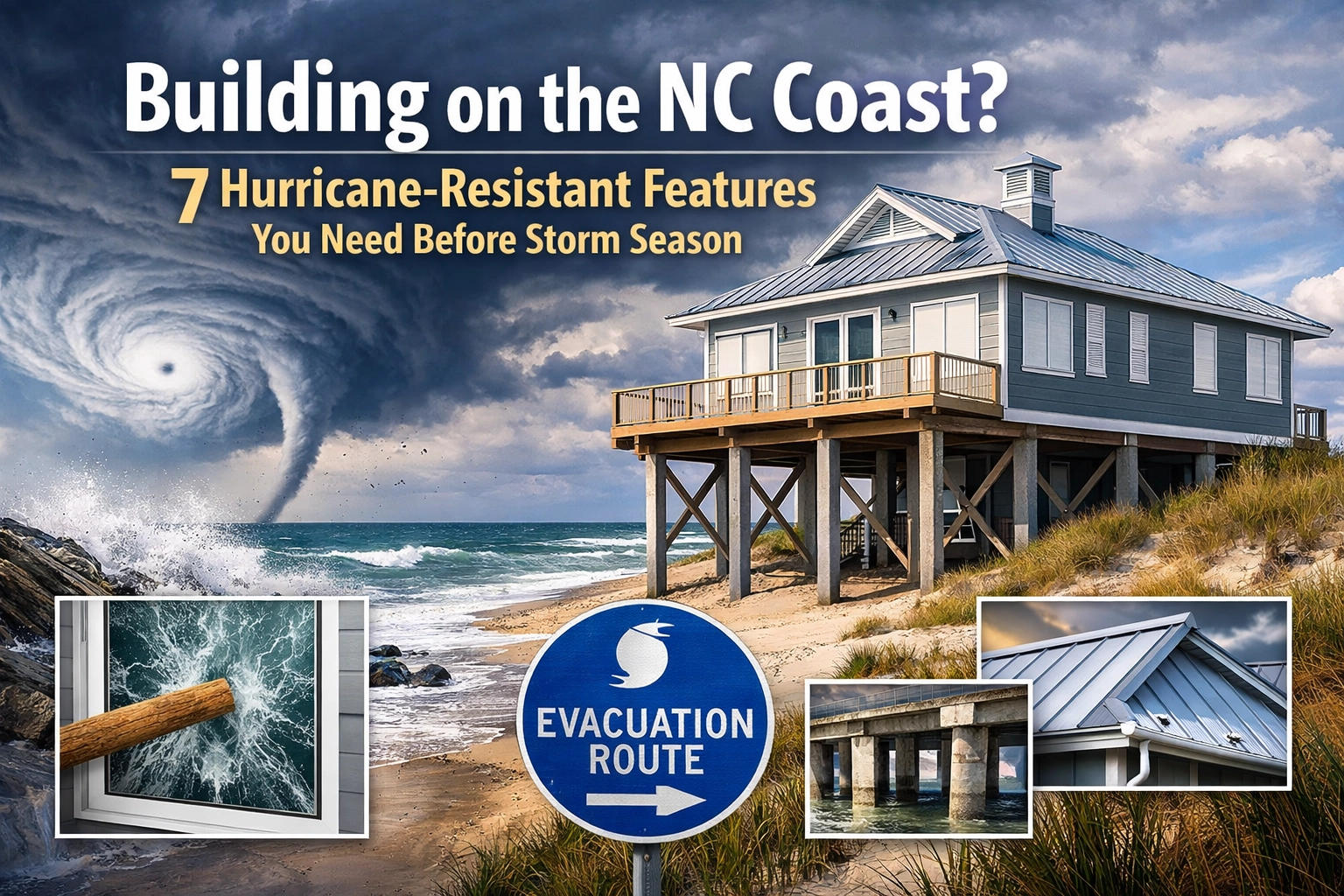
Hurricane-resistant design. Veteran-owned precision. Coastal quality you can trust.
Building a custom home in Wilmington, NC means more than choosing paint colors and floor plans. It means engineering a structure that stands firm when Category 4 winds hit 140 mph and storm surge climbs toward your doorstep.
At Mill Creek Development Group, we approach coastal construction with the same discipline we learned in military service: methodical planning, unwavering standards, and zero shortcuts. Every custom home we build in Brunswick County integrates hurricane resistance from the foundation up. This isn't an add-on feature. This is how we build.
Storm season arrives every June. Your home needs to be ready long before the first forecast models appear.
Why Hurricane-Resistant Features Matter in Coastal NC
The North Carolina coast faces unique structural challenges. Salt air corrodes metal. Flood zones require elevation. Wind codes in Brunswick County mandate designs that withstand 130-150 mph sustained winds.
Most builders check boxes to meet minimum code requirements. We engineer homes that exceed them.
Confidence. Clarity. Consistency. These aren't just words: they're commitments embedded in every construction decision we make. When you partner with a veteran-owned custom home builder in Wilmington, NC, you get a team that understands mission-critical planning and execution.

1. Impact-Rated Windows and Doors
Your windows and doors are your home's most vulnerable points during a hurricane.
Impact-rated systems feature laminated glass bonded to reinforced frames. They're tested to withstand hurricane-force winds and airborne debris traveling at projectile speeds. When a storm hits, these systems prevent breach points that allow wind pressure to enter your home: pressure that can lift roofs and blow out walls.
The benefits extend beyond storm protection. Impact-rated windows reduce insurance premiums, block UV damage to interiors, and provide superior noise insulation from coastal traffic and ocean sounds.
Standard windows require plywood boarding before each storm. Impact-rated systems eliminate that hassle entirely. You evacuate with confidence knowing your home is sealed and protected.
We specify impact-rated systems in every coastal custom home we build: from our Oyster Cove design to commercial tenant improvements along the Wilmington waterfront.
2. Reinforced Roofing Systems with Hurricane Straps
Roof failures cause more catastrophic storm damage than any other structural vulnerability.
Modern hurricane-resistant roofing combines two critical elements: premium wind-rated materials and engineered connection systems. Metal roofing or specially rated architectural shingles form the first line of defense. Hurricane clips and straps create the second: anchoring your roof structure directly to your home's frame.
This connection distributes uplift forces during high winds. Without proper anchoring, roofs separate from walls at wind speeds far below hurricane thresholds.
We don't trust conventional toe-nailing methods. Every roof we engineer uses metal connectors rated for coastal wind loads. The installation is more labor-intensive. The cost is moderately higher. The performance during a major hurricane is incomparably superior.

3. Elevated Foundation Design
Coastal North Carolina building codes require elevated foundations in designated flood zones. This isn't bureaucratic overhead: it's essential flood protection.
Building above base flood elevation (BFE) delivers three critical advantages:
Reduced flood insurance costs. Policies for elevated homes cost significantly less than ground-level construction in the same zone.
Storm surge protection. During Hurricane Florence, properly elevated homes in Wilmington and Leland emerged from 6-8 feet of flooding with minimal damage. Ground-level homes in identical areas suffered catastrophic losses.
Structural integrity. Elevated design prevents foundation saturation and soil erosion that compromise structural stability.
We engineer elevation requirements into every coastal custom home from initial concept through final inspection. Our Stillwater and Shoal Sound plans incorporate elevated designs that integrate seamlessly with coastal architectural aesthetics: no awkward staircases or disproportionate structures.
4. Engineered Foundation Systems
Your foundation must do more than elevate your home. It must anchor it against catastrophic forces.
Reinforced concrete columns, deep pile foundations, or pier and beam construction create the unshakeable base required for coastal exposure. These systems resist both uplift from extreme winds and lateral forces from storm surge and flooding.
In areas like Brunswick County and Leland, where soil conditions vary and flood zones intersect with residential development, proper foundation engineering is non-negotiable.
We partner with structural engineers who specialize in coastal construction. Every foundation design receives third-party review and meets or exceeds local building codes. This adds time to the planning phase. It eliminates foundation failures that plague homes built without proper engineering oversight.
Veteran discipline means we don't skip steps. Foundation engineering happens before we order materials or schedule excavation.

5. Premium Hurricane-Resistant Building Materials
Material selection determines long-term performance in harsh coastal environments.
Reinforced concrete, steel framing components, and pressure-treated lumber resist corrosion from salt air and moisture. Steel framing offers superior hurricane resistance compared to traditional wood framing: steel doesn't rot, warp, or weaken over time.
We specify marine-grade fasteners, corrosion-resistant flashing, and weather-resistant barriers designed for coastal applications. These materials cost more upfront. They deliver decades of reliable performance without premature deterioration.
Quality isn't an abstract concept at Mill Creek Development Group. It's a material-by-material commitment to building homes that last.
6. Engineered Drainage and Stormwater Management
Effective water management protects both your roof and foundation during and after storm events.
Gutters and downspouts must be properly sized, securely fastened, and strategically positioned to handle intense rainfall rates: coastal storms can dump 3-4 inches of rain per hour. Undersized gutters overflow. Poorly attached systems separate from fascia boards during high winds.
We design gutter systems that direct water away from foundation perimeters. In flood-prone areas, we integrate French drains or graded swales to channel surface runoff away from structures.
Proper drainage prevents standing water that saturates soils and compromises foundation stability. It's unglamorous infrastructure that becomes critically important when 15 inches of rain falls in 24 hours.

7. Wind-Resistant Landscaping Design
Your landscaping either protects your home during storms or becomes airborne debris that damages it.
Wind-resistant landscaping emphasizes deep-rooted native species adapted to coastal conditions. These plants flex in high winds rather than snapping. They require less irrigation and tolerate salt spray.
Loose materials like gravel, decorative rocks, and lightweight mulch become projectiles during hurricanes. We recommend secured groundcover or heavier mulch options that stay in place during storms.
Tree placement matters. Tall, brittle species located too close to structures pose significant damage risks. Proper spacing, species selection, and regular trimming reduce these hazards without sacrificing aesthetic appeal.
Building with Confidence in Coastal NC
Hurricane-resistant construction requires expertise, discipline, and unwavering commitment to quality standards.
At Mill Creek Development Group, we bring veteran-owned precision to every custom home we build in Wilmington, Brunswick County, and Leland. We specialize in coastal construction because we understand the engineering challenges and building code requirements unique to this region.
Confidence. Clarity. Consistency. You deserve a builder who communicates clearly, delivers consistently, and stands behind every commitment. Storm season arrives every year. Your home should be ready: engineered, elevated, and built to coastal standards that exceed minimum requirements.
If you're planning a custom home in coastal North Carolina, let's talk before storm season. We'll walk through your site, discuss hurricane-resistant features specific to your location, and create a construction plan built on veteran discipline and coastal expertise.
Visit Mill Creek Development Group to explore our custom home plans and schedule a consultation.
Your coastal dream deserves a foundation built to last.
Leave a Reply