
The snow falls. The temperature plummets. The power flickers: then goes dark.
When a coastal freeze hits eastern North Carolina, preparation time ends. Survival mode begins. Winds howl at 40 to 70 mph. Ice coats every surface. Your home becomes your fortress: but only if you know how to protect it and the people inside.
This is your mid-storm survival guide. What to do when you're in the thick of it. How to stay safe when the mercury drops and the lights go out. When to call for help. And how Mill Creek Development Group builds homes that stand strong when nature tests every nail and beam.
Power Outages: Managing the Dark Hours
Generators save lives: but only when used correctly.
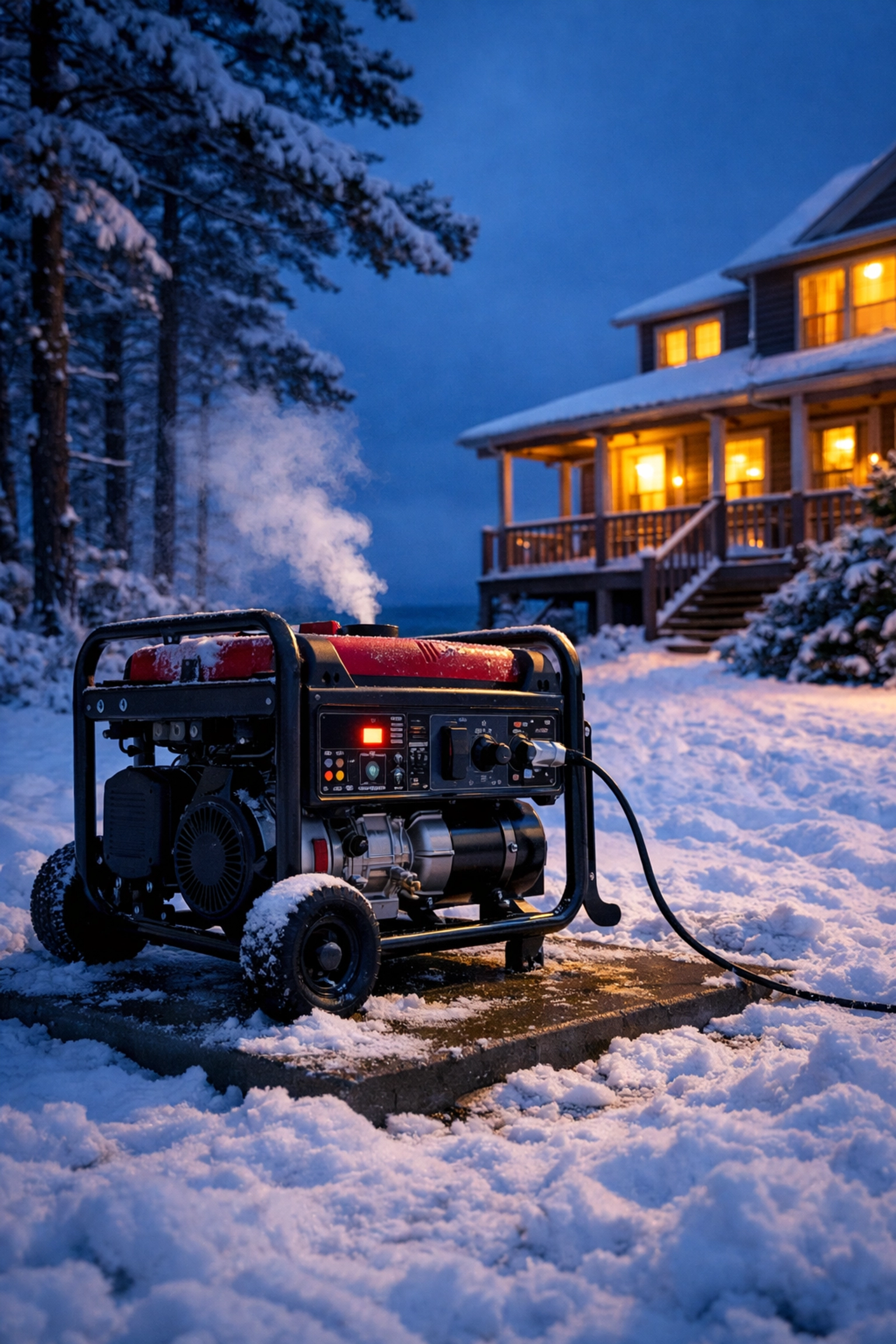
Never run a generator indoors. Not in your garage. Not in your basement. Not even near an open window. Carbon monoxide is silent. Odorless. Deadly. Position your generator at least 20 feet from any opening to your home. Point the exhaust away from structures.
Fuel your generator outdoors. Gasoline vapors ignite easily, especially in enclosed spaces. Store extra fuel in approved containers, away from living areas.
Prioritize your electrical loads. Your generator cannot power everything. Choose essentials: refrigerator, one heating source, minimal lighting, phone chargers. Rotate usage if capacity is limited. Overloading a generator damages the unit and creates fire risk.
Keep your refrigerator and freezer closed. A full freezer maintains safe temperatures for 48 hours if unopened. A half-full freezer: 24 hours. Your refrigerator holds temperature for about four hours. Every time you open the door, you reduce that window.
Charge devices during brief power restoration. Coastal storms bring intermittent outages. When power returns: even for minutes: charge phones, tablets, battery packs. Communication is critical during extended emergencies.
Use flashlights and LED lanterns. Avoid candles whenever possible. Open flames and heating equipment create fire hazards, especially when homes are sealed tight against the cold.
Staying Warm Without Risking Your Life
Desperation drives dangerous decisions. Never use your oven or stovetop for heat. Gas ranges produce carbon monoxide. Electric ovens were not designed to heat spaces: they create fire hazards and trip breakers when your electrical system is already stressed.
Never burn charcoal indoors. Not for heat. Not for cooking. Charcoal produces massive amounts of carbon monoxide. Grills belong outside, even in a freeze.
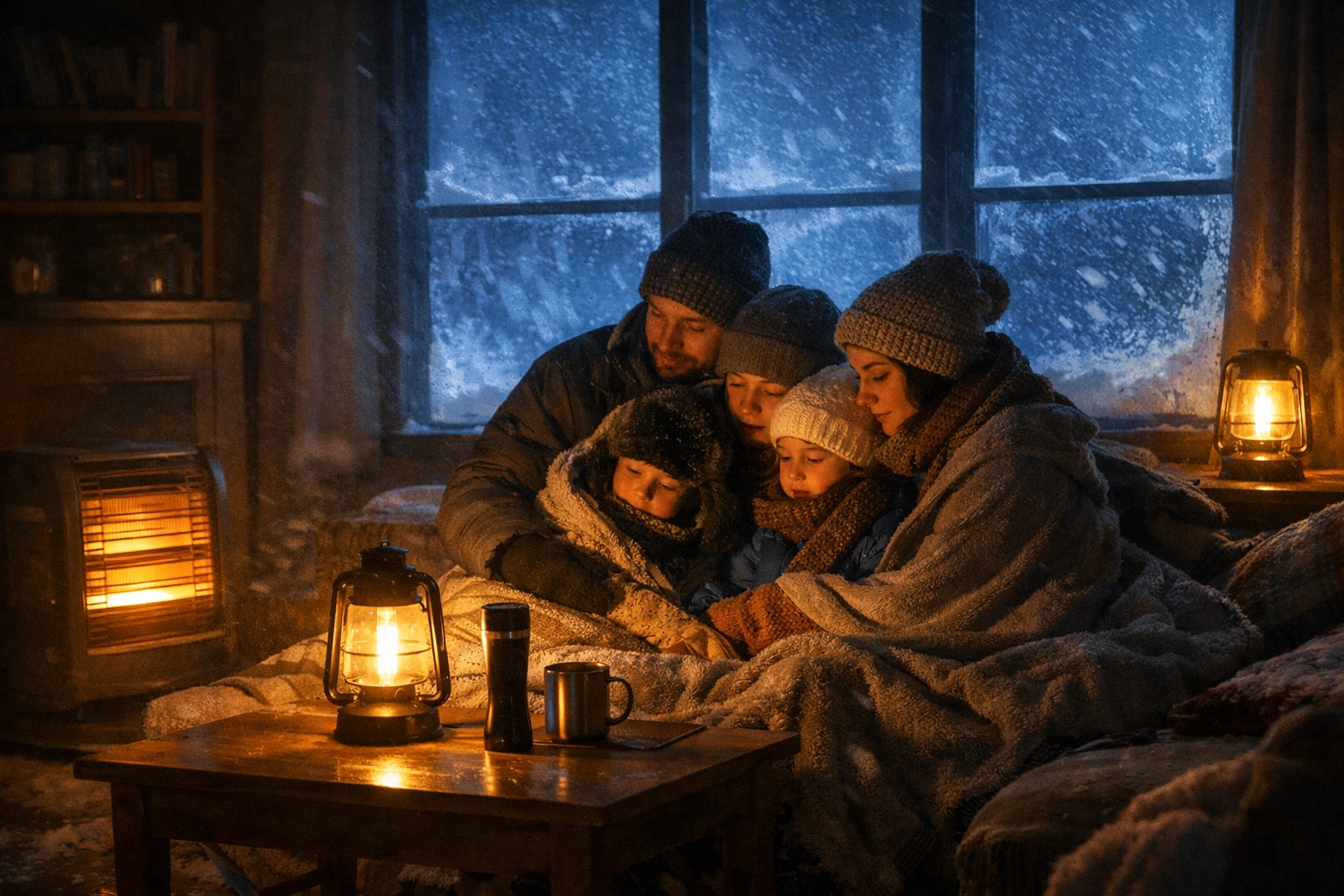
Space heaters require vigilance. Keep them three feet from anything flammable: curtains, furniture, blankets, papers. Never leave them unattended. Plug them directly into wall outlets, not extension cords. Turn them off before sleeping.
Layer your body, not just your home. Thermal underwear. Wool socks. Hats: you lose significant heat through your head. Multiple thin layers trap warmth better than one heavy layer. Keep moving to generate body heat, but avoid sweating, which cools you down when moisture evaporates.
Close off unused rooms. Concentrate your family in one space. Hang blankets over doorways to trap heat. Open cabinet doors under sinks to let warm air circulate around pipes.
If temperatures inside drop dangerously low, seek shelter elsewhere. Community warming centers open during severe weather. Your safety matters more than your property.
Protecting Pipes During the Freeze
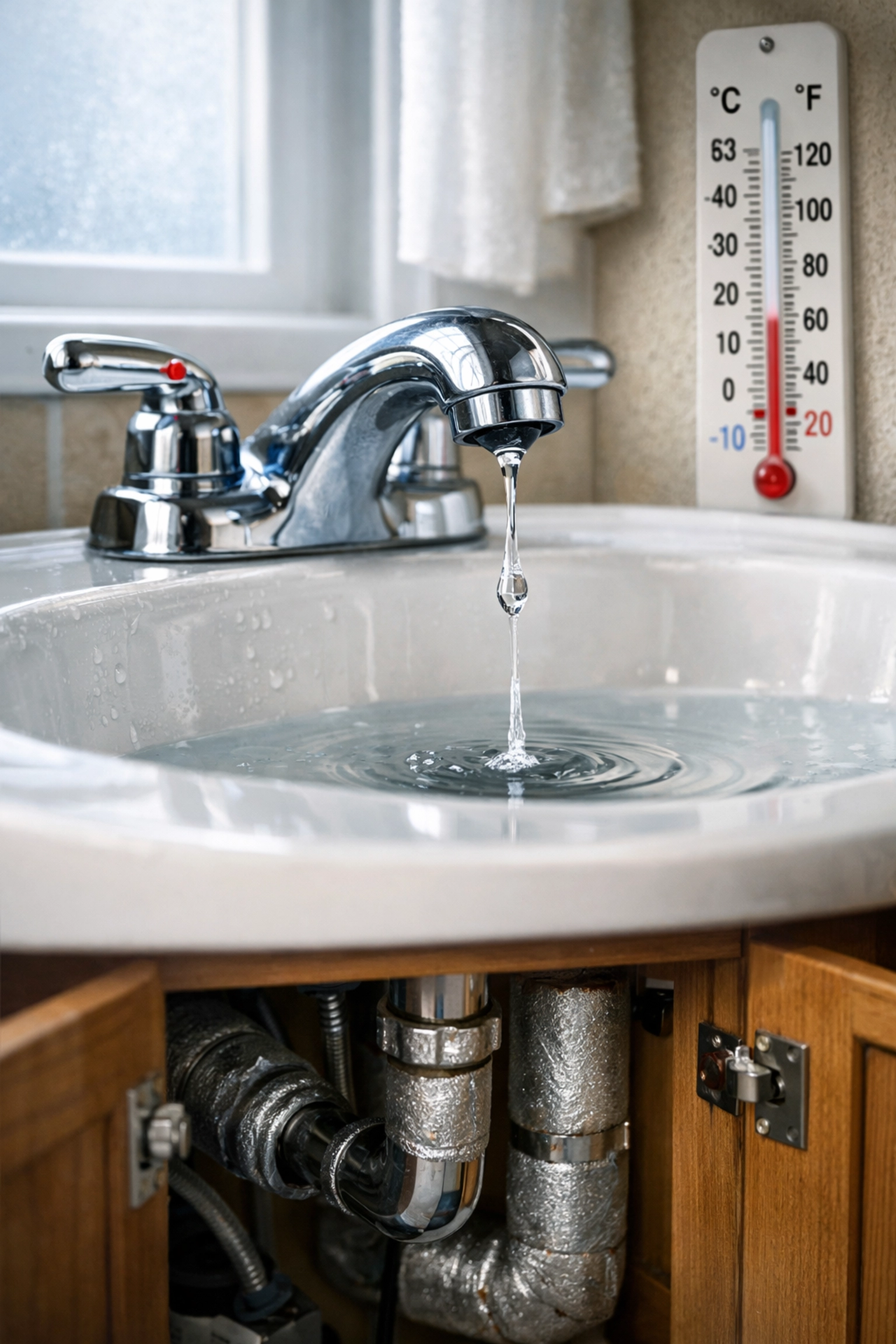
You dripped your faucets before the storm hit. Now maintain that flow: even a trickle prevents freezing in vulnerable lines.
Monitor your water pressure. Sudden drops signal ice blockages forming in pipes. Reduced flow from one fixture while others run normally indicates a localized freeze.
Keep cabinet doors open under sinks, especially on exterior walls. Warm air circulation prevents freezing in exposed plumbing.
If pipes freeze, never use open flames to thaw them. Blowtorches, propane heaters, and similar tools damage pipes and create fire risks. Use a hair dryer on low heat, working from the faucet back toward the frozen section. Wrap frozen areas with towels soaked in hot water. Apply heating pads if available.
Know your main water shutoff location. When pipes burst: and thawing often reveals cracks you didn't know existed: every second counts. Shutting off water immediately limits damage.
Listen for running water when no taps are open. Check ceilings and walls for water stains. Inspect basements and crawl spaces for pooling water. These signs demand immediate action.
Post-Storm Assessment: What to Check When It's Over
The storm passes. Temperatures climb. Your home survived: but did your systems?
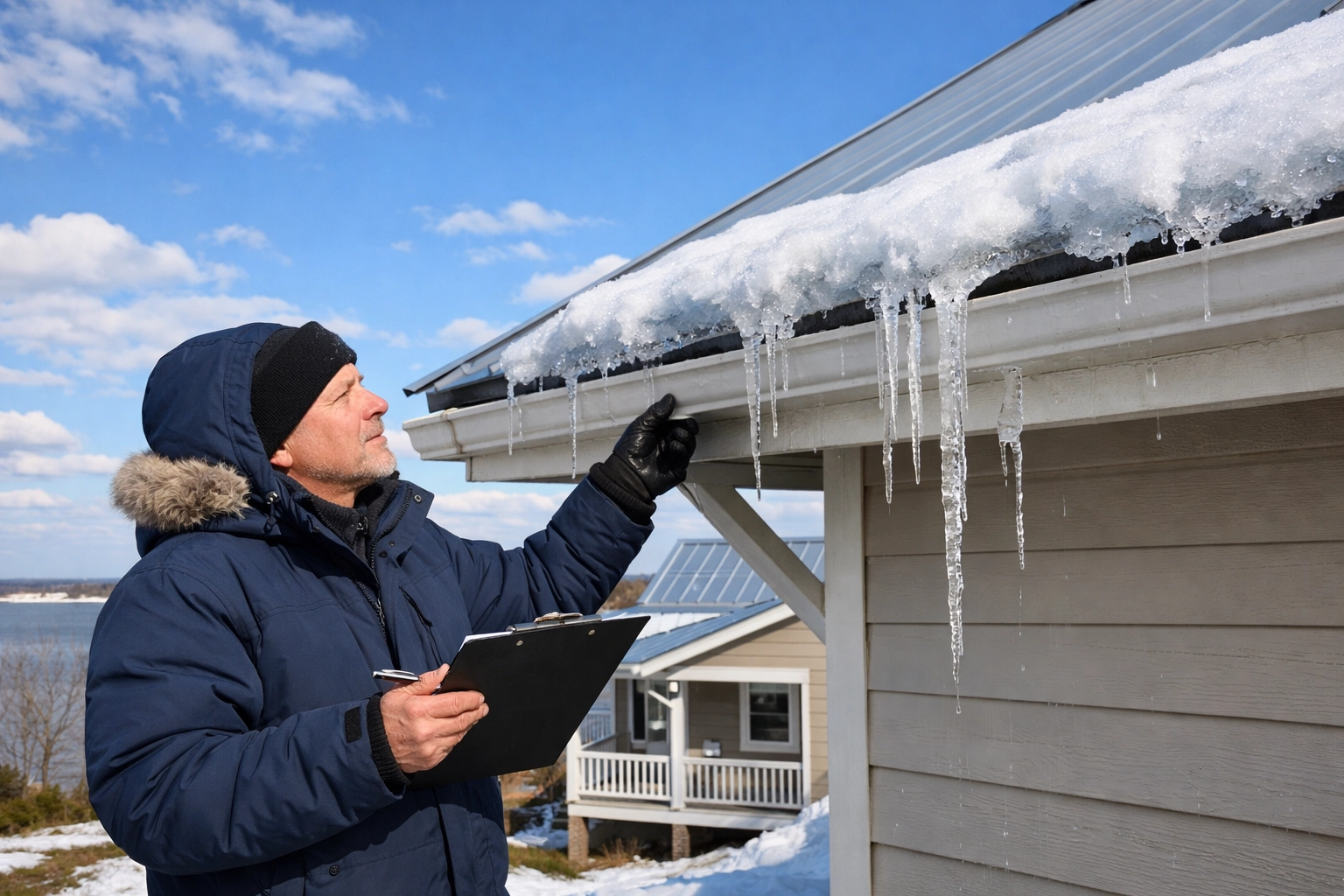
Inspect your property methodically. Start outside. Check your roof for ice dams, damaged shingles, or sagging areas that suggest water infiltration. Examine gutters and downspouts for ice blockages that prevent drainage.
Look for tree damage. Broken limbs resting on your roof or power lines require professional removal. Do not attempt this yourself: especially near electrical lines.
As pipes thaw, leaks emerge. Monitor ceilings, walls, floors for water intrusion. Check crawl spaces and attics. Small leaks become major problems quickly. Frozen pipes expand: when ice melts, cracks appear.
Test your plumbing system. Run water at every fixture. Flush toilets. Listen for unusual sounds: hissing, gurgling, or rushing water where it shouldn't be. Check water heater connections and supply lines.
Inspect your HVAC system before restarting. Ice and wind damage outdoor units. Debris clogs intakes. Frozen condensate lines prevent proper operation. A professional inspection prevents expensive damage from operating compromised equipment.
Document everything. Photograph damage immediately. Keep receipts for emergency repairs. Your insurance claim depends on thorough documentation.
When to Call a Professional
Some situations demand expert intervention. Do not wait when you observe:
Active water leaks. Small drips escalate into floods. Ceiling stains indicate hidden damage. Wall bulges suggest water accumulation behind surfaces.
No water at multiple fixtures. A frozen or burst main line requires immediate professional assessment. This exceeds DIY capability.
Electrical issues post-storm. Burning smells. Sparks. Outlets or switches that feel hot. Breakers that trip repeatedly. These signals mean danger: call a licensed electrician immediately.
Structural concerns. Sagging ceilings. Cracked walls. Doors that won't close properly. Foundation cracks. These indicate serious damage requiring professional evaluation.
Extensive mold growth. Water damage creates mold within 24 to 48 hours. Professional remediation prevents health hazards and structural deterioration.
A general contractor Wilmington NC trusts provides rapid response during disasters. Experience matters when your home's integrity hangs in the balance.
How Mill Creek Builds Storm-Ready Homes
We build homes that handle extremes. Disaster relief and recovery services help when storms damage existing structures: but prevention starts at the foundation.
Proper insulation is non-negotiable. Our homes feature comprehensive insulation in walls, attics, and crawl spaces. Spray foam insulation in critical areas prevents the air infiltration that leads to frozen pipes and ice dams. Quality insulation maintains interior temperatures when power fails.
Generator pre-wiring eliminates emergency improvisation. Our designs include dedicated circuits and transfer switches that make generator connection safe and immediate. When storms approach, homeowners simply plug in: no extension cords running through windows, no overloaded circuits, no guesswork.
Strategic plumbing placement protects vulnerable lines. We route water supply lines through conditioned spaces whenever possible. Exterior wall plumbing receives extra insulation and protection. Hose bibs include interior shutoffs and drain valves for complete winterization.
Wind-resistant construction withstands coastal extremes. Hurricane straps. Reinforced connections. Impact-resistant materials. Metal roofing that sheds ice and resists wind uplift. These features protect your investment when coastal storms test every connection.
Elevated foundations and proper drainage prevent water intrusion. Coastal flooding accompanies winter storms in eastern North Carolina. Our designs account for storm surge, standing water, and saturated ground conditions that compromise inferior construction.
When disaster strikes existing homes, Mill Creek Development Group responds. Our disaster relief and recovery services include emergency repairs, water damage mitigation, structural assessment, and complete restoration. We understand coastal construction. We know what fails and why. We rebuild stronger than before.
Building Resilience Into Every Home
Quality. Durability. Preparedness.
These principles guide every Mill Creek project. We build homes that shelter families during the worst weather coastal North Carolina delivers. Generator-ready electrical systems. Insulation that maintains warmth when power fails. Plumbing protected from freeze damage. Structures engineered to withstand wind and water.
Storm preparation matters: but storm-ready construction matters more. The homes we build incorporate decades of coastal experience. Every material choice. Every system design. Every construction detail reflects our commitment to resilience.
When you build with Mill Creek Development Group, you invest in peace of mind. Your home becomes your safe harbor: engineered, constructed, and equipped to protect your family when nature demands it.
We Stand Ready
Storms pass. Temperatures rise. Life returns to normal.
But the next storm is coming. The next freeze. The next test of your home's integrity.
Mill Creek Development Group builds homes that endure. We repair homes that need recovery. We serve Wilmington NC and the surrounding coastal communities with expertise earned through years of building and rebuilding after nature's worst.
Your home should protect you: in every season, through every storm. We make that possible.
Contact Mill Creek Development Group for disaster recovery services or to discuss building a home engineered for coastal resilience. Experience matters when storms test every beam and board. We build homes that stand strong.
Visit us at millcreekdev.com or call to discuss your project. When quality and durability matter most: when your family's safety depends on superior construction( Mill Creek delivers.)
Leave a Reply