
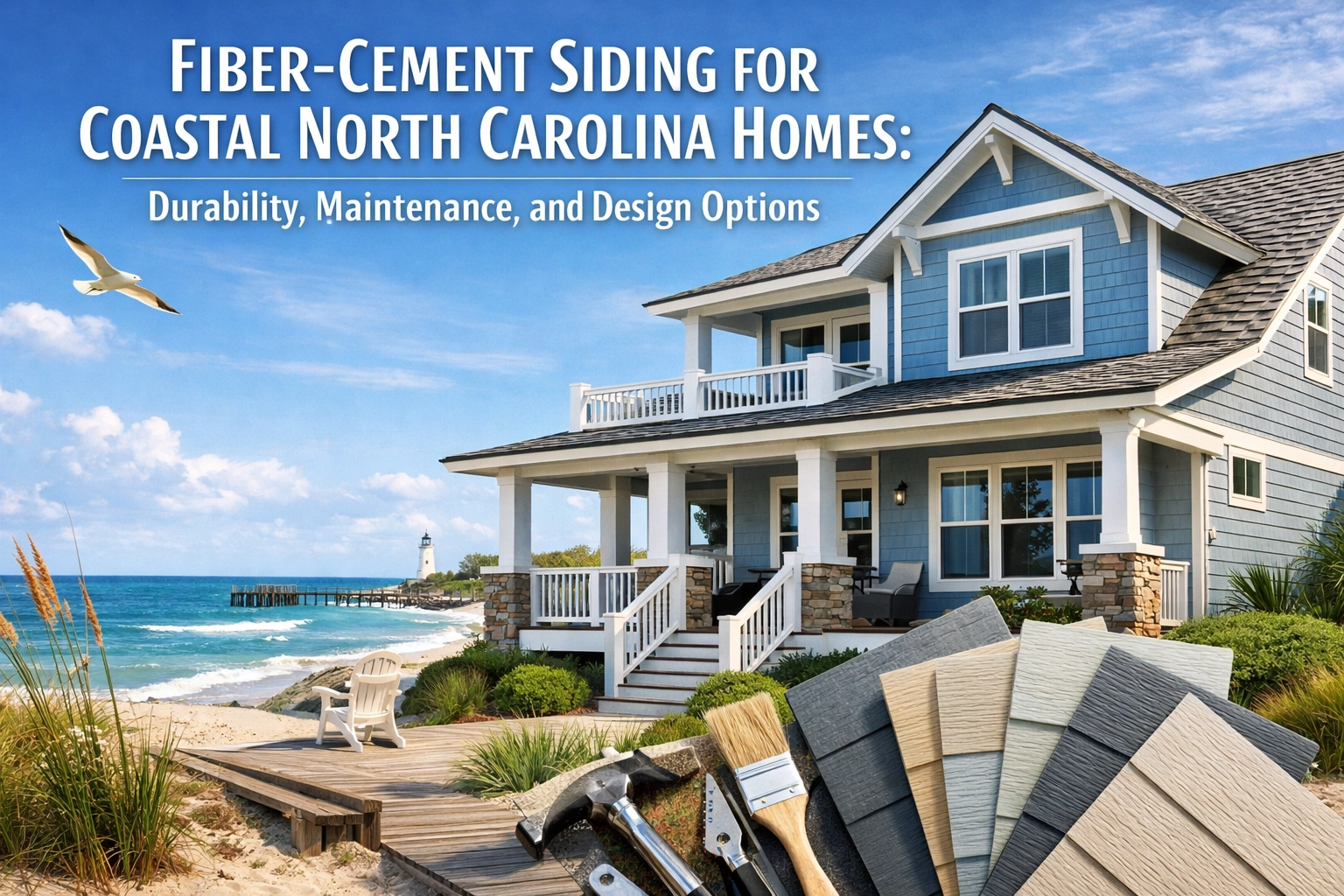
Built to Last. Designed for Coastal Conditions. Proven Performance.
When you build a custom home in coastal North Carolina: from Wilmington to Leland, Surf City to Calabash: you face conditions most builders never encounter. Salt air. Hurricane-force winds. Year-round humidity. Unpredictable storms that test every material choice you make.
Fiber-cement siding is engineered specifically for these challenges. It resists moisture, wind, fire, and pests while delivering the aesthetic versatility coastal homeowners demand. At Mill Creek Development Group, we build with materials that honor the discipline and consistency our veteran-owned team brings to every project: and fiber-cement siding delivers on that commitment.
Why Fiber-Cement Performs in Coastal North Carolina
Fiber-cement siding is composed of Portland cement, sand, cellulose fibers, and water. This combination creates a material that outperforms traditional wood, vinyl, and even some composite options in coastal environments.
The numbers speak clearly. Fiber-cement siding lasts 50 to 100 years with proper installation and maintenance. Compare that to vinyl siding, which typically needs replacement every 20 to 40 years, or wood siding that demands constant upkeep to prevent rot and decay.
But longevity is only part of the story.
Fiber-cement is classified by FEMA as a flood-resistant material. That designation matters in Pender County, Brunswick County, and other coastal zones where flood risk shapes every building decision. When storm surge threatens your investment, you need materials that can withstand prolonged water exposure without compromising structural integrity.
Salt air resistance. The coastal atmosphere in Hampstead, Holly Ridge, and Topsail Beach corrodes metal fasteners, degrades paint finishes, and accelerates material breakdown. Fiber-cement resists this corrosive environment. It does not rust. It does not warp. It maintains dimensional stability even when exposed to constant moisture and salt spray.
Pest resistance. Termites and carpenter ants destroy billions of dollars in property annually across North Carolina. Fiber-cement contains no organic material that attracts wood-destroying insects. You eliminate one of the most costly maintenance risks coastal homeowners face.
Fire resistance. Fiber-cement siding is non-combustible. It will not ignite. It will not contribute fuel to a fire. In wildfire-prone areas or neighborhoods with high-density construction, this fire rating provides protection that wood and vinyl cannot match.
Hurricane Resilience and Storm Performance
Coastal North Carolina homeowners understand storm preparation. Every hurricane season brings the same question: Will your home withstand the next major storm?
Fiber-cement siding is designed with wind resistance in mind. The material is heavier and denser than vinyl or wood alternatives. Proper installation: using corrosion-resistant fasteners and secure attachment methods: keeps the siding in place during high winds. Unlike vinyl panels that can crack, pull loose, or disappear entirely during hurricanes, fiber-cement boards remain fastened to the structure.
No material guarantees hurricane-proof performance. But fiber-cement's track record in coastal communities demonstrates superior resilience. Homes built with fiber-cement siding consistently show less damage after major storms compared to homes with vinyl or untreated wood siding.
Impact resistance matters. Windborne debris: tree branches, roof shingles, construction materials: becomes projectiles during severe weather. Fiber-cement's density and composition allow it to absorb impacts that would shatter or puncture lighter materials.
At Mill Creek Development Group, we approach storm resilience with the same discipline we learned in military service. We do not cut corners. We do not use substandard installation methods. We build homes that protect families and investments when conditions turn severe.
Moisture Management and Installation Considerations
Fiber-cement is moisture-resistant, but it is not waterproof. This distinction is critical for coastal homeowners and builders.
Proper installation determines performance. When fiber-cement siding is installed incorrectly, moisture can wick up from the foundation or penetrate behind the boards through unsealed joints. Over time, this moisture exposure causes the material to become brittle and compromises its structural integrity.
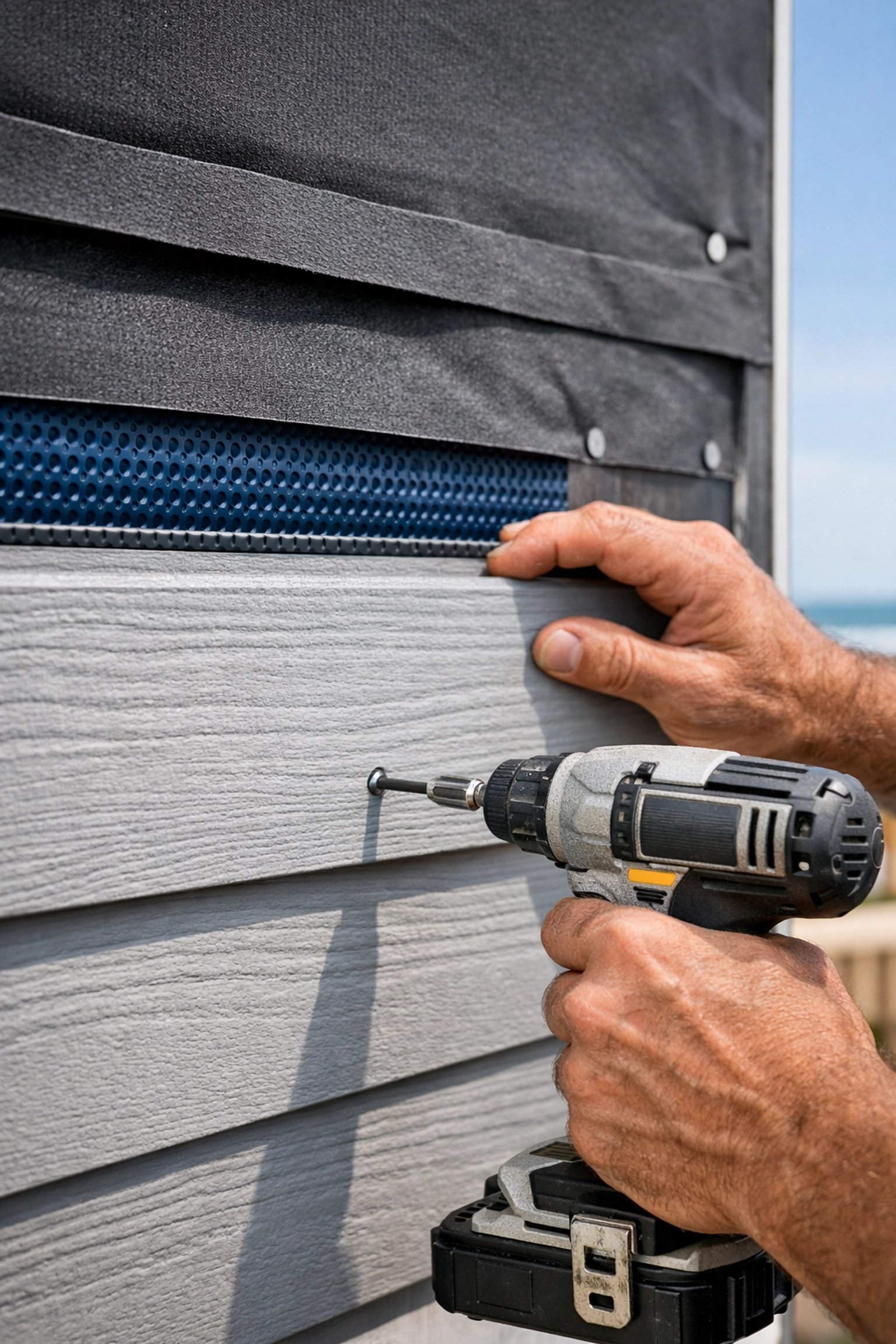
We follow manufacturer specifications precisely. That means maintaining proper clearance between the siding and grade level. It means using the correct fasteners in the correct locations. It means sealing every joint, flashing every window and door opening, and ensuring adequate drainage behind the siding system.
Moisture barriers and drainage planes are non-negotiable. Behind every fiber-cement installation, a properly installed weather-resistant barrier and drainage system protects the structural framing from water intrusion. This layered approach to moisture management is especially critical in coastal North Carolina, where driving rain and high humidity are constant factors.
Caulking and sealant maintenance. Over time, caulking around windows, doors, and board joints can crack or shrink. Regular inspection: every two to three years: allows homeowners to identify gaps before moisture penetrates the envelope. Reapplying high-quality sealant in these areas is a simple maintenance task that prevents costly repairs.
Maintenance Requirements for Coastal Homes
Fiber-cement siding requires less maintenance than wood but more attention than vinyl. The maintenance is straightforward and predictable.
Annual or bi-annual cleaning. Salt spray, pollen, and dirt accumulate on siding surfaces. Washing the siding once or twice per year with a garden hose or pressure washer prevents buildup and maintains appearance. Use low pressure to avoid damaging the finish.
Caulk and sealant inspection. As mentioned, check caulking every few years. Look for shrinkage, cracking, or gaps that allow moisture entry. Reapply as needed using manufacturer-recommended products.
Repainting schedule. The paint finish on fiber-cement siding determines repainting frequency. James Hardie's ColorPlus® Technology provides a factory-applied finish that lasts 15 years or more before requiring repainting. This baked-on finish resists fading, cracking, and peeling far better than field-applied paint.
If you choose unpainted or field-painted fiber-cement, plan to repaint every 7 to 12 years depending on sun exposure, humidity, and the quality of the initial paint application.
Touch-up repairs. Fiber-cement can be repaired and repainted if damaged. Unlike vinyl siding, which becomes difficult to match after years of sun exposure, fiber-cement accepts new paint and integrates seamlessly with existing surfaces.
Paint and Warranty Considerations
Factory-finished fiber-cement offers the best long-term value. Pre-finished products like James Hardie's ColorPlus® system are applied in controlled environments using industrial processes that achieve consistency and durability field-applied paint cannot match.
Warranty protection. Most fiber-cement manufacturers offer robust warranties: 30 years for material defects, 15 years for factory finishes. These warranties provide peace of mind, but they require compliance with installation and maintenance guidelines. Improper installation voids coverage.
Color selection matters for coastal homes. Lighter colors reflect heat and resist fading in the intense coastal sun. Darker colors absorb heat, which can accelerate paint degradation. At Mill Creek Development Group, we guide homeowners through color selection based on orientation, shade coverage, and long-term maintenance goals.
Field-applied paint requires preparation. If you choose unpainted fiber-cement, the quality of the primer and topcoat application directly impacts longevity. We use high-quality acrylic latex paints formulated for exterior use in humid climates. Proper surface preparation: cleaning, priming, and applying multiple coats: is non-negotiable.
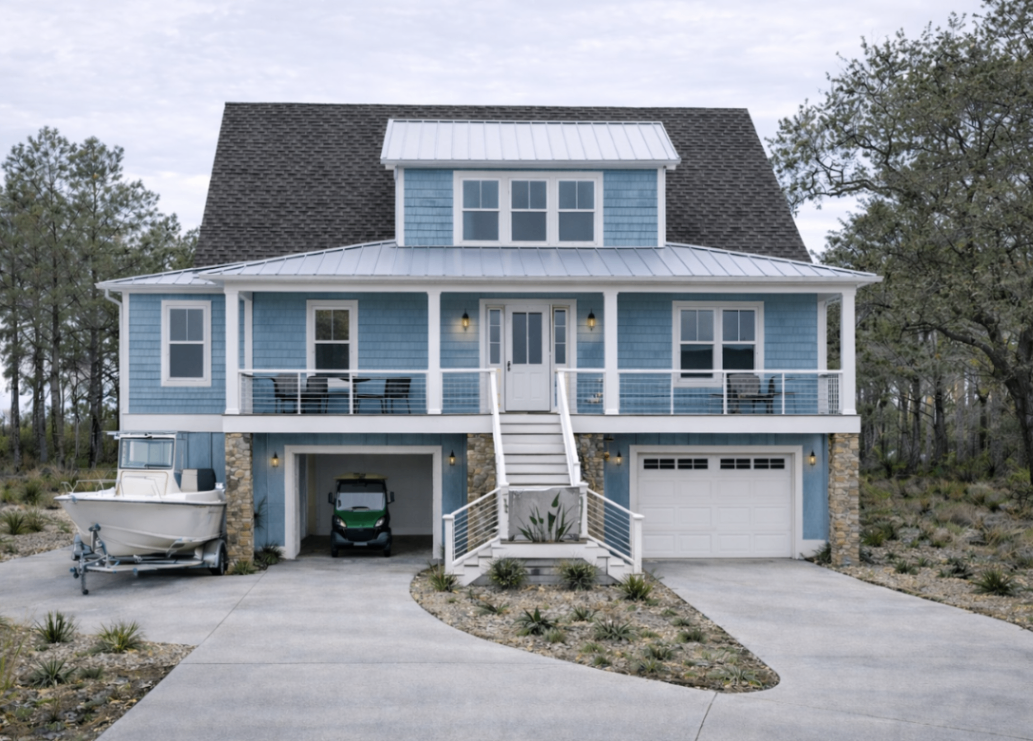
Design Options for Coastal Architecture
Fiber-cement siding adapts to nearly any architectural style. You are not locked into a single aesthetic.
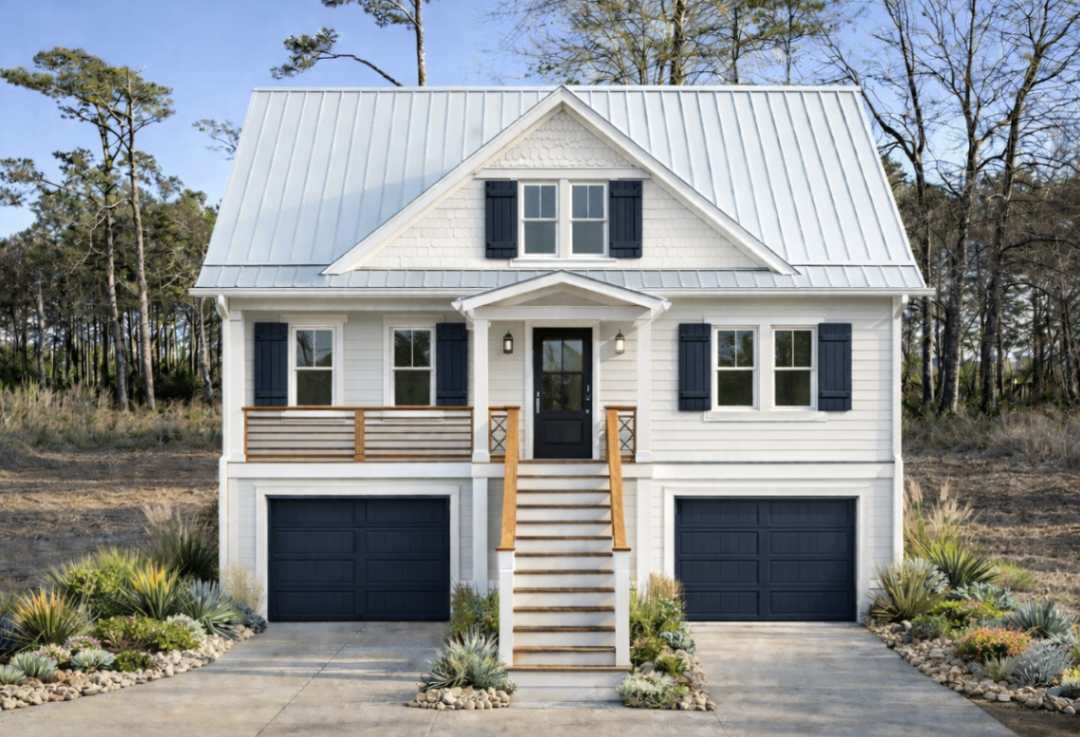
Lap siding mimics traditional horizontal wood siding. This classic coastal look works beautifully on Craftsman, farmhouse, and cottage-style homes throughout Leland and Carolina Beach.
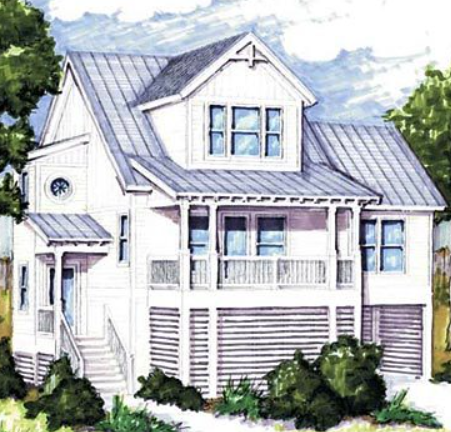
Vertical board-and-batten adds texture and visual interest. This option fits modern coastal designs and complements metal roofing: a combination we use frequently for elevated coastal homes in Topsail and Wrightsville Beach.
Shingle-style panels replicate the look of cedar shakes without the maintenance burden. This option suits Cape Cod and coastal cottage designs common in Southport and Oak Island.
Smooth finish panels provide a clean, contemporary appearance for modern coastal homes. Paired with large windows and minimalist trim, this style appeals to homeowners seeking a fresh take on coastal architecture.
Color versatility. Fiber-cement accepts any paint color. Whether you want classic coastal whites and blues, modern grays and charcoals, or earthy greens and tans, the material accommodates your vision. This flexibility allows you to refresh your home's appearance over time without replacing the siding.
Texture options. Manufacturers offer smooth, wood-grain, and rough-sawn textures. Each provides a different visual effect and tactile quality. We help homeowners select textures that complement their design goals and blend with the surrounding landscape.
How Fiber-Cement Fits the Mill Creek Approach
At Mill Creek Development Group, we build with Confidence, Clarity, and Consistency. Every material choice reflects those values.
Confidence in long-term performance. We do not install products that require replacement in 20 years. We build homes that last generations. Fiber-cement siding aligns with that commitment.
Clarity in cost and maintenance expectations. We walk homeowners through the full lifecycle cost of fiber-cement: upfront investment, maintenance requirements, repainting schedules, and warranty coverage. No surprises. No hidden costs.
Consistency in installation quality. Our veteran-owned team brings military discipline to every job site. We follow manufacturer specifications. We use proper fasteners. We seal every joint. We install drainage systems correctly. That consistency protects your investment and ensures the siding performs as engineered.
We are locally operated and deeply familiar with coastal North Carolina building conditions. We understand salt air corrosion. We know hurricane-force wind loads. We have built through flood zones, elevated foundations, and challenging coastal lots from Calabash to Morehead City. That local knowledge informs every material choice and installation decision we make.
Ready to Build with Materials That Last?
Fiber-cement siding delivers the durability, low maintenance, and design flexibility coastal North Carolina homeowners need. It resists moisture, wind, fire, and pests. It lasts decades. It adapts to your architectural vision.
At Mill Creek Development Group, we build custom homes with materials and methods that honor your investment. Whether you are planning a new build in Wilmington, an upfit in Pender County, or a coastal retreat in Brunswick County, we bring the discipline and expertise your project deserves.
Start with our Project Questionnaire. Walk through your goals, timeline, and vision with our team. We will provide clarity on materials, costs, and the building process: no guesswork, no surprises.
📋 Complete the Project Questionnaire: https://linktr.ee/MillCreekDev
🌐 Explore our process: http://www.millcreekdev.com
📱 Connect with us: @MillCreekDev
Let's build something that lasts.
: AJ, President | Mill Creek Development Group
Leave a Reply