
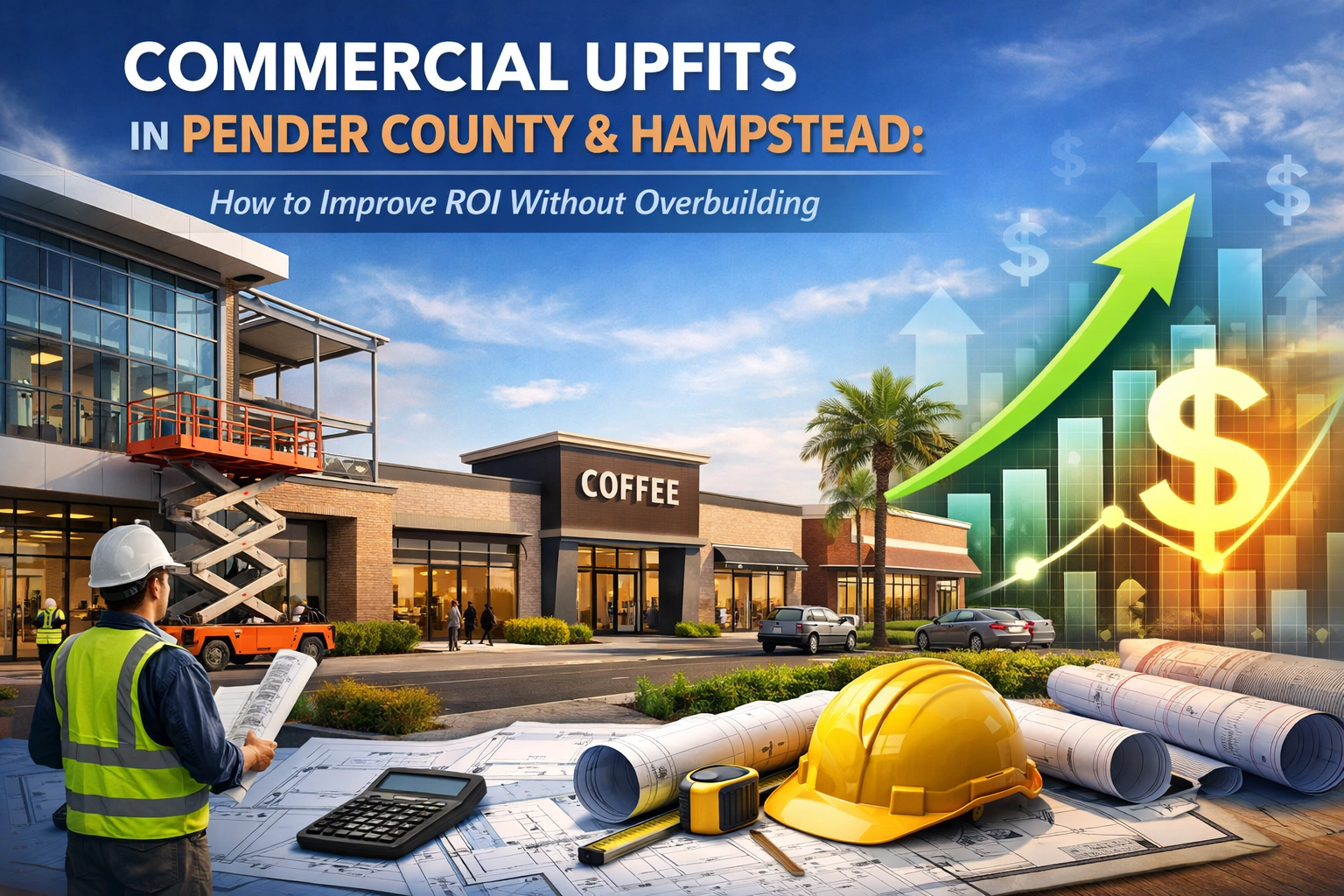
Your commercial space should work as hard as you do. Every square foot. Every dollar invested. Every minute of downtime avoided.
For business owners across Pender County, Hampstead, and Wilmington, the decision to upfit a retail location, office suite, or service business isn't just about aesthetics, it's about return on investment. And too often, we see owners overbuild. They invest in features that sound impressive but don't move the needle on revenue or tenant satisfaction.
At Mill Creek Development Group, we approach commercial upfits the same way we approach every project: with Confidence, Clarity, and Consistency. We help you build what matters, nothing more, nothing less.
What Is a Commercial Upfit?
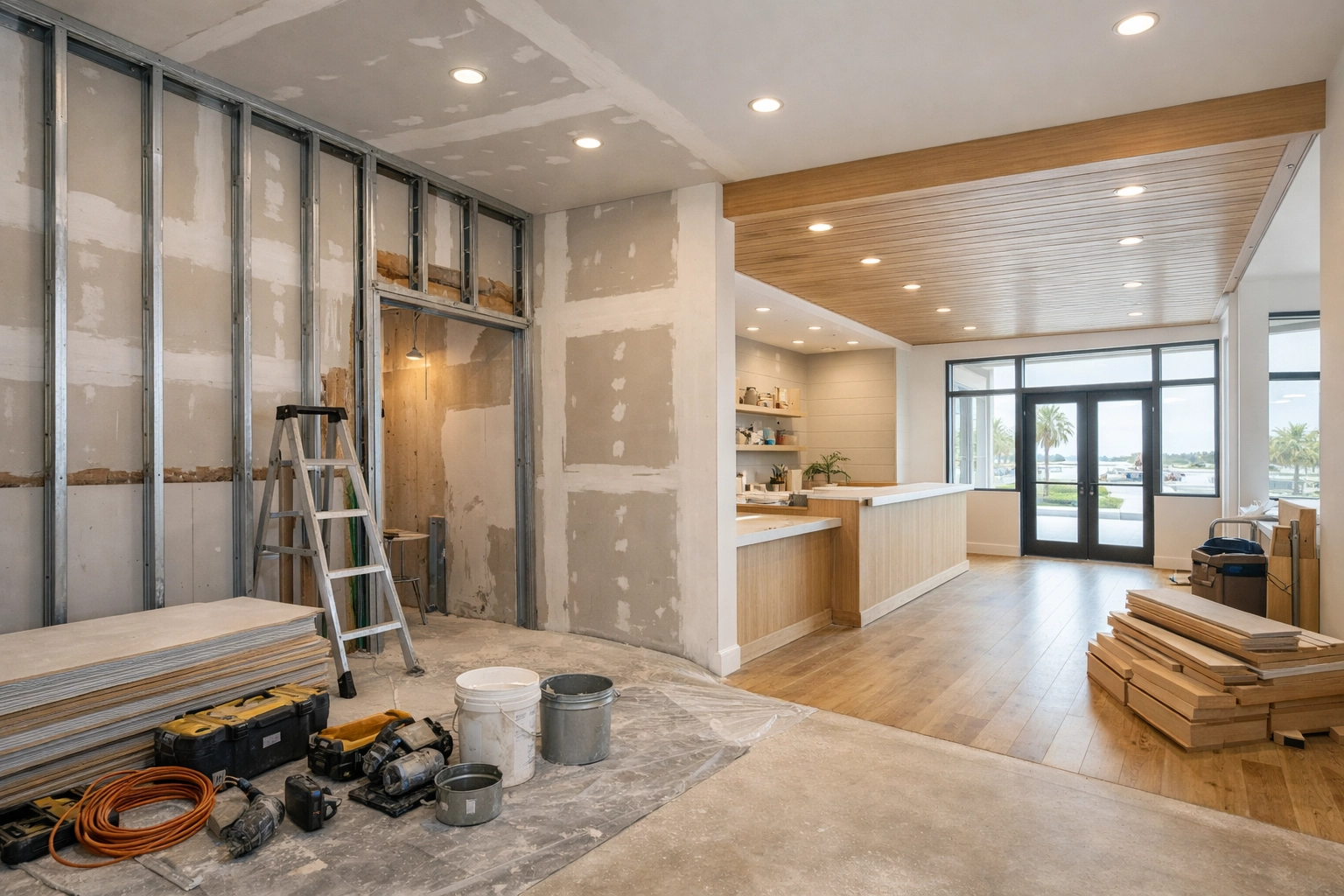
A commercial upfit transforms raw or existing commercial space into a functional, branded environment tailored to your business needs. Whether you're renovating an outdated office in Hampstead, converting a shell space in Pender County, or refreshing a retail storefront along the coastal North Carolina corridor, an upfit makes the space work for your operation.
Upfits can include:
- Interior framing and drywall installation
- Electrical upgrades and lighting design
- HVAC modifications
- Flooring (tile, carpet, polished concrete)
- Custom millwork and fixtures
- Restroom upgrades
- ADA compliance modifications
- Storefront glass and entry systems
The goal is simple: maximize functionality and brand presence while controlling costs and minimizing business disruption.
The ROI Challenge: Build Smart, Not Big
Here's the problem we see repeatedly in Pender County and Hampstead: business owners confuse investment with overspending. They assume that more features, higher-end finishes, and complex layouts automatically translate to better returns.
They don't.
ROI on a commercial upfit comes from three areas:
- Tenant attraction and retention (if you're leasing)
- Operational efficiency (reduced overhead, improved workflow)
- Customer experience (brand consistency, comfort, accessibility)
Overbuilding: installing premium finishes in back-of-house areas, adding unnecessary square footage, or designing complex layouts that require excessive maintenance: drains capital without improving any of these outcomes.
The smartest commercial upfits prioritize function over flash. They focus budget where it impacts revenue and cut aggressively where it doesn't.
What Affects the Cost of a Commercial Upfit?
We don't publish flat-rate pricing because every project is different. But we do help clients understand what drives cost so they can make informed decisions.
Size and Scope
Square footage matters. A 1,200-square-foot office upfit will cost significantly less than a 5,000-square-foot retail build-out. Scope includes how much demolition is required, whether you're starting from a shell or renovating an existing space, and how much of the work involves structural modifications versus cosmetic updates.
Mechanical and Electrical Systems
Upgrading HVAC, adding dedicated circuits for equipment, or installing specialized lighting (like track lighting for retail displays) adds cost. Older buildings in Wilmington and Hampstead often require electrical panel upgrades to meet code, especially if you're adding commercial kitchen equipment or high-draw machinery.
Finishes and Materials
Luxury vinyl tile costs less than porcelain. Paint costs less than custom millwork. Laminate countertops cost less than quartz. The key is matching finish level to function. High-traffic customer-facing areas warrant durable, attractive finishes. Storage rooms and back offices do not.
Permitting and Code Compliance
Commercial work in Pender County requires permits, inspections, and adherence to building codes and fire marshal requirements. ADA compliance, fire-rated materials, and egress standards can add costs, but they're non-negotiable. Skipping steps or cutting corners creates liability and delays.
Timeline and Scheduling
Accelerated schedules cost more. Rush orders on materials, overtime labor, and compressed permitting timelines increase expenses. The most cost-effective upfits allow reasonable lead times for procurement and coordination.
How to Avoid Overbuilding: Five Practical Steps
1. Start with Business Objectives, Not Design Trends
Define what success looks like. If you're a medical office, patient flow and privacy matter more than open-concept layouts. If you're a retail boutique, product visibility and checkout efficiency drive design. Align every decision to a measurable business outcome.
2. Prioritize Customer-Facing Areas
Your reception area, retail floor, and customer restrooms justify higher investment. Your break room, storage closets, and administrative offices do not. Allocate budget where clients and customers experience your brand.
3. Design for Flexibility
Avoid permanent, custom-built features that limit future use. Modular furniture, movable partitions, and adaptable lighting systems allow you to reconfigure space as your business evolves without costly demolition and reconstruction.
4. Use Durable, Low-Maintenance Materials
ROI isn't just about upfront cost: it's about total cost of ownership. Vinyl plank flooring holds up better than carpet in high-traffic areas. Fiber-cement siding and metal roofing outlast cheaper alternatives. Durable finishes reduce replacement costs and downtime.
5. Work with a Contractor Who Understands Your Timeline
Every day your business is closed or disrupted costs money. A disciplined project manager minimizes downtime by coordinating trades efficiently, managing material deliveries, and anticipating permitting delays before they happen.

Timeline Expectations for Commercial Upfits in Pender County
Most commercial upfits in Pender County and Hampstead follow a similar timeline:
Pre-Construction (2–4 Weeks)
- Initial consultation and site assessment
- Design and space planning
- Budget development
- Permitting and plan review (Pender County requires Fire Marshal approval for commercial work)
Construction (4–12 Weeks)
Timeline depends on scope. A simple office refresh might take four weeks. A full restaurant build-out could take twelve. Factors include demolition complexity, lead times on custom materials, and inspection schedules.
Final Inspections and Occupancy (1–2 Weeks)
Final inspections from the building department and fire marshal must be completed before you can legally occupy the space. Plan for this buffer.
The key to staying on schedule? Clear communication and proactive problem-solving. When your contractor identifies potential delays early: material backorders, permit revisions, unforeseen structural issues: you can adjust without derailing the entire project.
Permitting and Code Compliance in Pender County
Commercial upfits in Pender County require building permits. Depending on scope, you may also need electrical, plumbing, and mechanical permits. The Fire Marshal's Office reviews plans for fire safety, egress, and occupancy classification.
Common compliance requirements include:
- ADA-accessible restrooms and entries
- Fire-rated walls and doors in certain occupancies
- Emergency lighting and exit signage
- Sprinkler systems (depending on building size and use)
- Proper ventilation for commercial kitchens or manufacturing spaces
Permitting isn't optional. It protects your investment and ensures your space is safe and insurable. Working with a contractor who understands local codes and maintains strong relationships with Pender County inspectors avoids costly rework and delays.
The Mill Creek Approach: Discipline, Clarity, and Results
At Mill Creek Development Group, we bring veteran-owned discipline to every commercial project. Our approach is built on the same principles that guide our custom residential work: Confidence, Clarity, and Consistency.
Confidence means you know exactly what to expect: scope, budget, and timeline: from day one. No surprises. No scope creep. No unnecessary upsells.
Clarity means transparent communication throughout the project. You understand what's happening, why it's happening, and what comes next. We don't hide behind jargon or bury issues until they become emergencies.
Consistency means we show up, execute the plan, and deliver on our commitments. Every trade coordinated. Every inspection scheduled. Every detail finished to standard.
We've worked across coastal North Carolina: from Calabash to Morehead City: on projects ranging from small office renovations to large-scale commercial build-outs. We understand the unique challenges of building in this region: coastal building codes, material availability, weather delays, and permitting timelines.
And because we're locally operated, we know the inspectors, suppliers, and subcontractors in Pender County, Hampstead, and Wilmington. That means faster approvals, better pricing, and fewer headaches.
Your Next Step: Start with the Project Questionnaire
If you're considering a commercial upfit in Pender County or Hampstead, the first step is understanding your goals, timeline, and budget. We start every project with our Project Questionnaire: a structured conversation that helps us align on priorities before we draft a single plan.
From there, we provide a clear scope, realistic timeline, and transparent budget. No pressure. No obligation. Just the information you need to make a smart decision.
Visit https://linktr.ee/MillCreekDev to complete the questionnaire, or reach out at www.millcreekdev.com.
Let's build something that works: for your business, your budget, and your bottom line.
: AJ, President | Mill Creek Development Group
Leave a Reply