
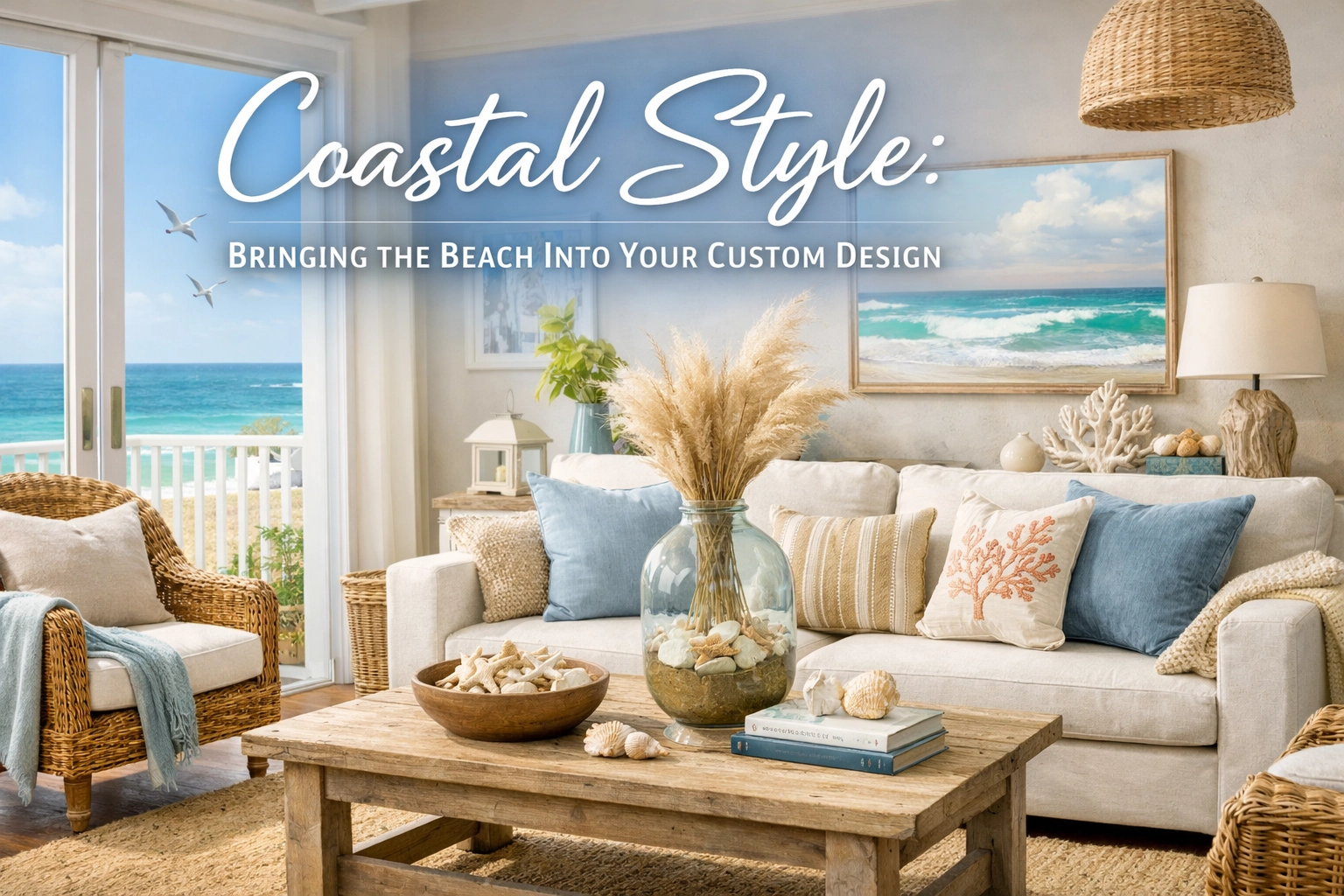
Light. Air. Water. Home.
Building along the North Carolina coast means more than constructing four walls and a roof: it means capturing the essence of coastal living in every design decision you make. Whether you're planning a primary residence in Wilmington, a retreat in Leland, or an investment property along our coastline, coastal style transforms a house into a space that breathes with the rhythm of the ocean.
At Mill Creek Development Group, we specialize in custom homes that honor the coast while serving the way you actually live. Coastal design isn't about nautical kitsch or overdone beach themes. It's about understanding how light moves through spaces, how materials age gracefully in our climate, and how a home can feel both refined and relaxed: the way coastal North Carolina itself feels.
Let's talk about bringing the beach into your custom design the right way.
The Foundation: Color That Captures Coastal Light
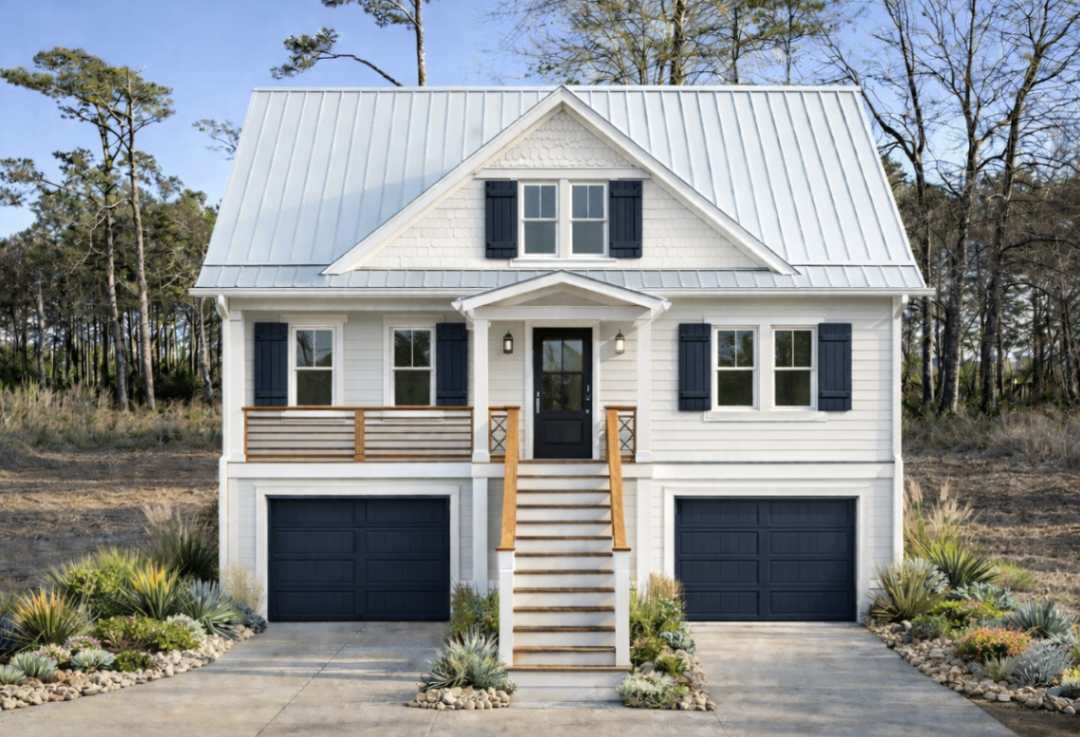
Coastal color palettes work because they mirror what you see every day along our shores. Chalky whites. Soft grays. Weathered blues. Sand and sage. These aren't decorating trends: they're reflections of the environment that make a home feel grounded in its location.
Interior color strategy for coastal custom homes:
Start with a neutral foundation: warm whites or light grays on walls create the backdrop that allows natural light to do what it does best. Layer in deeper coastal tones through cabinetry, trim details, and accent walls. Navy kitchen islands. Pale blue board-and-batten. Driftwood-gray ceiling beams.
The North Carolina coast offers unique color inspiration you won't find in generic beach design guides. Think about the specific blues in our waterways: the deep teal of the Intracoastal, the soft aqua of shallow sounds, the silvery gray-blue of morning fog. These exact shades create authenticity in your design that generic "ocean blue" never will.
Exterior color choices that respect our coastal climate:
Your exterior palette needs to work harder here. Salt air. Intense sun. Seasonal storms. We build with materials that age gracefully, and we choose colors that weather beautifully rather than fight the elements. Light-toned siding reflects heat. Natural wood accents develop character. Metal roofing in coastal neutrals or deeper tones provides both durability and visual interest.
The homes we build in Leland and Wilmington use color to enhance architectural details without overwhelming them. Subtle contrasts. Clean lines. Timeless combinations that won't feel dated in five years.
Materials and Textures: Building for the Coast
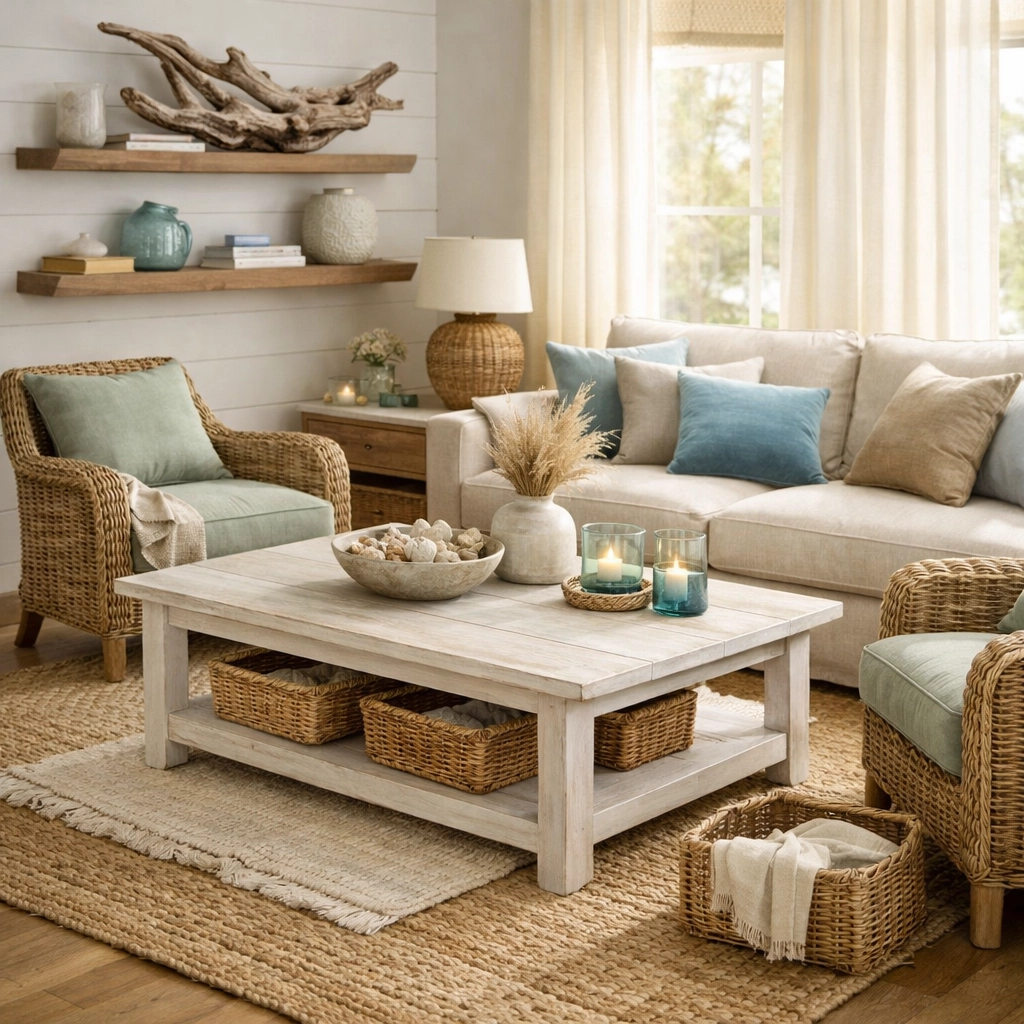
Coastal style relies on natural materials that tell a story. In custom home building, this means making intentional choices about what goes into your home: not just for aesthetics, but for how materials perform in our specific climate.
Flooring that anchors coastal design:
Light hardwoods create the foundation. White oak in natural or weathered finishes. Engineered wood that handles humidity fluctuations. Wide planks that emphasize the clean, uncluttered feel of coastal interiors. We avoid overly glossy finishes: coastal style favors matte or satin sheens that feel more organic and lived-in.
In high-traffic areas and moisture-prone spaces, porcelain tile in wood-look finishes or natural stone brings durability without sacrificing the aesthetic. Area rugs in jute, sisal, or sea grass add warmth and define zones in open-concept layouts.
Architectural details that create texture:
Shiplap. Board-and-batten. Coffered ceilings. Exposed beams. These elements add dimension and interest to walls and ceilings without relying on color or pattern. We incorporate them strategically: a shiplap accent wall in the primary bedroom, board-and-batten in the dining area, exposed ceiling beams in the great room.
The key is restraint. Too much creates visual noise. Applied thoughtfully, these details enhance the architecture and create shadow lines that shift throughout the day as natural light moves through your home.
Cabinetry and millwork choices:
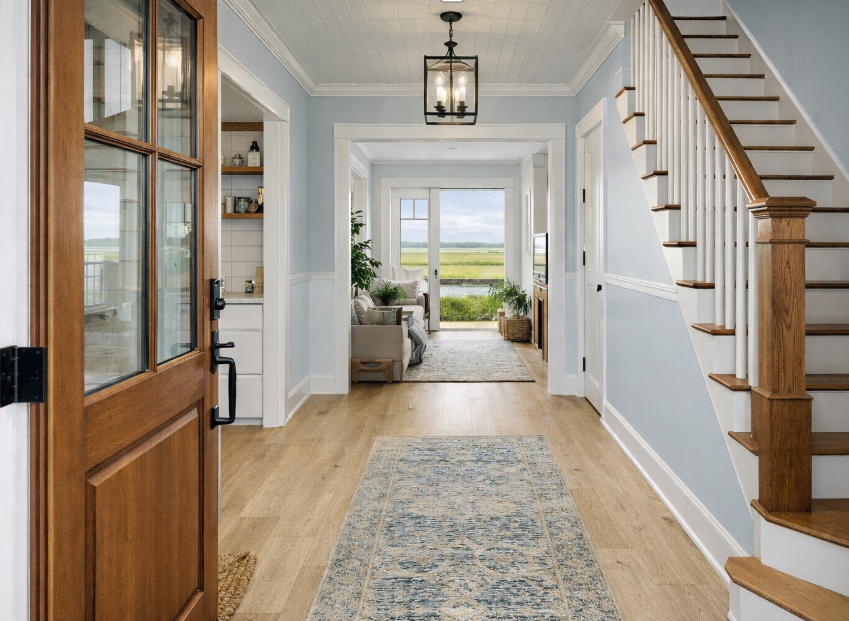
Custom cabinetry defines coastal kitchens and baths. We build homes with painted cabinets in soft whites, coastal blues, or sage greens paired with natural wood elements: floating shelves, open upper cabinets, wood range hoods. The mix of painted and natural finishes creates depth and keeps spaces from feeling too matchy or sterile.
Hardware matters more than you might think. Brushed nickel, unlacquered brass, or matte black: these finishes interact with coastal color palettes and stand up to our climate. We help you choose hardware that complements your overall design while meeting the practical demands of daily use.
Layouts That Embrace Coastal Living
Coastal homes live differently than homes built inland. Your floor plan should acknowledge that. Open concepts. Indoor-outdoor connections. Spaces designed for entertaining. Views maximized. Storage integrated.
The great room approach:
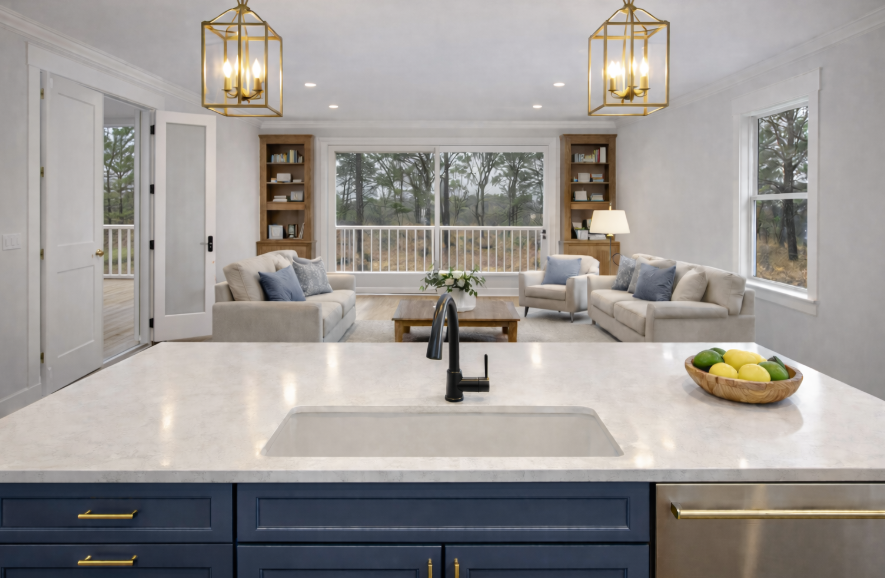
Most custom coastal homes we build in Wilmington and Leland center around a great room that combines kitchen, dining, and living areas into one flowing space. This isn't just a design preference: it's how people actually use their homes. Families gather in the kitchen. Guests flow naturally between spaces. Sightlines extend from entry to views.
We design these spaces with intentional zones defined by ceiling details, flooring transitions, or furniture placement rather than walls. The result feels open and connected while still providing definition and purpose to each area.
Transitional spaces that blur boundaries:
Coastal living happens between indoors and out. Covered porches. Screened rooms. Decks with built-in seating. We design these spaces as extensions of interior living areas: same flooring materials, coordinated lighting, thoughtful furniture planning.
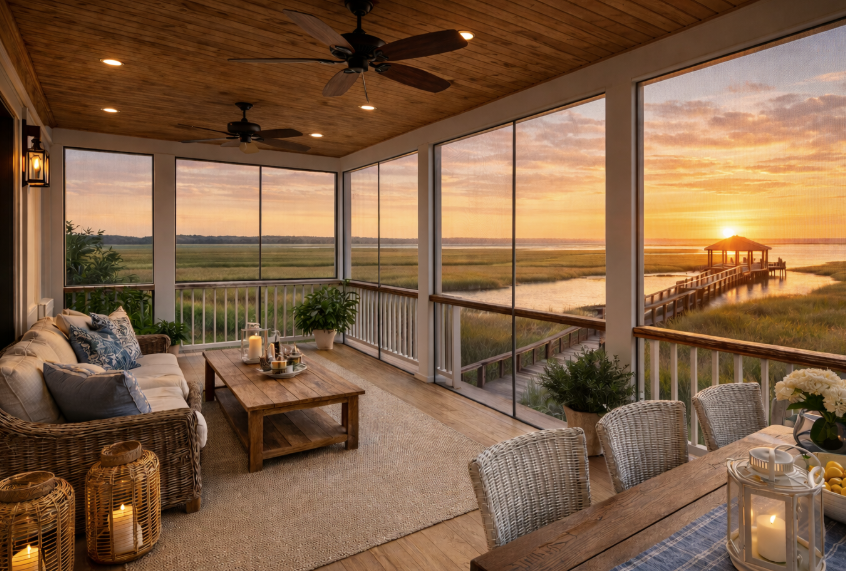
Your screened porch shouldn't feel like an afterthought. It should feel like your favorite room in summer. Ceiling fans for air movement. Durable finishes that handle moisture. Electrical planning for entertainment and ambiance.
Strategic window placement:
Views drive window decisions in coastal custom homes. We position windows to capture specific vistas: water views, marsh landscapes, tree canopies. Large windows bring in natural light and create connection to the outdoors. We balance that with energy efficiency, privacy considerations, and structural requirements.
Transom windows above doors. Corner windows that wrap views. Floor-to-ceiling glass in living areas. These choices transform how a home feels and functions along the coast.
Lighting: Natural and Designed
Coastal homes celebrate natural light, but designed lighting creates atmosphere and functionality after sunset.
Maximizing daylight:
Our climate offers abundant natural light year-round. Your home should capture it. South-facing windows provide consistent light. East-facing windows offer morning sun in kitchens and breakfast areas. West-facing windows create warm afternoon light in living spaces.
We design with light in mind: room orientation, window sizing, ceiling heights, and reflective finishes all work together to bring daylight deep into your home.
Fixture selection for coastal interiors:
Light fixtures anchor your design aesthetic. We recommend natural materials: rattan pendants, linen drum shades, wood and metal combinations. Fixtures should feel substantial without overwhelming spaces.
Scale matters tremendously. Oversized pendants above kitchen islands. Statement chandeliers in dining areas. Flush-mounts or semi-flush fixtures in bedrooms and hallways. We help you select and position fixtures that provide both functional lighting and design impact.
Layered lighting for flexibility:
Every room needs multiple light sources. Overhead fixtures for general illumination. Task lighting for work areas. Accent lighting for ambiance. Dimmer switches on everything possible. This layering creates flexibility for different times of day and different uses of space.
Building Your Coastal Custom Home
Bringing coastal style to life requires more than good intentions and a Pinterest board. It requires experience with our specific climate, understanding of materials that perform along the coast, and meticulous attention to detail in every phase of construction.
We build custom homes in coastal North Carolina that honor this place. That means homes designed specifically for our environment: elevated foundations for flood protection, impact-resistant windows for storm resilience, materials chosen for long-term performance in salt air and humidity.
It also means homes built to reflect how you want to live: whether that's full-time coastal living, seasonal retreats, or investment properties designed for rental income. Your vision. Your lifestyle. Your budget. Our expertise.
The process starts with conversation. Understanding what draws you to coastal style. Identifying which elements resonate most with your vision. Translating design inspiration into buildable plans that work within your site, your timeline, and your investment parameters.
From there, we walk you through every decision: finishes, fixtures, layouts, details. We provide the guidance that comes from building dozens of custom coastal homes. We bring the craftsmanship that ensures your home looks as good in year ten as it does on move-in day.
Start Your Coastal Custom Home
Ready to bring coastal style to your custom home? Let's talk about your vision, your site, and how we can build something remarkable together along the North Carolina coast.
Complete our Project Questionnaire at linktr.ee/MillCreekDevelopmentGroup and we'll start the conversation. Learn more about our complete custom home process at millcreekdevelopmentgroup.com/our-process.
Building coastal. Building well. Building for you.
: AJ, President | Mill Creek Development Group
Leave a Reply