
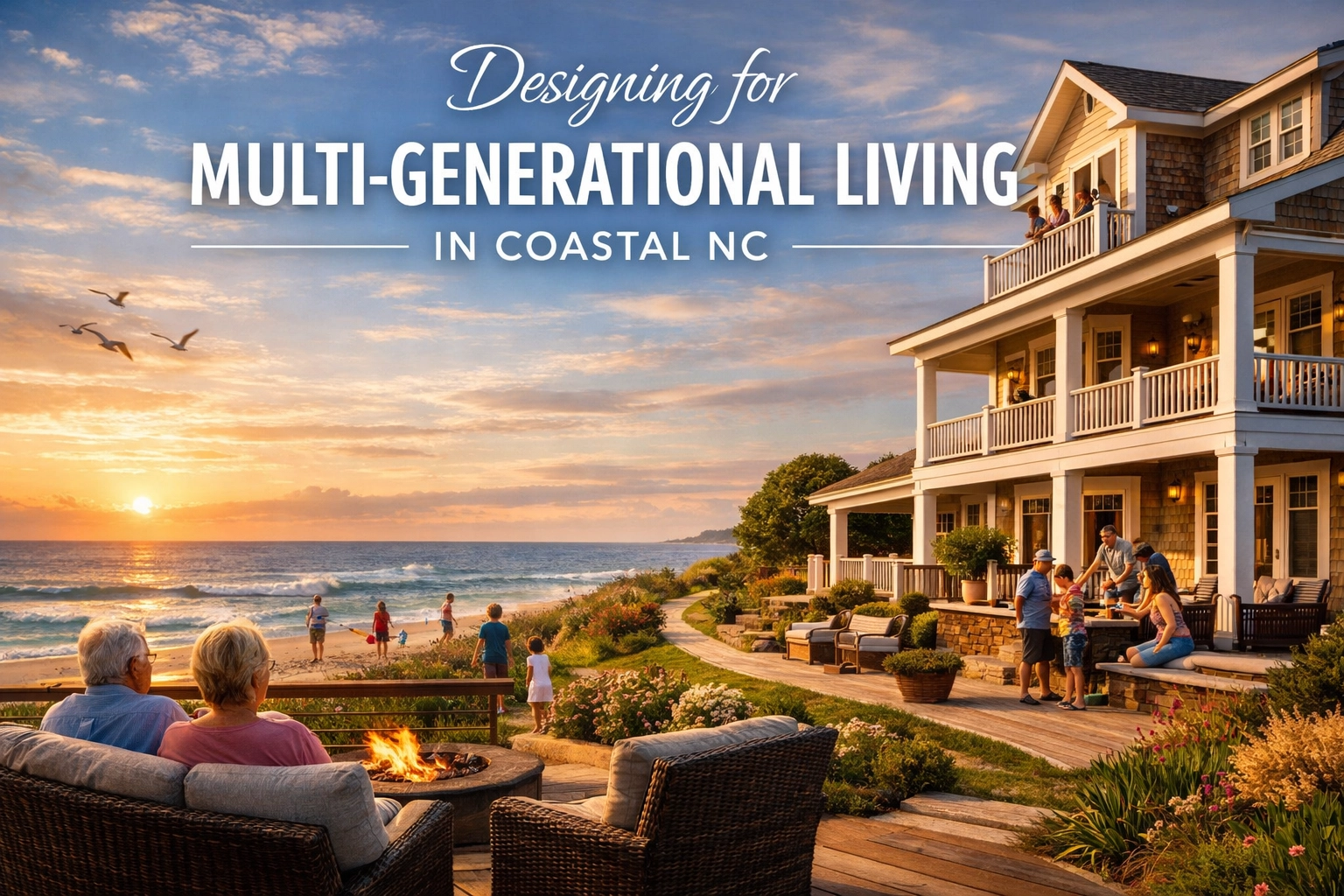
The Coastal Carolina Family Is Changing
More families are choosing to live together. Grandparents. Parents. Adult children. Sometimes even great-grandparents: all under one roof or on one property in coastal North Carolina.
The reasons are practical. Childcare support. Elder care. Shared expenses. Stronger family bonds. And frankly, the chance to build equity together while enjoying everything Brunswick County and Leland have to offer.
But here's the thing: cramming multiple generations into a traditional floor plan doesn't work. You need intentional design. Space that adapts. Privacy that coexists with togetherness.
That's where working with a custom home builder in Brunswick County NC makes all the difference.
Why Custom Matters for Multi-Generational Homes
Production builders work from templates. Fixed layouts. Limited flexibility. That approach fails when your 80-year-old father needs a ground-floor suite and your daughter's family needs space upstairs.
Custom design solves this.
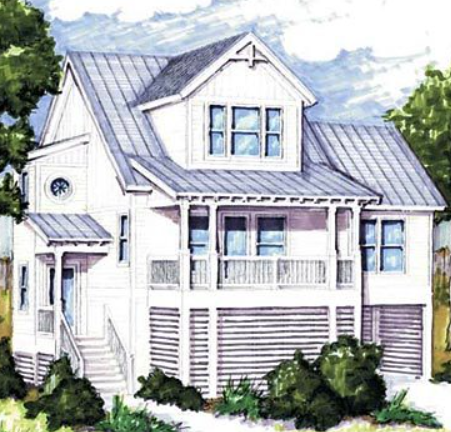
When you work with a custom home builder in Leland NC, you're not selecting from pre-drawn plans. You're creating a home that reflects how your family actually lives. Where grandkids can play without disturbing grandparents. Where aging parents maintain independence while staying close. Where everyone has breathing room.
The Foundation: Flexible Space Planning
Multi-generational living requires multiple living zones. Not just bedrooms scattered throughout a house: but distinct areas where different branches of the family can gather, relax, and function semi-independently.
Consider including:
Separate living areas on different floors or wings. One family might prefer watching movies in the main den while another group enjoys quieter conversation in a secondary sitting room.
Dual kitchens or kitchenettes. A full prep kitchen in a guest suite means aging parents can make morning coffee without navigating stairs. It means teenagers can grab snacks without disrupting the main household routine.
Private outdoor access. Side entrances or separate porch entries give everyone autonomy. Grandparents can come and go for morning walks. Adult children can return from work without cutting through shared spaces.
This isn't about building separate houses. It's about creating connected independence within one cohesive home.
Accessibility Is Non-Negotiable
Mobility changes over time. A 60-year-old building for their future will have different needs at 75. Young families welcoming aging parents must plan ahead.
Single-level living eliminates the most obvious barrier: stairs. When possible, position primary living spaces, at least one master suite, a full bathroom, and kitchen access on the ground floor.
For homes requiring multiple stories, consider:
Ground-floor master suites. At least one bedroom and full bath accessible without climbing stairs protects against future mobility challenges.
Elevator-ready construction. Even if you don't install an elevator immediately, pre-wiring and structural planning makes future installation straightforward and cost-effective.
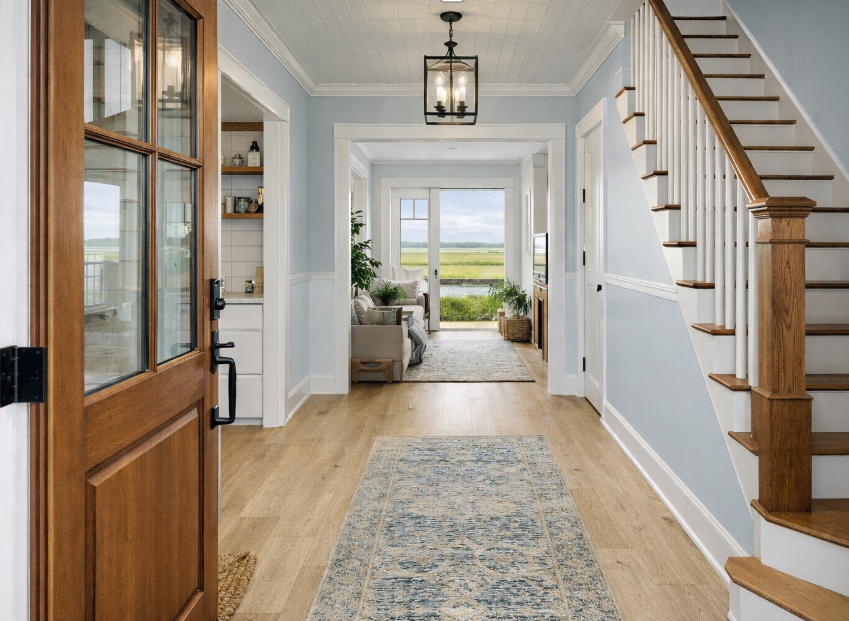
Wider doorways and hallways. Standard 32-inch doors work fine: until someone needs a walker or wheelchair. Building with 36-inch doorways and wider halls costs minimally more during construction but delivers massive long-term value.
Curbless showers. Walk-in or roll-in showers with built-in seating accommodate everyone from toddlers to seniors. They're safer, easier to clean, and increasingly popular regardless of accessibility needs.
Coastal North Carolina's relatively flat topography makes single-level custom homes particularly practical. You're not fighting steep lots or dramatic elevation changes common in mountain regions.
The Master Suite: Flexibility and Comfort
Multi-generational homes often require multiple master suites: not just bedrooms, but complete retreats with ensuite bathrooms, walk-in closets, and private spaces.
The primary suite should offer:
Generous square footage. Room for king beds, sitting areas, and personal storage without feeling cramped.
Spa-quality bathrooms. Dual vanities. Soaking tubs or oversized showers. Adequate lighting. These aren't luxuries in multi-generational design: they're essentials that reduce morning bottlenecks when multiple adults share a home.
Laundry access. A washer-dryer hookup or dedicated laundry closet in or near the master suite means aging parents don't haul baskets up and down stairs.
Soundproofing considerations. Insulated walls between sleeping areas. Solid-core doors. Strategic placement away from high-traffic zones.
Secondary master suites: often located upstairs or in opposite wings: provide similar amenities. Each generation deserves private sanctuary space.
Bedroom and Bathroom Count
Plan for more than you think you need.
A typical multi-generational home in coastal NC might include:
- 5 to 7 bedrooms spread across floors or wings
- 4 to 5 full bathrooms
- 1 to 2 half baths for common areas
This configuration supports:
- Grandparents' suite (bedroom + bath)
- Parents' primary suite (bedroom + bath)
- Children's bedrooms (3-4 rooms sharing 1-2 baths)
- Guest room or future flexibility
- Home office or den convertible to bedroom
The goal is privacy without isolation. Everyone should access a bathroom without crossing through someone else's bedroom. Morning routines should flow without conflict.
Location Matters: Coastal NC Advantages
Brunswick County and Leland offer unique advantages for multi-generational living.
Beach access appeals to all ages. Grandparents enjoy morning walks. Kids love summer days on the sand. Proximity to coastal recreation keeps everyone active and engaged.
Mild climate reduces weather-related mobility challenges. No harsh winters limiting elderly relatives to indoor spaces for months.
Growing communities with mixed demographics. You're not isolated in a 55+ development or surrounded only by young families. Coastal NC neighborhoods increasingly embrace age diversity.
Healthcare access. Wilmington and surrounding areas offer quality medical facilities: critical when caring for aging family members.
Lower cost of living compared to other coastal regions. Building a larger custom home for multiple generations remains financially viable.
When selecting your lot, consider:
- Proximity to grocery stores, pharmacies, medical offices
- Sidewalks or safe walking paths
- Community amenities (pools, parks, social spaces)
- Flood zone status and elevation requirements
- Lot size adequate for the square footage you need
Common Areas: Where Families Connect
Multi-generational design requires balance. Private spaces prevent tension. Shared spaces build connection.
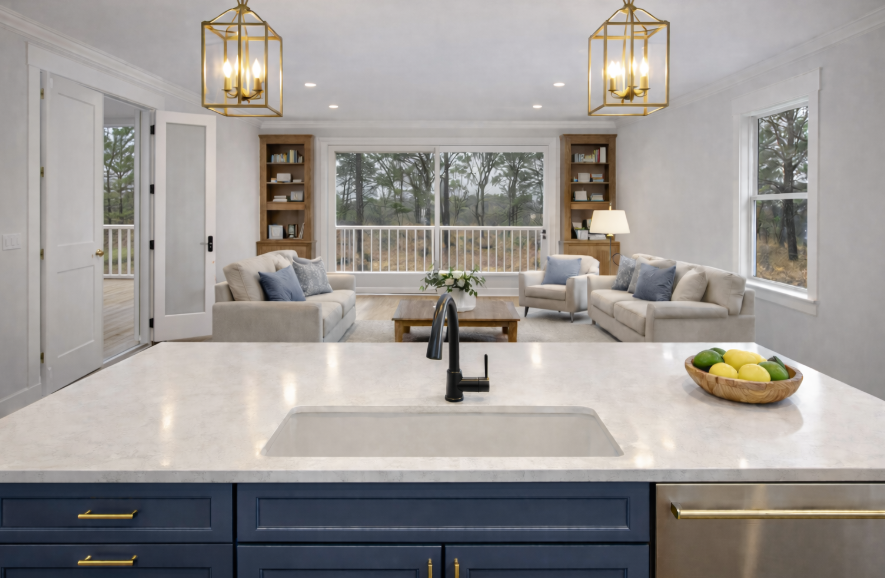
Open-concept living works well for main gathering areas. Combined kitchen, dining, and living zones let multiple generations occupy the same space while engaged in different activities. Grandma reads in the living room. Mom preps dinner. Kids do homework at the island. Everyone's together without being on top of each other.
Outdoor living spaces extend usable square footage. Covered porches. Screened rooms. Patio areas with outdoor kitchens. Coastal North Carolina's climate supports year-round outdoor use: these become vital gathering spots.
Multipurpose rooms adapt to changing needs. A playroom today becomes a craft room tomorrow. A home gym converts to a physical therapy space if needed.
Why Mill Creek Development Group
We build custom homes in Brunswick County and Leland designed around how you live: not how a production builder thinks you should live.
Veteran-Owned. Locally Operated. We understand commitment. To quality. To community. To the families who trust us with their most important investment.
When you're planning a multi-generation home, you need a builder who listens. Who understands that your 4-bedroom floor plan actually needs to function like two 2-bedroom apartments under one roof. Who knows how to integrate accessibility features without compromising aesthetics.
We combine meticulous craftsmanship with flexible design thinking. Every home starts with understanding your family's unique dynamics: then translating that into livable, beautiful space.
Start Your Multi-Generational Journey
Building a home for multiple generations requires careful planning. Budget considerations. Zoning questions. Design decisions that ripple through the entire project.
The best time to start is before you need it.
If you're considering a custom home in coastal North Carolina: whether for your growing family, aging parents, or investment in multi-generational living: let's talk about what's possible.
Step one: Complete our Project Questionnaire. Share your vision. Your family's needs. Your timeline and budget parameters. We'll help you understand whether multi-generational custom construction aligns with your goals.
Visit https://linktr.ee/MillCreekDevelopmentGroup to get started.
Building homes. Building relationships. Building for generations.
: AJ, President | Mill Creek Development Group
Leave a Reply