

Your First Commercial Investment Deserves Strategic Planning
Your first commercial property investment represents more than a financial decision. It's a commitment to your business growth, your community presence, and your long-term wealth strategy.
The difference between commercial projects that deliver returns and those that drain resources comes down to planning. Strategic planning. Professional partnerships. Clear execution.
Too many first-time commercial investors focus exclusively on location and purchase price. They overlook feasibility. They underestimate building codes. They select contractors based on the lowest bid rather than proven capability.
Smart investors approach commercial development differently.
Feasibility Comes First: Always
Before you sign purchase agreements or finalize financing, establish project feasibility.
Feasibility determines whether your vision aligns with regulatory reality. Whether your budget matches construction costs. Whether your timeline reflects actual permitting and building processes.
A comprehensive feasibility study examines:
Site conditions and limitations. Soil composition, drainage patterns, utility access, and environmental constraints shape what you can build and how much it costs.
Zoning regulations and land use. Local ordinances dictate allowable building types, height restrictions, parking requirements, and setback distances. What works in one Wilmington neighborhood may not work two miles away.
Market demand and competitive landscape. Your target tenants or users must exist in sufficient numbers to justify the investment. Understanding local market dynamics prevents expensive miscalculations.
Construction costs and budget alignment. Material costs, labor availability, and design complexity all impact your bottom line. Early cost modeling identifies budget gaps before you're committed.
Working with a design build commercial contractor during feasibility analysis saves money and time. An experienced contractor identifies site challenges early, provides realistic cost projections, and helps you avoid projects that look attractive on paper but fail in execution.
Building Codes Shape Every Commercial Project
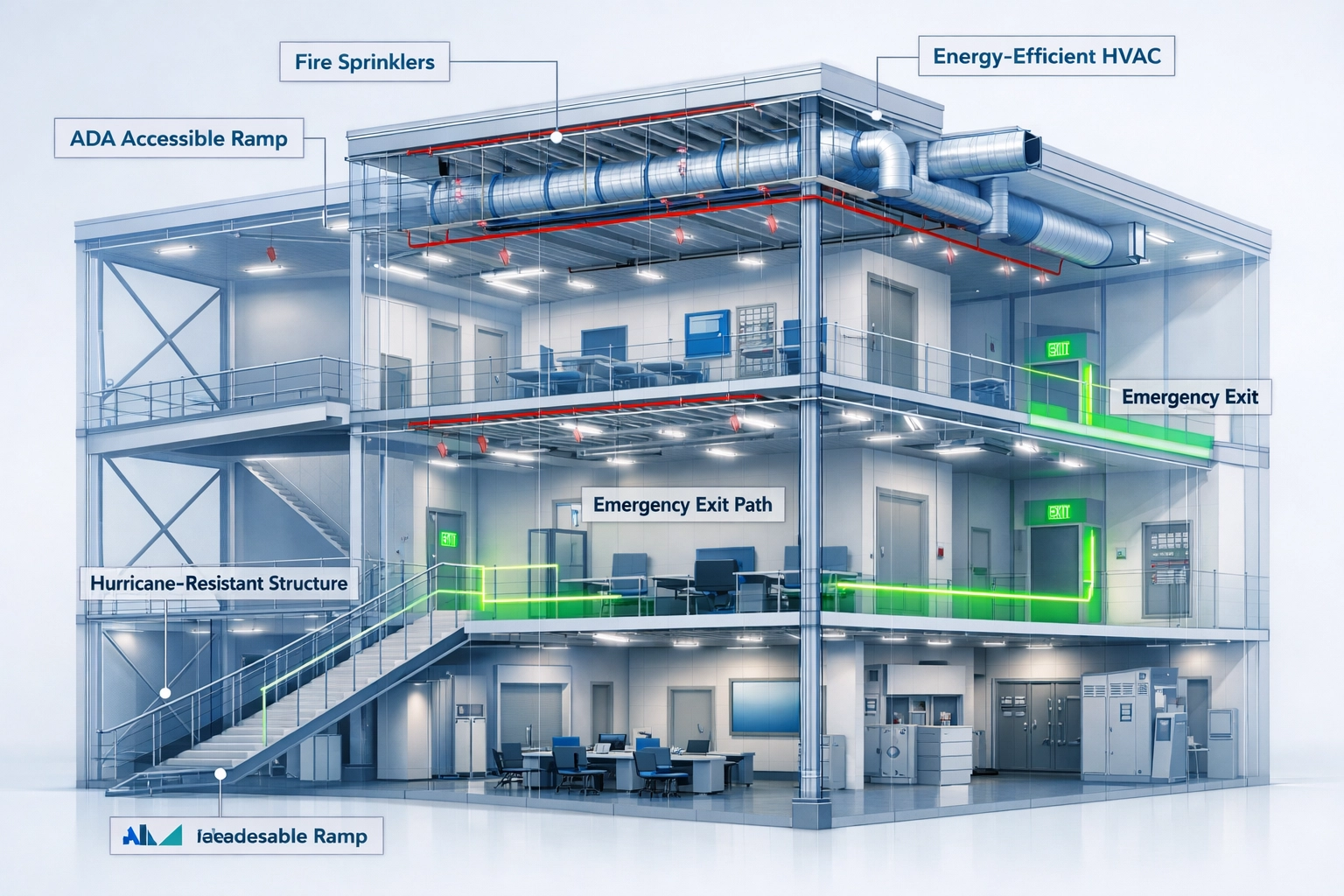
Building codes exist to protect public safety, structural integrity, and long-term building performance. They're not obstacles: they're frameworks that ensure your investment meets professional standards.
Commercial building codes in coastal North Carolina address specific regional challenges. Hurricane-force winds. Flood zones. Salt air corrosion. Seismic considerations.
Your commercial project must comply with:
International Building Code (IBC) standards. The IBC establishes minimum requirements for structural design, fire safety, accessibility, and occupancy loads. North Carolina adopts modified versions with state-specific amendments.
ADA accessibility requirements. The Americans with Disabilities Act mandates specific design features for commercial buildings. Parking spaces. Entrance ramps. Restroom configurations. Door widths. Signage placement.
Fire safety and suppression systems. Sprinkler requirements, fire-rated walls, emergency exits, and alarm systems vary based on building size, occupancy type, and construction materials.
Energy efficiency standards. Commercial energy codes establish insulation values, HVAC efficiency, lighting requirements, and envelope performance to reduce operational costs and environmental impact.
Local amendments and overlay districts. Wilmington and surrounding coastal communities often add requirements beyond state codes. Historic districts. Coastal overlay zones. Downtown design standards.
Navigating these regulations requires local expertise. A commercial contractor Wilmington NC with established relationships with local building officials, inspectors, and permitting departments accelerates approvals and prevents costly design revisions.
The Design-Build Advantage for First-Time Investors
Traditional design-bid-build approaches separate design from construction. You hire an architect. Finalize plans. Then solicit contractor bids.
This fragmented process creates communication gaps, budget conflicts, and timeline delays.
Design-build integration delivers better outcomes.
A design-build commercial contractor manages both design and construction under one contract, one timeline, one point of accountability.
The advantages for first-time commercial investors:
Single source of responsibility. You work with one team from concept through completion. No finger-pointing between designers and builders when challenges emerge.
Budget certainty earlier in the process. Construction costs inform design decisions from day one. You don't finalize plans only to discover they exceed your budget by 30%.
Faster project delivery. Design and permitting overlap with pre-construction activities. Long-lead materials get ordered while plans finalize. Projects complete weeks or months faster.
Value engineering throughout. Your contractor identifies cost-saving alternatives during design rather than after plans are locked. Small design modifications can yield significant budget savings without compromising quality.
Fewer change orders and surprises. When designers understand construction realities and builders influence design choices, you avoid expensive field modifications.
Design-build relationships work best when you select partners early. Bring your contractor into initial site evaluation, feasibility analysis, and conceptual planning. Their input shapes realistic budgets and buildable designs from the start.
Understanding Investment Metrics and Financial Planning
Commercial real estate investing requires fluency in specific financial metrics. These numbers determine deal viability and investment returns.
Cap Rate (Capitalization Rate) measures the relationship between net operating income and purchase price. An 8% cap rate means annual income equals 8% of what you paid for the property. Higher cap rates indicate higher returns but often higher risk.
Net Operating Income (NOI) represents profitability after operating expenses: property taxes, insurance, maintenance, management fees: but before debt service. Strong NOI supports positive cash flow and property value appreciation.
Gross Leasable Area (GLA) quantifies total rentable space. Accurate GLA calculations impact rent projections, building efficiency, and comparative value analysis.
Debt Service Coverage Ratio (DSCR) compares NOI to annual debt payments. Lenders typically require DSCR above 1.25, meaning income exceeds debt payments by at least 25%.
Understanding these metrics allows you to evaluate construction budgets against projected returns. A slightly higher upfront investment in quality construction might reduce maintenance costs, attract better tenants, and deliver superior long-term NOI.
Your design-build partner should help you model these financial projections. How do material choices impact maintenance costs? How does building efficiency affect tenant retention? How do construction timelines affect your carry costs and lease-up schedule?
Building Your Professional Team
Successful commercial investors rely on experienced professionals who understand local markets and commercial transactions.
Commercial real estate broker. A broker with local market expertise identifies opportunities, negotiates favorable terms, and provides comparative market analysis to support decision-making.
Commercial real estate attorney. Legal counsel reviews purchase agreements, lease contracts, zoning issues, and entity structures to protect your interests.
Accountant or CPA with commercial experience. Tax strategies, depreciation schedules, and entity selection significantly impact investment returns. Early accounting guidance prevents expensive restructuring later.
Commercial lender. Banks and credit unions that specialize in commercial lending understand property types, market dynamics, and realistic underwriting. Personal banking relationships rarely translate to commercial lending expertise.
Design-build commercial contractor. Your contractor doesn't just build: they advise on site selection, provide budget guidance, navigate permitting, and deliver the physical asset that generates your returns.
These professionals work together throughout your investment lifecycle. Early coordination prevents conflicts and ensures everyone works toward shared objectives.

Why Local Wilmington Expertise Matters
Commercial development isn't generic. Every market has unique characteristics, regulations, and challenges.
Coastal North Carolina commercial projects face specific considerations:
Hurricane-resistant construction standards. Wind loads, impact-resistant materials, and structural connections that exceed inland requirements.
Flood zone compliance. FEMA flood maps, base flood elevations, and flood insurance requirements impact design and long-term costs.
Coastal aesthetics and community expectations. Projects that fit the local character attract better tenants and face smoother approval processes.
Seasonal construction challenges. Weather patterns, tourism cycles, and labor availability affect scheduling and sequencing.
Established relationships with local officials. Permitting moves faster when your contractor has credibility with building departments, planning boards, and inspection teams.
A commercial contractor Wilmington NC brings this local knowledge to every project. They understand which inspectors focus on specific details. Which suppliers deliver on time. Which subcontractors perform quality work consistently.
This local expertise translates directly to your bottom line through faster approvals, fewer delays, and construction that meets both code requirements and community standards.
Moving Forward with Confidence
Your first commercial investment sets the foundation for your portfolio growth. Strategic planning, professional partnerships, and disciplined execution separate successful investors from those who learn expensive lessons.
Define clear investment goals before searching for properties. Understand your return expectations, risk tolerance, and timeline. These goals guide every subsequent decision.
Conduct thorough due diligence on properties, markets, and potential returns. Verify zoning, review environmental reports, analyze comparable sales, and model realistic financial projections.
Select a design-build partner early in your process. Their feasibility input, cost guidance, and construction expertise prevent expensive mistakes and unrealistic expectations.
Maintain financial discipline throughout the project. Construction budgets include contingencies for unforeseen conditions. Resist the temptation to eliminate contingencies to make deals work on paper.
Think long-term about building quality, tenant experience, and operational efficiency. Cutting construction costs often increases maintenance expenses and reduces tenant retention.
Commercial development represents significant financial commitment. The right partnerships, thorough planning, and quality construction transform that commitment into lasting wealth and community impact.
Ready to discuss your commercial project? We provide feasibility analysis, design-build services, and the local expertise that ensures your first commercial investment delivers the returns you expect.
Start with our Project Questionnaire to begin the conversation about your commercial vision.
: AJ, President | Mill Creek Development Group
Leave a Reply