
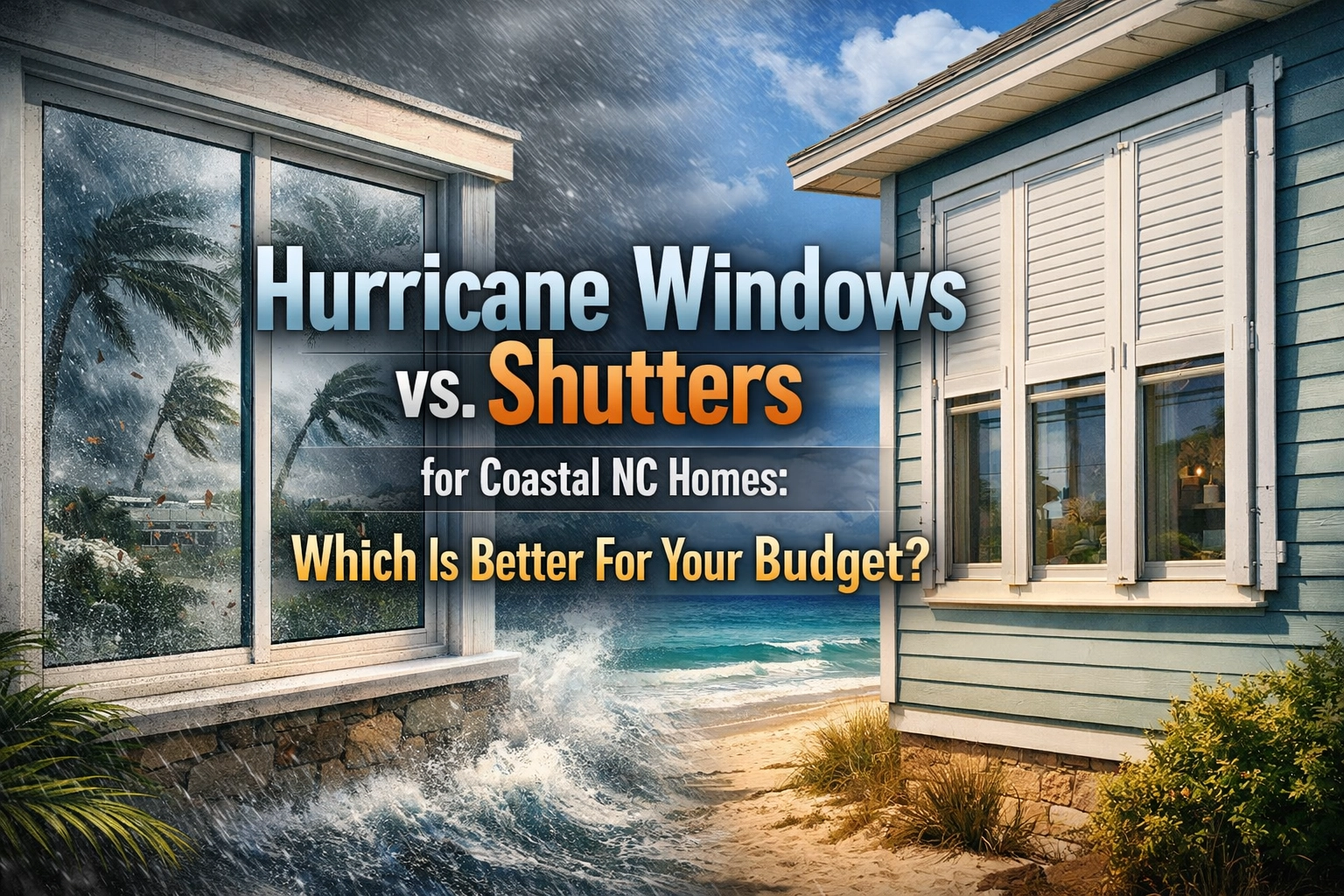
Living along coastal North Carolina means embracing breathtaking views, salt air, and the reality of hurricane season. Every homeowner: from Wilmington to the Outer Banks: faces a critical decision when building or renovating: hurricane windows or shutters?
The answer depends on your budget, your timeline, and how you define value. This guide breaks down the real costs, long-term considerations, and code requirements so you can make an informed decision for your coastal home.
The Immediate Cost Reality
Budget matters. When you compare upfront price tags, hurricane shutters win by a significant margin.
Standard hurricane shutters range from $10 to $50 per square foot, depending on the type you choose. Accordion shutters typically cost $15 to $25 per square foot. Storm panel shutters run even lower: around $7 to $15 per panel. Automatic roll-down shutters, the most convenient shutter option, fall in the $20 to $30 per square foot range.
Impact-resistant hurricane windows, by contrast, average $40 to $55 per square foot. For a full window installation, expect to invest $3,750 to $5,350 per window depending on size, frame material, and glass specifications.
For a coastal home with fifteen windows, shutters might total a few thousand dollars. The same home outfitted with impact windows could require a $60,000+ investment. That upfront gap is real: and it drives many homeowners toward shutters initially.
Long-Term Value: The Five-Year Calculation
Upfront cost tells only part of the story. Total cost of ownership over five to ten years shifts the equation dramatically.
Impact windows deliver three financial advantages that shutters cannot match:
Energy efficiency. Impact windows reduce heating and cooling costs by 20 to 30 percent monthly. The Low-E coatings and multi-pane insulated glass that make them storm-resistant also make them energy-efficient. In coastal North Carolina, where HVAC systems run nearly year-round, those savings compound quickly. Over ten years, reduced energy bills can offset a significant portion of the initial window investment.
Insurance premium reductions. Many coastal insurance carriers offer premium discounts: often 10 to 45 percent annually: for homes with certified impact-resistant windows. Shutters rarely qualify for the same reductions because they require manual deployment and offer less comprehensive protection. Verify eligibility with your insurer, but the potential savings add up year after year.
Increased home value. Impact windows are considered a permanent upgrade. Appraisers recognize them. Buyers value them. Shutters, while functional, do not carry the same resale appeal or contribute as meaningfully to assessed home value.
Shutters offer one immediate advantage: low entry cost: but they deliver no ongoing financial return. They require maintenance. They must be deployed before every storm. They provide no energy savings. They add little to resale value.
When you calculate monthly energy savings, annual insurance reductions, and eventual resale impact, impact windows often reach cost parity within seven to ten years: and continue delivering value beyond that breakeven point.
Maintenance and Operational Realities
Coastal living demands durable materials and minimal upkeep. Here, impact windows hold a decisive advantage.
Shutters require servicing at least twice annually: more frequently in high-salt environments like Topsail Island, Figure Eight Island, and Wrightsville Beach. Accordion shutters need track cleaning and lubrication. Roll-down shutters require motor maintenance. Storm panels must be inspected, stored, and tested for fit. Every shutter type demands time, effort, and recurring expense.
Then comes deployment. Hurricane watches trigger a scramble. You must physically install or close every shutter: a multi-hour task for most homes: while grocery stores empty and gas lines lengthen. If you travel frequently or own a second home, deployment becomes even more complicated. Who closes the shutters when you are not there?
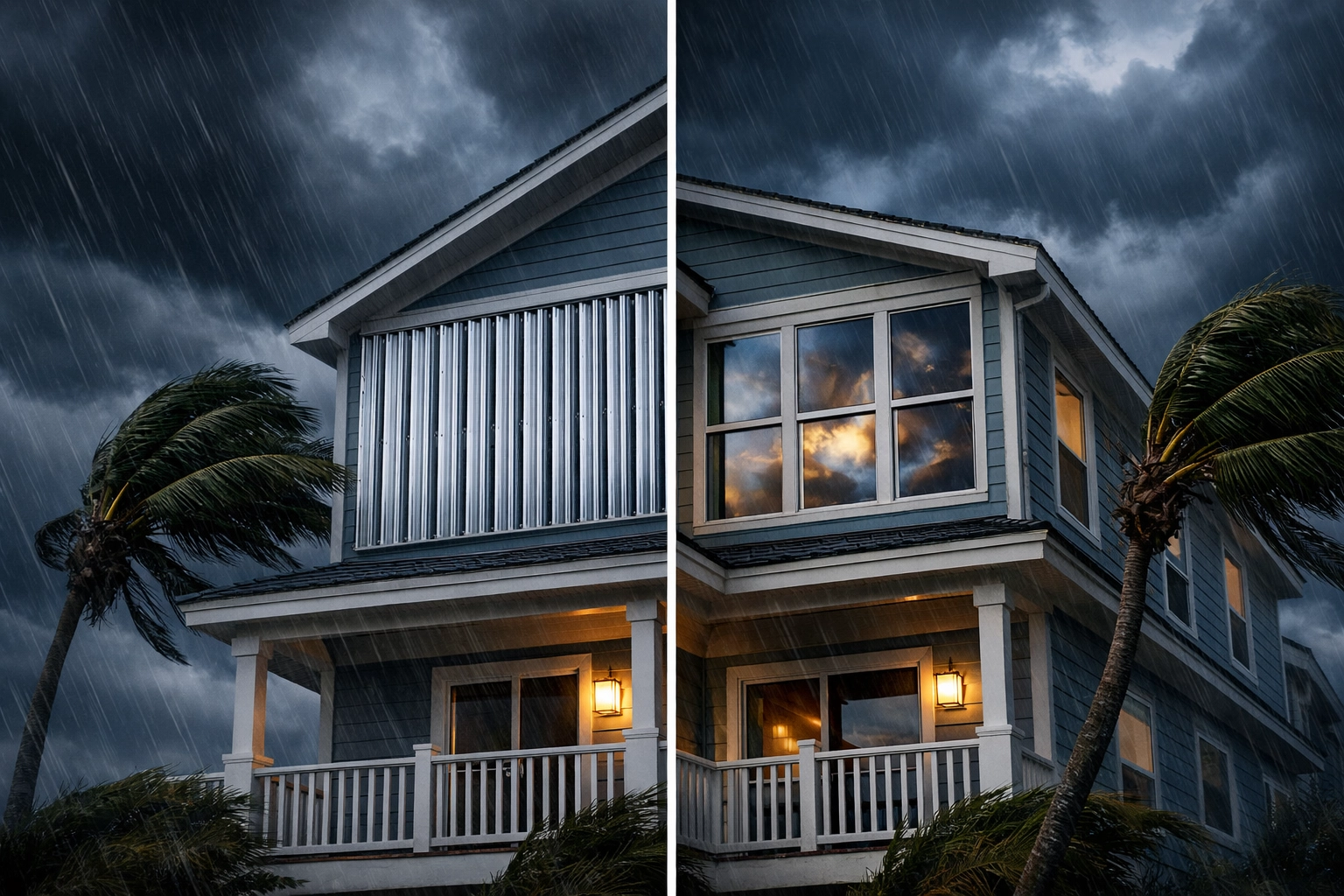
Impact windows require zero action. They function as standard windows every day of the year. They provide permanent storm protection without deployment. They demand no more maintenance than any quality window: occasional cleaning, standard seal checks, routine hardware inspections. No emergency scrambles. No frantic installation before a storm. No mid-season servicing costs.
For homeowners who value convenience, peace of mind, and hands-off storm readiness, impact windows eliminate the operational burden shutters create.
The Energy Efficiency Factor
Coastal North Carolina summers run hot and humid. Winters bring wind and cold snaps. HVAC systems cycle constantly, and energy bills reflect it.
Hurricane shutters provide zero insulation value. When deployed, metal or polycarbonate panels may block sunlight and reduce solar heat gain temporarily, but they offer no year-round thermal performance. When stored, they contribute nothing to your home's energy profile.
Impact windows function as high-performance insulated glazing units. Multi-pane construction, Low-E coatings, argon or krypton gas fills, and thermally broken frames all reduce heat transfer. The same structural laminate that stops wind-borne debris also dampens sound and blocks UV rays that fade furniture and flooring.
Homeowners consistently report 20 to 30 percent reductions in monthly energy costs after installing impact windows. In a coastal home where cooling dominates eight months of the year, that monthly savings becomes substantial. Over a decade, energy savings alone can approach $15,000 to $20,000 depending on home size and system efficiency.
Shutters deliver storm protection. Impact windows deliver storm protection and year-round comfort, efficiency, and savings.
Insurance Considerations for Coastal Properties
Wind and hail coverage along coastal North Carolina carries high premiums. Insurers assess risk carefully, and storm-resistant features directly influence rates.
Impact-resistant windows qualify for substantial discounts with most carriers because they meet strict testing standards: ASTM E1996 and E1886 for large missile impact resistance, which simulates a 9-pound 2×4 traveling at 34 to 50 miles per hour depending on wind zone. Windows that pass these tests demonstrate proven performance under extreme conditions.
Shutters may qualify for smaller discounts, but coverage varies by carrier and shutter type. Manual shutters often receive minimal consideration because deployment depends on homeowner action: and storms do not always provide advance notice. Automatic roll-down shutters fare better but still rarely match the premium reductions impact windows command.
Before committing to either option, request quotes from your insurance provider. Ask specifically about premium reductions, coverage terms, and documentation requirements. The annual savings may tip the financial calculation decisively in favor of windows.
Building Codes and Coastal Requirements
North Carolina enforces the 2018 North Carolina Residential Code with amendments, and coastal counties often impose additional wind load and impact resistance requirements.
Homes within the High-Velocity Hurricane Zone (HVHZ) or designated wind zones must meet specific missile impact ratings. These zones extend inland from the coast based on wind speed maps and storm surge modeling. Your builder or design professional should verify requirements for your specific location, but most coastal builds require either impact-resistant glazing or approved shutter systems.
Impact windows automatically satisfy code when properly certified. Shutters must meet the same impact standards, but compliance depends on correct installation, secure anchoring, and documented testing. Improperly installed shutters provide a false sense of security and may void insurance coverage or fail inspection.
If you are building new or renovating substantially, confirm code requirements early. Some jurisdictions restrict shutter types. Others mandate engineered drawings and third-party testing for shutter systems. Impact windows simplify compliance: install certified products correctly, and you meet the standard without additional documentation or deployment procedures.
Making the Right Choice for Your Budget
No universal answer exists. The better choice depends on your financial situation, your home's age, your long-term plans, and your tolerance for maintenance and operational demands.
Choose hurricane shutters if:
- Your immediate budget is tightly constrained and you need storm protection now
- You plan to sell or relocate within three to five years
- You are comfortable with manual deployment and recurring maintenance
- Your home does not qualify for significant insurance discounts with impact windows
Choose impact windows if:
- You plan to own your coastal home for seven years or longer
- You value energy efficiency, convenience, and permanent protection
- You want to maximize insurance discounts and resale value
- You prefer a hands-off approach to storm preparation
For new construction, the conversation shifts. Building with impact windows from the start avoids retrofit costs and integrates storm protection seamlessly into the design. Mill Creek Development Group incorporates impact-resistant glazing into coastal custom homes as a standard consideration: not an afterthought. We engineer for wind loads, select appropriate glass specifications, and coordinate with inspectors to ensure compliance and performance.
We do not sell windows. We do not install shutters. We plan and build homes that withstand coastal conditions while delivering efficiency, comfort, and value.
Next Steps: Plan Ahead
Storm protection decisions belong in the design phase: not the week before hurricane season begins. Whether you are building new, renovating, or evaluating your current home, start the conversation early.
Mill Creek Development Group specializes in custom homes designed for coastal North Carolina's unique climate, code requirements, and lifestyle demands. We combine engineering precision with architectural vision to create homes that perform beautifully season after season.
If you are considering a custom build or major renovation, take the first step. Complete our Project Questionnaire at linktr.ee/MillCreekDev and share your vision, your site, and your priorities. We will respond with a clear assessment and a path forward.
Storm protection is not a luxury. It is a fundamental requirement. Plan wisely. Build well. Protect what matters.
: AJ, President | Mill Creek Development Group
Leave a Reply