
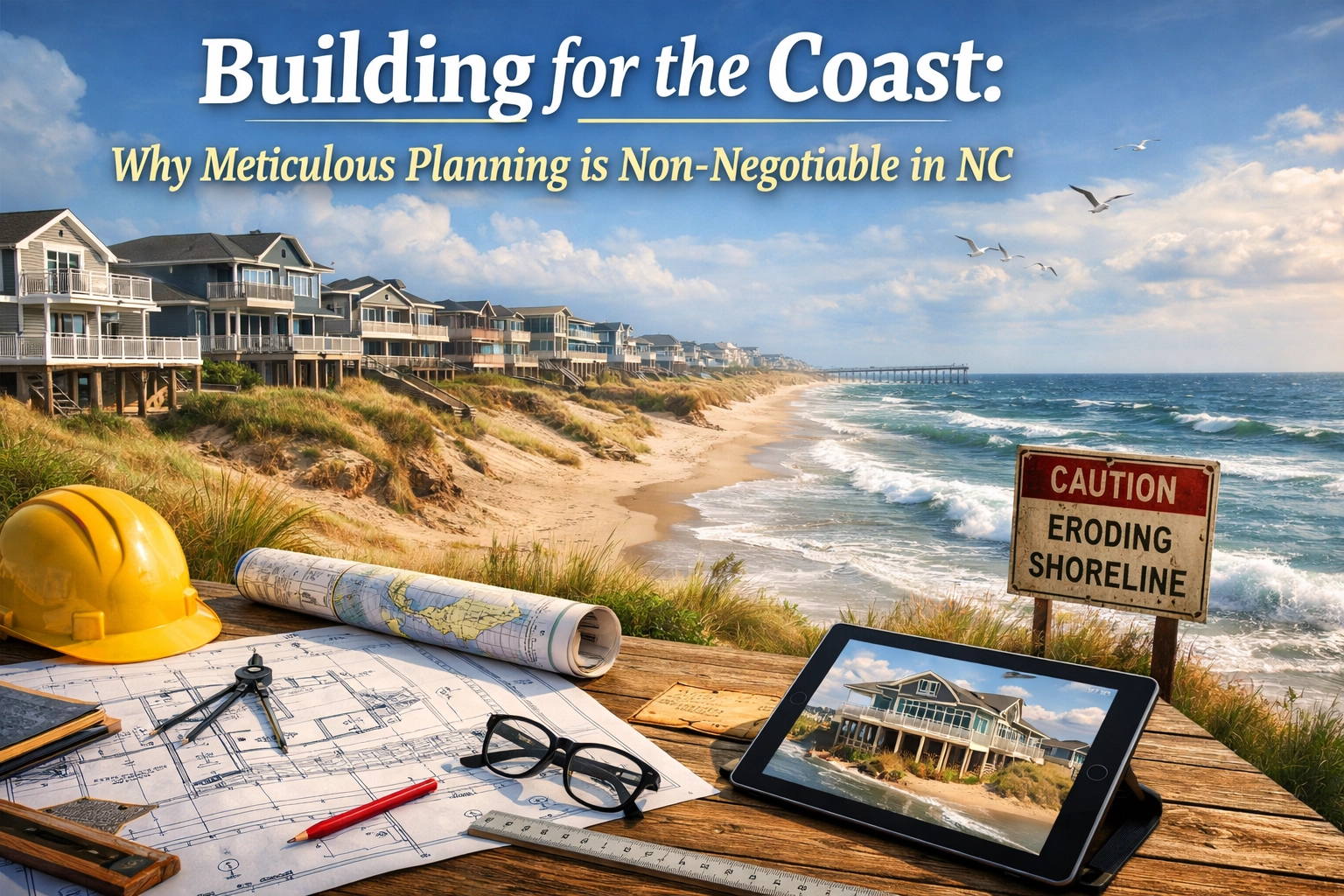
Meticulous Planning. Veteran-Owned Discipline. Coastal North Carolina Expertise.
Building along the North Carolina coast in 2026 requires more than architectural vision and construction skill: it demands a comprehensive understanding of complex regulatory frameworks, environmental protections, and the unique challenges that define coastal development. One misstep in planning can result in permit denials, project delays, significant fines, and mandatory restoration work that derails timelines and budgets.
For property owners seeking a custom home builder Wilmington NC can trust, or a general contractor Wilmington NC with proven coastal experience, the difference between a smooth project and a regulatory nightmare comes down to one critical factor: meticulous planning executed by professionals who understand exactly what's required before the first shovel hits the ground.
The Regulatory Reality of Coastal Construction
Coastal development in North Carolina operates under multiple layers of overlapping regulations that must be satisfied simultaneously. The North Carolina Coastal Area Management Act (CAMA) governs development across the state's 20 coastal counties, establishing strict requirements for Areas of Environmental Concern (AECs) that cover oceanfront zones, estuarine waters, coastal wetlands, and public trust areas.
CAMA setback requirements alone present significant complexity. Oceanfront development must respect frontal dune and primary dune setbacks: measurements that require precise calculation and understanding of dynamic coastal geography. Estuarine shoreline construction demands a minimum 75-foot setback from the normal water line. Incorrect setback calculations rank among the most common reasons for permit rejections, triggering costly redesigns and timeline extensions.
Wetlands protection adds another regulatory dimension. North Carolina enforces stringent wetland protection laws requiring comprehensive delineation studies before any construction activity near sensitive areas. Recent EPA and Corps of Engineers guidance issued in 2025 has evolved the regulatory definition of jurisdictional wetlands, introducing new standards around "continuous surface connection" to navigable waters. Coastal wetlands fall under dual jurisdiction: regulated by both CAMA and the U.S. Army Corps of Engineers under Section 404: creating overlapping compliance obligations that must be navigated precisely.
Stormwater management regulations apply to any project disturbing one acre or more of land. These projects require a North Carolina Department of Environmental Quality (NCDEQ) Notice of Coverage and a detailed Stormwater Pollution Prevention Plan with site-specific best management practices tailored to coastal conditions. Construction without approved permits violates state law and triggers immediate enforcement action.
The regulatory framework also includes building code requirements specific to flood zones, elevation standards for coastal construction, and local municipal ordinances that add additional layers of review. In 2026, staying current with evolving implementation guidance and regulatory changes is not optional: it's essential for project approval and legal compliance.
Environmental Engineering for Coastal Longevity
Beyond regulatory compliance, coastal construction demands specialized engineering solutions that address the unique environmental realities of building near saltwater, shifting sands, and hurricane-prone geography.
Erosion management requires elevated foundation systems, proper drainage design, and long-term planning for shoreline dynamics that will affect the property for decades. Storm surge protection, wind load calculations for coastal wind zones, and material selection for saltwater resistance all factor into designs that must perform reliably in extreme conditions.
Elevation requirements for coastal flood zones aren't suggestions: they're mandated minimums for habitable structures. State-owned construction faces strict elevation standards reflecting serious concerns about sea-level rise and storm surge impact. Private residential and commercial projects must meet these same realities with foundation designs that protect both immediate safety and long-term property value.
Site-specific hydrology varies dramatically even within the same coastal community. Understanding groundwater tables, soil composition, drainage patterns, and seasonal water movement informs foundation design, utility placement, and landscape planning that prevents future problems. This level of detailed site analysis requires experience: knowledge that comes from building successfully in coastal North Carolina year after year.
The Cost of Inadequate Planning
The consequences of insufficient planning extend far beyond inconvenience. Projects without proper upfront planning face:
Permit denials that halt construction entirely until compliance issues are resolved
Significant fines from state and federal agencies for violations of environmental regulations
Mandatory restoration costs when protected areas are disturbed without authorization
Project delays measured in months as regulatory reviews restart and designs are revised
Budget overruns as unexpected compliance requirements emerge mid-construction
Legal liability for environmental damage or non-compliant construction that affects neighboring properties
For property owners, these risks translate to financial losses, extended timelines, and the frustration of watching a dream project stall because critical planning steps were missed or mishandled at the beginning.
Veteran-Owned Discipline Applied to Coastal Construction
Discipline. Preparation. Execution.
The military approach to mission planning provides a natural framework for managing complex coastal construction projects. Every successful military operation begins with meticulous intelligence gathering, detailed planning, identification of potential obstacles, and preparation of contingency responses before action begins.
We apply this same disciplined methodology to every coastal project. Before design work starts, we conduct comprehensive site analysis, regulatory research, and permitting pathway mapping. We identify potential compliance challenges early: not when they surface unexpectedly during construction. We build realistic timelines that account for regulatory review periods, environmental study requirements, and seasonal considerations specific to coastal work.
This veteran-owned approach means our clients receive honest assessments upfront. We don't promise timelines we can't deliver or minimize regulatory requirements to win a project. We provide clarity about what's required, confidence in our ability to navigate the process, and consistency in delivering results that meet both regulatory standards and client expectations.
Coastal North Carolina Expertise That Protects Your Investment
Local Knowledge. Proven Results. Regulatory Mastery.
Building successfully in coastal North Carolina requires intimate familiarity with local conditions, relationships with regulatory agencies, and a track record of approved projects that demonstrate competence and reliability. Generic construction knowledge doesn't translate to coastal success: this environment demands specialized expertise.
We've navigated CAMA permitting for oceanfront properties, estuarine developments, and coastal wetland projects. We've secured Army Corps permits for complex jurisdictional wetland situations. We've designed and built elevated foundations that meet flood zone requirements while delivering the architectural vision our clients expect. We understand how local soil conditions affect foundation design, how coastal wind loads influence structural engineering, and how saltwater proximity impacts material selection for lasting performance.
Our relationships with permitting agencies, environmental consultants, and coastal engineers streamline the approval process. We know which studies are required before applications are submitted. We understand how to present plans that satisfy regulatory reviewers on the first submission. We've built the institutional knowledge that comes from successfully completing coastal projects year after year in Wilmington, Wrightsville Beach, Carolina Beach, Topsail, and throughout coastal North Carolina.
Meticulous Planning Delivers Peace of Mind
When you choose a general contractor Wilmington NC with proven coastal expertise, you're not just hiring construction labor: you're partnering with professionals who understand that every successful coastal project begins with comprehensive planning executed by people who know exactly what's required.
We start every project with our detailed Project Questionnaire: a structured process that captures your vision, assesses site conditions, identifies regulatory requirements, and establishes realistic expectations before design work begins. This upfront investment in planning protects your timeline, your budget, and your peace of mind throughout construction.
Ready to build along the North Carolina coast with confidence?
Start with our Project Questionnaire to discuss your vision and receive expert guidance on regulatory requirements, site considerations, and realistic project planning: https://linktr.ee/MillCreekDevelopmentGroup
Learn more about our complete process for residential and commercial coastal projects: Our Process
Building along the coast demands meticulous planning. We bring the discipline, expertise, and local knowledge that protects your investment and delivers results.
: AJ, President | Mill Creek Development Group
Leave a Reply