
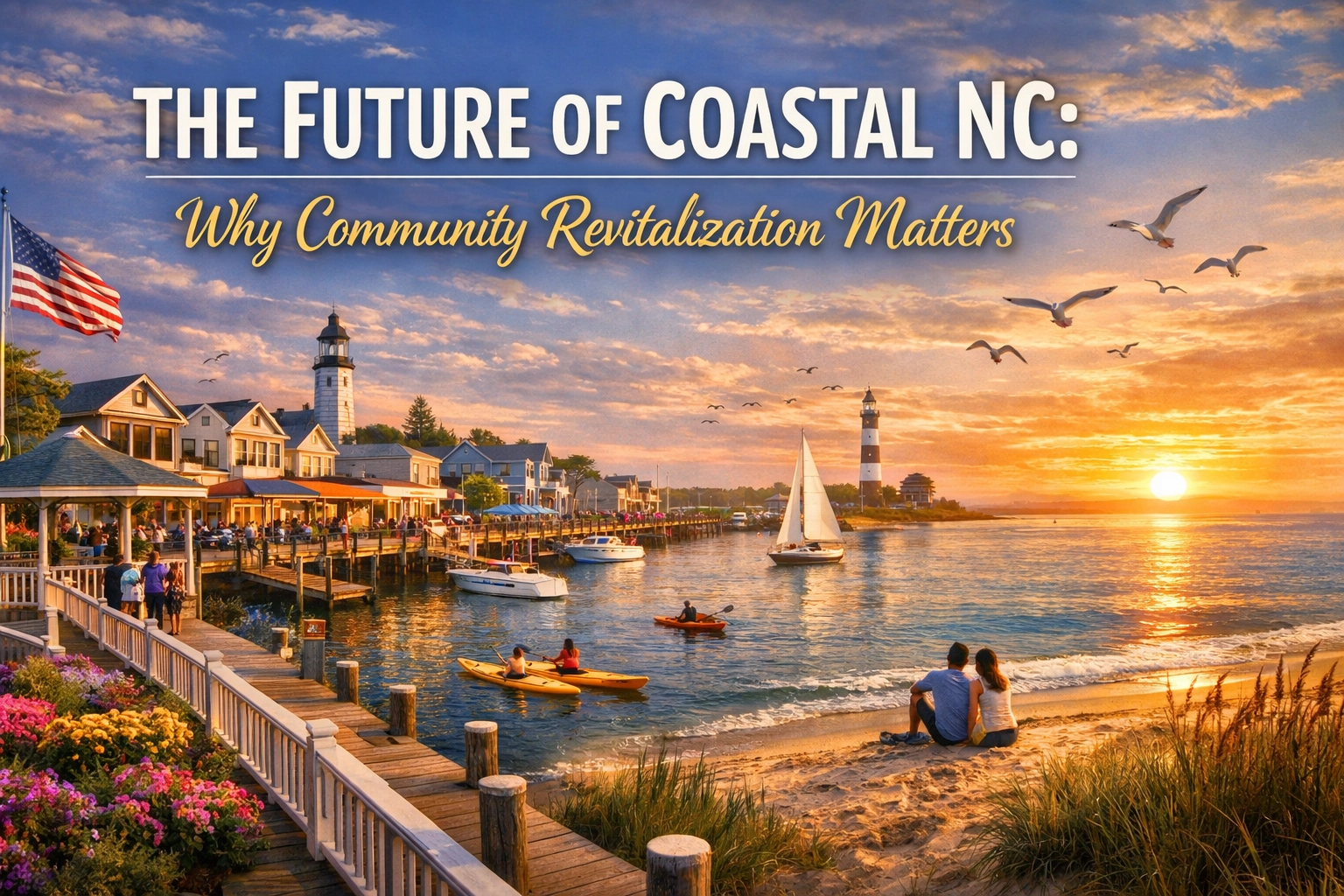
Coastal Carolina Is Growing. Fast.
Walk through downtown Wilmington on a Saturday morning. Drive through Calabash during tourist season. Notice the new construction in Morehead City.
The development pressure is real: and it's accelerating.
Communities across coastal North Carolina have experienced steadily increasing growth over the last thirty years. New residents arrive. Tourism expands. Beach access gets tighter. Small-town character shifts under the weight of progress.
But growth doesn't have to erase what makes these places special.
Community revitalization: when done right: preserves the soul of a town while creating economic opportunity. It transforms underutilized commercial districts into vibrant gathering spaces. It brings neighbors together. It strengthens local infrastructure without sacrificing authenticity.
And it requires experienced partners who understand both the construction side and the community impact.
What Community Revitalization Actually Means
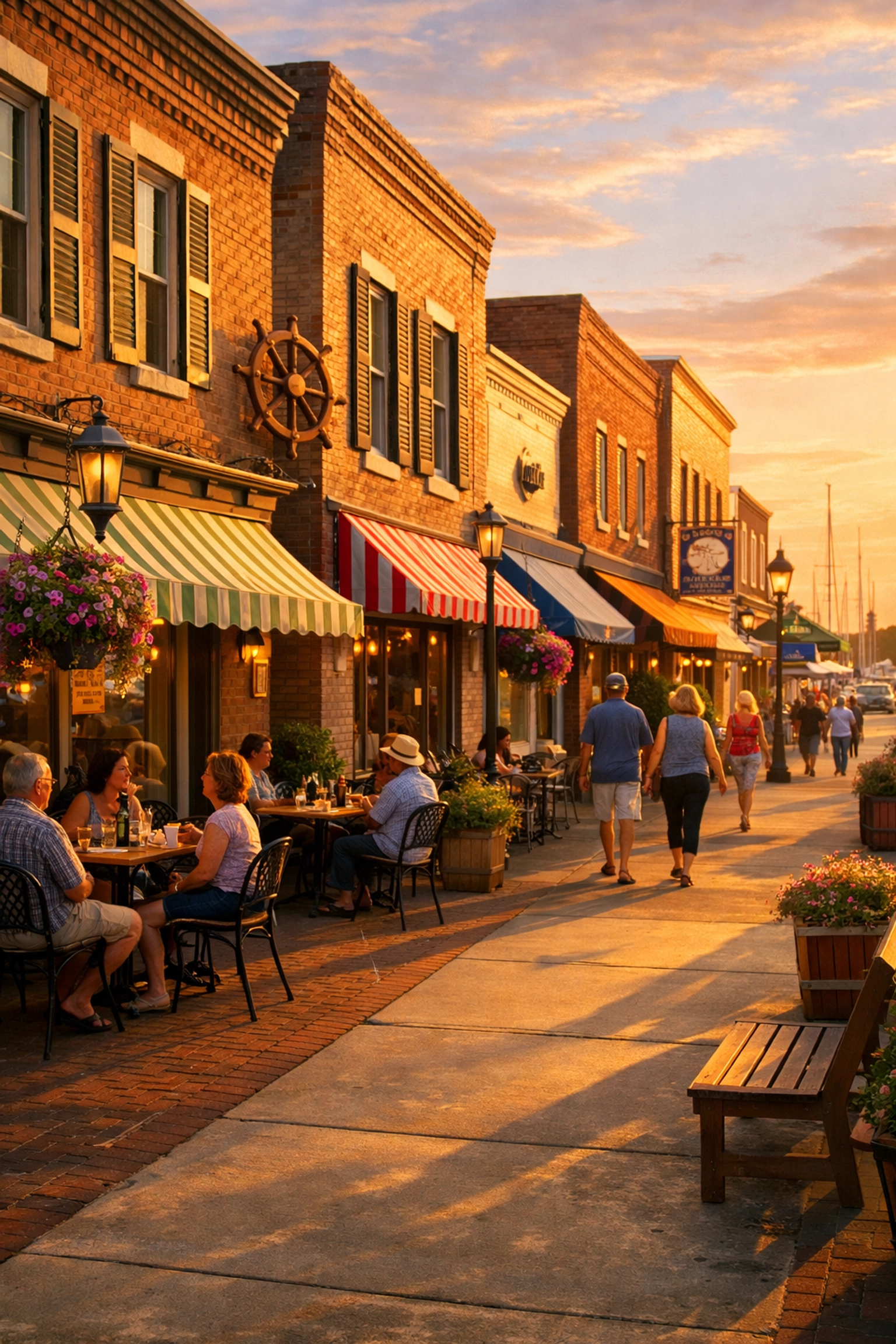
Revitalization isn't just about aesthetics. It's not simply painting storefronts or planting flowers along Main Street.
True community revitalization rebuilds the economic engine and the social fabric of a place simultaneously.
It starts with honest assessment. What does this district need? Who does it serve? What makes it irreplaceable?
Then it requires strategic investment: upgrading aging commercial buildings, improving accessibility, creating spaces where people naturally gather. The kind of work that extends a building's life by decades while making it relevant to modern businesses and foot traffic.
This is where the concept of the Third Place becomes critical.
Sociologist Ray Oldenburg coined the term to describe spaces that aren't home (first place) or work (second place): they're the coffee shops, community centers, parks, and local gathering spots that give a town its identity. These Third Places foster connection. They build social capital. They create the informal networks that strengthen entire communities.
When commercial districts decline, Third Places disappear. When revitalization focuses only on luxury condos or chain retail, Third Places get displaced.
Thoughtful commercial renovation protects and creates Third Places. It transforms an abandoned storefront into a local bookshop. It converts an old warehouse into a farmers market venue. It preserves historic buildings that anchor collective memory.
The Economic Case for Revitalization
Property values rise in revitalized districts: not just for the renovated buildings, but for surrounding properties. According to commercial real estate studies, strategic redevelopment can increase nearby property values by 15–30% within five years.
Tax revenue increases. When vacant storefronts become productive businesses, local governments collect sales tax, property tax, and business license fees: funds that support schools, infrastructure, and public services.
Job creation expands beyond construction. Every renovated commercial space represents potential employment. Restaurants hire servers. Retail shops need managers. Professional offices bring accountants, designers, and consultants to the area.
Tourism strengthens. Visitors don't come to coastal Carolina to see strip malls and vacant lots. They come for authentic experiences: locally owned restaurants, unique shops, historic downtown districts with character. Revitalized commercial corridors deliver exactly what tourists seek while serving residents year-round.
The investment environment stabilizes. As Brunswick County has demonstrated, communities that prioritize preserving natural beauty and small-town charm while allowing strategic growth create predictable, stable conditions for business investment. Developers and business owners need certainty: revitalization provides it.
The Social Impact You Can't Ignore
Numbers tell part of the story. The human impact completes it.
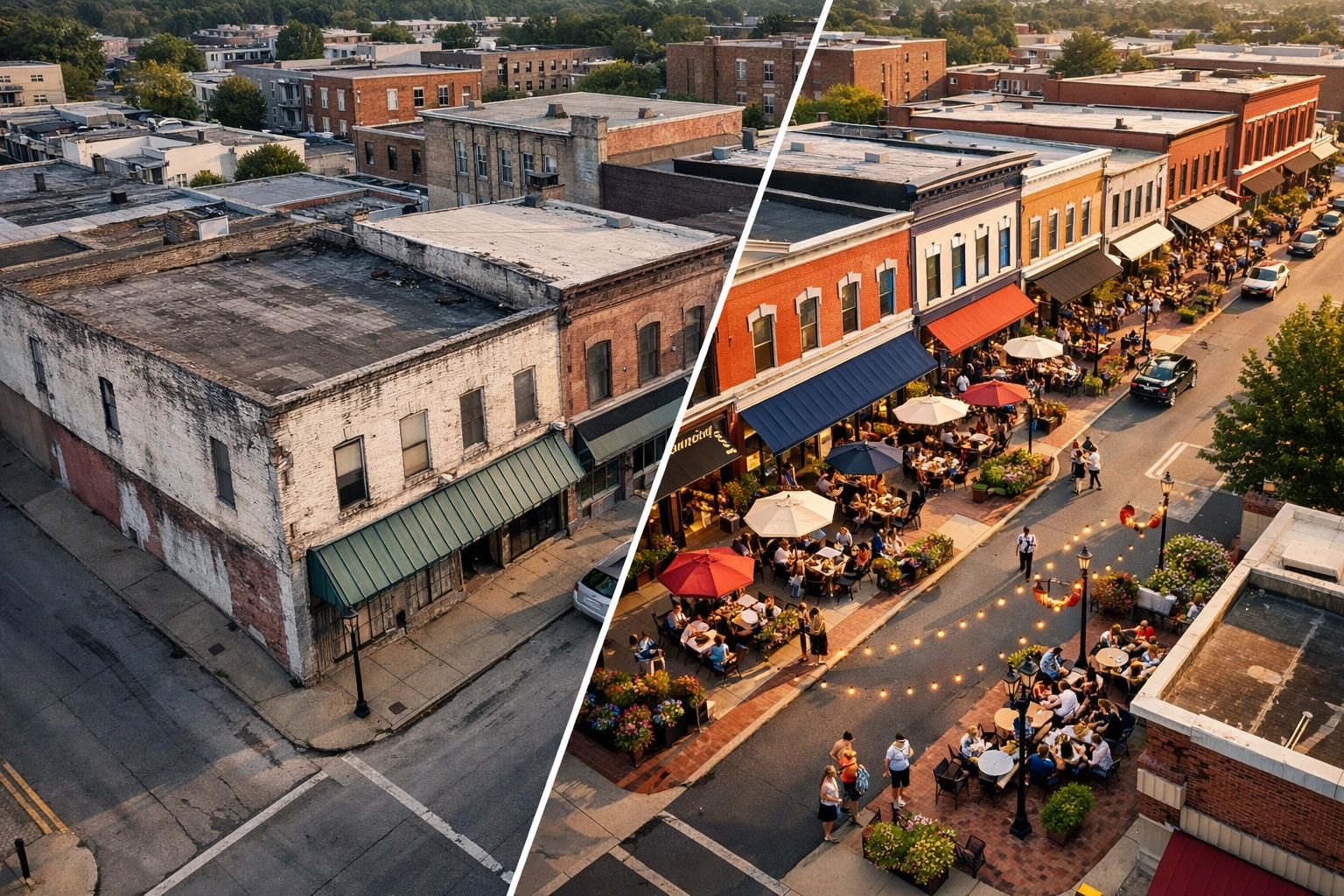
Revitalized districts reduce isolation. When walkable commercial corridors return to neighborhoods, residents: especially seniors and young families: gain accessible gathering spaces. Social connection improves mental health, reduces crime, and builds community resilience.
Local identity strengthens. Towns with distinct commercial districts develop pride. Residents point visitors toward their renovated downtown. They support local businesses because those businesses reflect community values.
Equity improves when revitalization is done thoughtfully. Public access matters: the N.C. Division of Coastal Management recognizes this, investing approximately $1.5 million annually through the Public Beach and Coastal Waterfront Access program. Since 1981, over 500 grants totaling more than $54 million have funded walkways, dune crossovers, parking areas, and urban waterfront revitalization across all 20 coastal counties.
That same commitment to access should guide commercial revitalization. Upgraded sidewalks. ADA-compliant entrances. Lighting that improves safety. Features that welcome everyone, not just luxury consumers.
Historical preservation maintains cultural continuity. When a commercial renovation contractor restores a 1920s-era building instead of demolishing it, they preserve architectural heritage and the stories embedded in those spaces. Every preserved structure connects current residents to the people who built their community.
Mill Creek's Role in Coastal Infrastructure
At Mill Creek Development Group, we approach commercial renovation as community investment.
When we work on tenant improvements, commercial upfits, or district revitalization projects, we're not just upgrading buildings: we're strengthening the foundation of local commerce and community life.
Our experience spans the entire coastal corridor: from Calabash through Wilmington to Morehead City. We understand how coastal conditions affect commercial structures. We know which materials withstand saltwater exposure and hurricane-force winds. We recognize how local building codes and environmental regulations shape feasible solutions.
We combine construction expertise with respect for community character. A general contractor can hang drywall and pour concrete. A general contractor Wilmington NC businesses trust understands the difference between generic renovation and place-specific revitalization.
Our process starts with listening. What does this building need to serve its community for the next fifty years? What businesses could thrive here? How do we preserve what matters while upgrading what doesn't work?
Then we execute with precision: structural improvements, mechanical and electrical system upgrades, accessibility enhancements, aesthetic refinements that honor local architectural traditions.
We don't rush. We don't cut corners. We build commercial spaces that become landmarks.
Veteran-owned. Locally operated. Committed to coastal Carolina's future.
What Strategic Revitalization Looks Like
Surf City provides a clear example. Like most southeastern coastal communities, it has experienced significant development pressure over thirty years. That growth created stress on the natural and cultural characteristics that made it desirable in the first place.
Their response? Strategic planning to assess current conditions, develop a shared vision, and define clear priorities. Not reactive development: intentional revitalization that balances growth with preservation.
Calabash demonstrates another model. Despite increasing demand, local planning has prioritized preserving natural beauty and small-town charm. Residents still enjoy unspoiled marshes, quiet rivers, and wide beaches while new amenities expand thoughtfully.
This approach doesn't stop progress: it guides it.
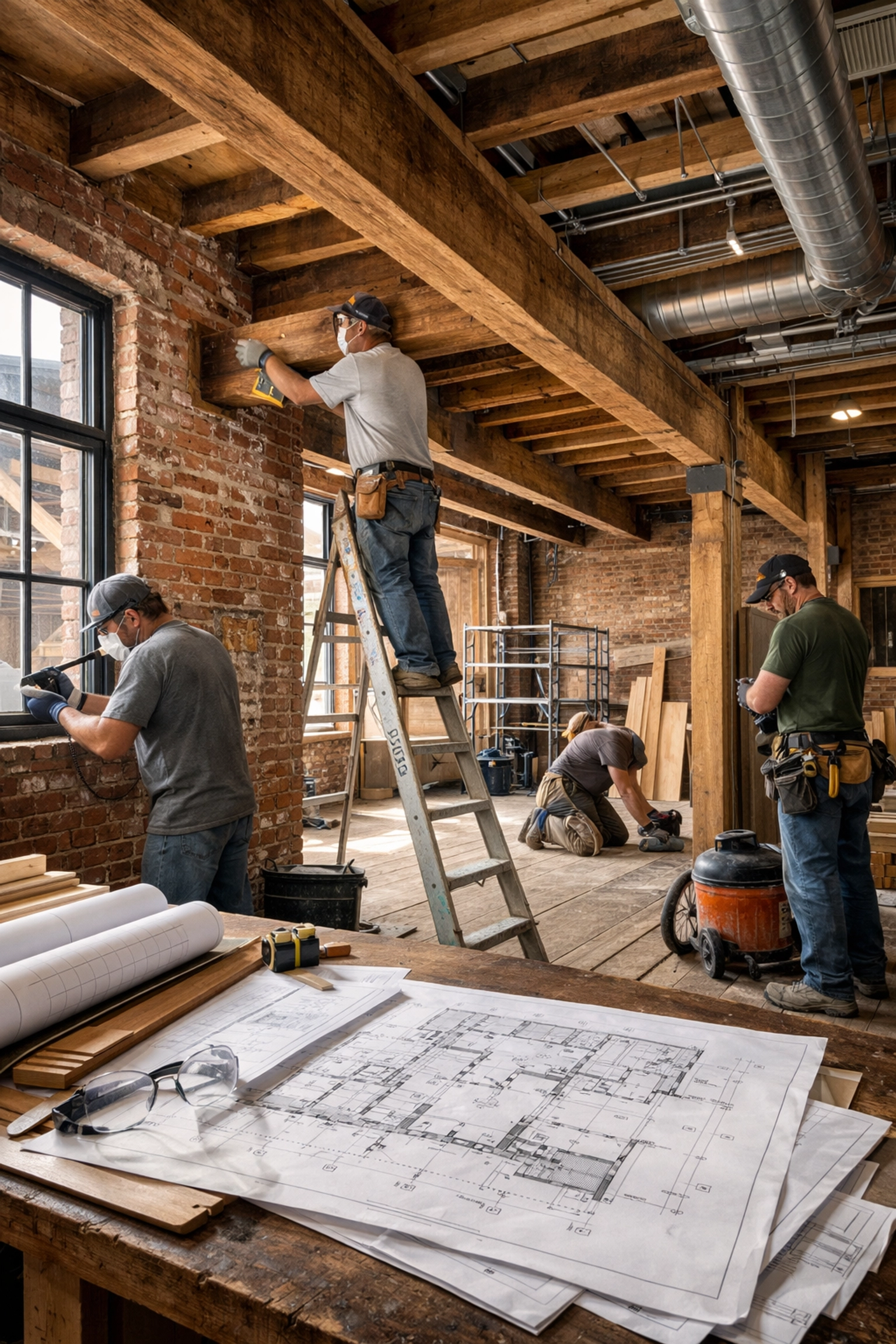
The same principle applies to individual commercial projects. When you renovate a mixed-use building in a historic downtown, you can triple its commercial utility while maintaining its exterior character. When you convert a vacant warehouse into modern office space, you eliminate blight and create employment without adding sprawl.
Strategic revitalization asks: What does this community need to thrive for generations?
Then it builds the answer.
Building Forward Together
Coastal North Carolina stands at a critical juncture.
We can allow unchecked development to strip away the qualities that make these towns special. We can watch commercial districts decay as investment flows only to new construction on the outskirts.
Or we can invest in revitalization: the patient, strategic work of upgrading existing infrastructure, preserving community character, and creating spaces where neighbors gather and businesses thrive.
This isn't preservation for preservation's sake. It's building economic resilience. It's strengthening social bonds. It's ensuring the next generation inherits towns worth living in.
At Mill Creek Development Group, we're committed to being part of that solution.
If you're exploring commercial renovation, tenant improvements, or district revitalization along the North Carolina coast, we'd welcome the conversation. Our experience, local knowledge, and dedication to quality make us the partner your project deserves.
Start with our Project Questionnaire: it helps us understand your vision, timeline, and specific needs. From there, we'll develop a clear plan that serves both your business goals and the broader community.
You can access the questionnaire here: https://linktr.ee/MillCreekDevelopmentGroup
The future of coastal Carolina gets built one project at a time. Let's build it right.
: AJ, President | Mill Creek Development Group
Leave a Reply