

slug: 5-costly-mistakes-to-avoid-in-your-next-commercial-upfit
status: PUBLISHED
author: AJ
category: Articles
Professional Tenant Improvements Require Professional Planning
Commercial upfits. Tenant improvements. Interior renovations.
Whatever you call them, these projects represent significant investments in your business's future: and they're riddled with potential pitfalls that can drain your budget, delay your opening, and create costly headaches down the line.
We've seen it too many times. A retail space in Wilmington that needed to be gutted and rebuilt after failing inspection. A medical office in Shallotte that discovered mid-construction their HVAC couldn't support the new layout. A restaurant in Southport that opened three months late because nobody verified permitting requirements upfront.
These mistakes are avoidable. They're predictable. And they're expensive.
Mill Creek Development Group specializes in commercial renovation projects across coastal North Carolina: from Calabash to Morehead City: and we've built our reputation on doing it right the first time. Veteran-Owned Discipline meets practical construction expertise to deliver tenant improvement projects that meet code, stay on budget, and open on schedule.
Here are the five most costly mistakes we see business owners make: and how to avoid them.
Mistake #1: Skipping the Feasibility Consultation Before You Sign the Lease
The Problem: You fall in love with a space. The location is perfect. The rent is reasonable. You sign the lease: and then discover the building can't support your vision without a complete infrastructure overhaul.
This happens more than you'd think.
Retail spaces that lack adequate electrical capacity for your equipment. Restaurant locations without proper ventilation or grease trap access. Medical offices that can't accommodate ADA-compliant restroom modifications. Warehouse spaces with structural limitations that prevent the mezzanine you planned.
By the time you discover these issues, you're locked into a lease and facing one of two bad options: abandon your design vision entirely, or invest tens of thousands in infrastructure upgrades you never budgeted for.
The Solution: Commission a feasibility consultation before you commit to the space.
A qualified tenant improvement contractor can walk the property with you, review the existing infrastructure, identify code compliance gaps, and provide realistic cost projections for bringing the space to your specifications. This single step: typically completed in a matter of days: can save you from signing a lease on a space that will never work for your business model.
We provide these consultations for prospective clients throughout the region. The goal is clarity before commitment. Confidence before you sign. A realistic understanding of what's possible within your budget and timeline.

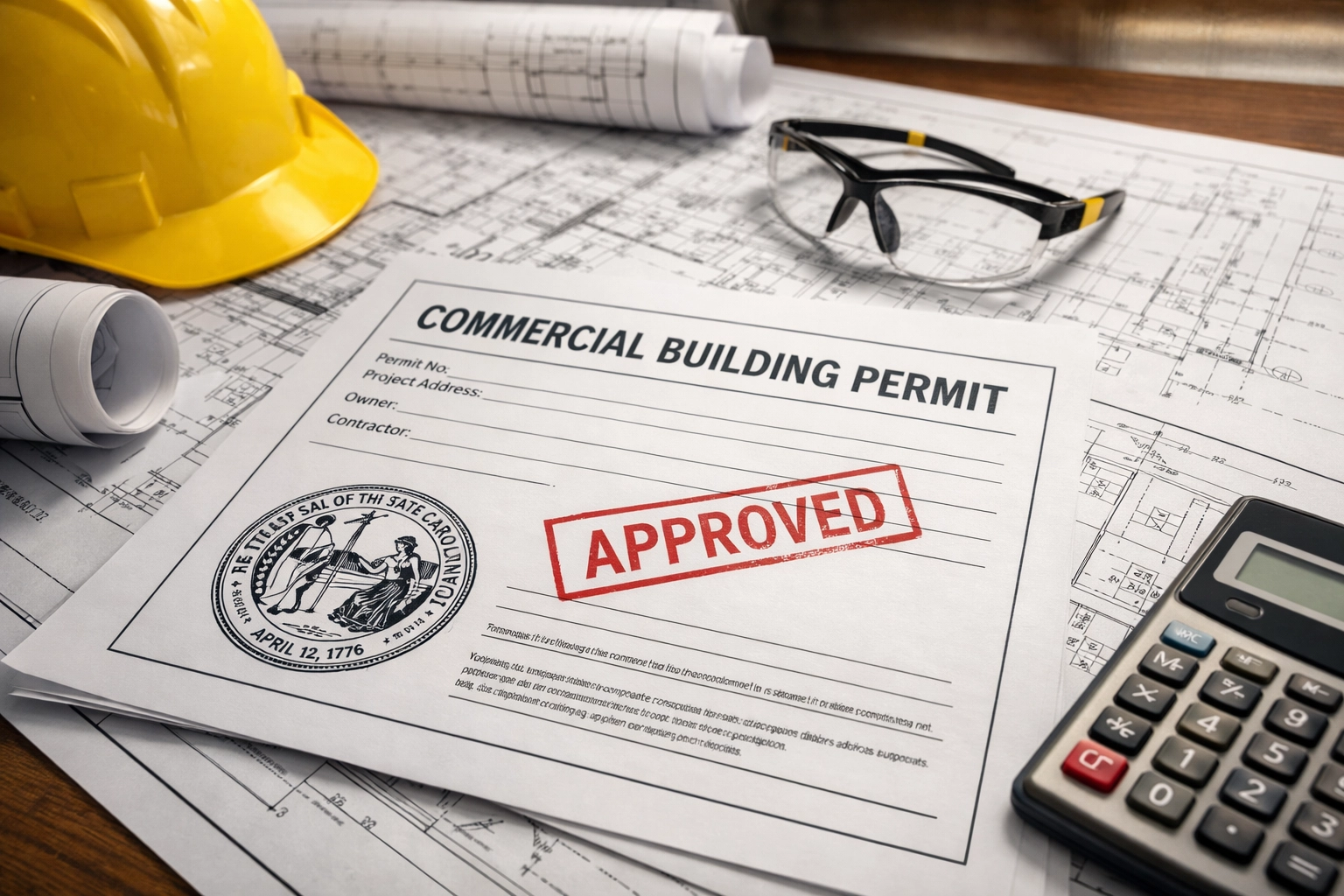
Mistake #2: Ignoring North Carolina Building Codes Until It's Too Late
The Problem: You design your dream layout, start demolition, and then the building inspector shows up with a stop-work order because your plans don't meet current NC commercial building codes.
North Carolina has specific requirements for commercial spaces: fire suppression systems, emergency egress paths, ADA accessibility standards, electrical load calculations, plumbing fixture ratios, ventilation rates for commercial kitchens, and dozens of other code provisions that vary by building type and occupancy classification.
These aren't suggestions. They're law. And discovering code violations mid-construction means expensive redesigns, material waste, schedule delays, and contractor change orders that multiply your budget.
The Solution: Engage with code requirements during the design phase: not after demolition begins.
A professional commercial renovation contractor builds code compliance into the initial plans. We review your design against current North Carolina building codes, coordinate with local building departments early in the process, and ensure your permit applications are complete and accurate before any work begins.
This proactive approach prevents surprise violations, eliminates costly mid-project redesigns, and keeps your timeline on track. The few extra days spent on thorough permit preparation save weeks of delays and thousands in rework costs.
Veteran-Owned Discipline means attention to detail. It means doing the paperwork right the first time. It means respecting the process instead of fighting it.
Mistake #3: Underestimating Infrastructure Needs
The Problem: Your upfit design looks beautiful on paper: but nobody verified whether the existing building systems can support it.
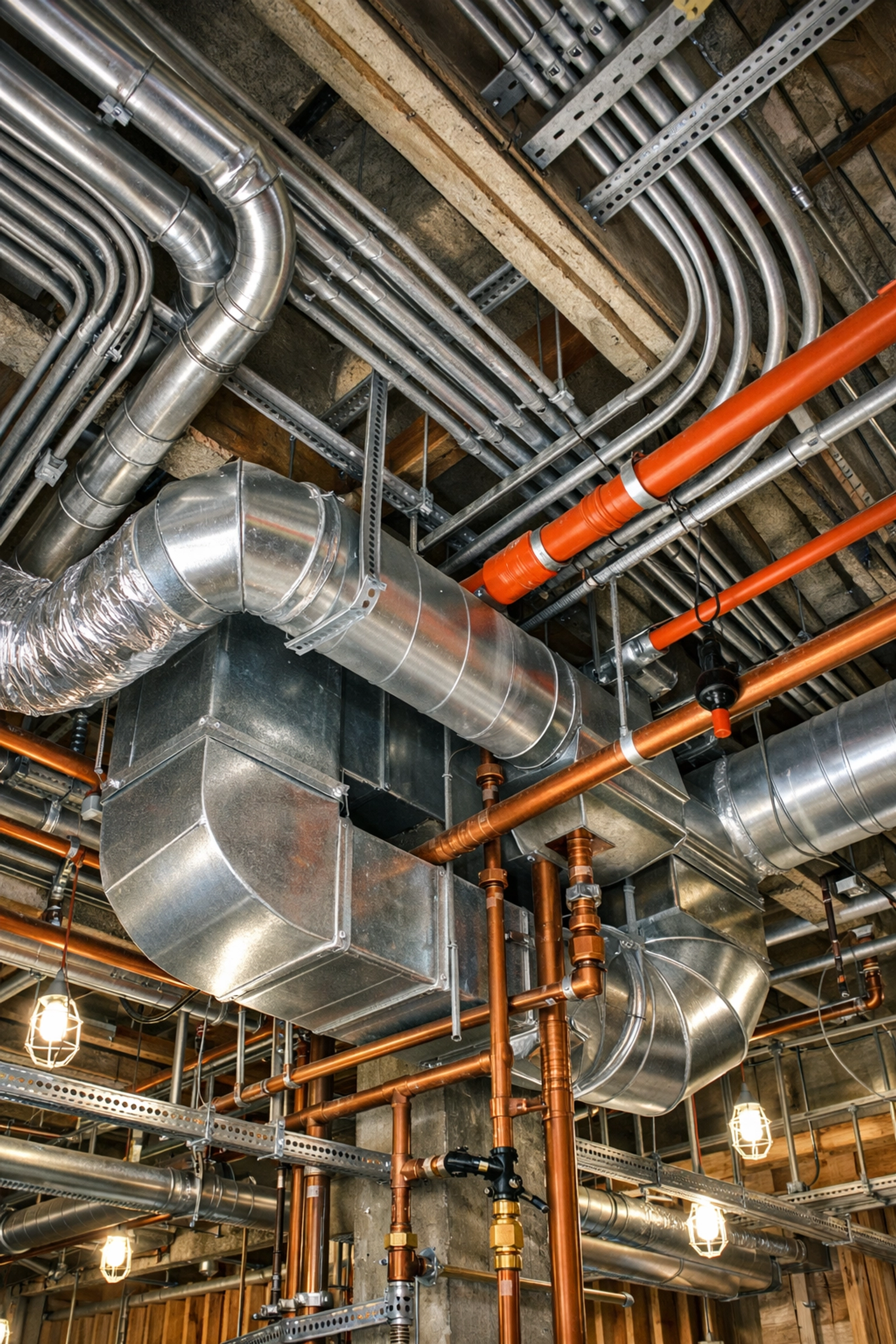
We see this constantly in older commercial buildings. The electrical panel is maxed out and can't handle additional circuits. The HVAC system is undersized for your new layout. The plumbing lines are corroded and need replacement. The roof leaks and requires repair before interior work can proceed.
These aren't cosmetic issues you can paint over. They're fundamental infrastructure problems that must be addressed: and they're expensive.
Business owners who skip the infrastructure assessment end up facing emergency repairs mid-project, change orders that blow the budget, and delayed openings while contractors source parts and reschedule work.
The Solution: Conduct a comprehensive infrastructure assessment before finalizing your upfit design.
This means hiring qualified professionals to evaluate:
Electrical Systems: Load capacity, panel condition, circuit availability, and code compliance for your equipment requirements.
HVAC Systems: Heating and cooling capacity for your square footage, ductwork condition, ventilation requirements for your business type.
Plumbing Systems: Water pressure, drain capacity, fixture locations, hot water heater sizing, and grease trap requirements if applicable.
Structural Systems: Load-bearing walls, floor capacity for heavy equipment, roof condition, and foundation integrity.
Building Envelope: Roof condition, window seals, exterior walls, and moisture intrusion points that could compromise your interior finishes.
This assessment informs your design decisions and your budget. It prevents expensive surprises. It creates a realistic project scope that accounts for both cosmetic improvements and necessary infrastructure upgrades.
Mistake #4: Choosing Your Contractor Based on Price Alone
The Problem: You collect three bids for your commercial upfit. One comes in significantly lower than the others. You sign the contract: and then discover why the bid was so low.
The contractor cuts corners on materials. They hire inexperienced subcontractors. They don't pull proper permits. They provide incomplete plans that miss critical details. They disappear when problems arise. They don't carry adequate insurance. They drag out the timeline because they're juggling too many projects.
By the time you realize the low bid was a red flag instead of a good deal, you're dealing with substandard work, code violations, and a contractor relationship that's deteriorated beyond repair.
The Solution: Evaluate contractors based on qualifications, experience, references, and process: not just price.
A professional tenant improvement contractor provides:
Detailed Specifications: Complete scope documentation that eliminates ambiguity and prevents change orders.
Realistic Timelines: Project schedules built on actual sequencing requirements and realistic crew availability.
Code Expertise: Deep knowledge of North Carolina commercial building codes and local permit processes.
Quality Subcontractors: Established relationships with licensed, insured specialists who deliver consistent results.
Clear Communication: Regular updates, responsive problem-solving, and transparent budget management.
Proper Insurance: Comprehensive liability and workers' compensation coverage that protects your investment.
The lowest bid rarely includes all of these elements. The lowest bid often reflects what's missing from the scope, not what's included in the price.
We've built our business on integrity. On delivering what we promise. On standing behind our work. Locally Operated means we're here long after your project is complete. Veteran-Owned means we approach every commitment with discipline and honor.
Mistake #5: Rushing the Timeline Without Accounting for Reality
The Problem: Your lease starts in six weeks. Your grand opening is advertised. Your staff is hired. You pressure your contractor to compress the timeline: and quality suffers.
Rushing commercial upfits creates a cascade of problems. Permit applications get rejected for missing information. Material deliveries get delayed. Subcontractors make mistakes. Inspections get failed. Rework becomes necessary. The timeline expands anyway: but now you're also dealing with substandard work and budget overruns.
The Solution: Build a realistic timeline from the beginning: and protect it.
Professional tenant improvement projects follow a logical sequence:
Pre-Construction Phase: Feasibility analysis, design development, permit applications, contractor selection, and material procurement: typically 4-8 weeks depending on project complexity.
Demolition and Infrastructure: Removal of existing finishes, structural modifications, electrical and plumbing rough-ins, HVAC installation: timeline varies by scope.
Finishes and Details: Drywall, flooring, millwork, fixtures, paint, and final details: typically 2-4 weeks for standard commercial spaces.
Inspections and Punch List: Final code inspections, certificate of occupancy, and completion of remaining details: 1-2 weeks.
This process can't be meaningfully compressed without compromising quality or increasing risk. The permit office doesn't work faster because you're in a hurry. The building inspector doesn't skip steps because your opening is advertised. Materials don't ship overnight because your timeline is aggressive.
Quality requires time. Discipline requires patience. Consistency requires proper process.
We encourage clients to plan commercial upfits with buffer time built into the schedule. Start the process before you need to open. Sign your lease with realistic timelines. Advertise your grand opening only after construction is substantially complete.
This approach eliminates pressure. It creates space for problem-solving when unexpected issues arise. It delivers better results at lower cost because quality work isn't rushed.
The Mill Creek Approach to Commercial Upfits
We bring Veteran-Owned Discipline to every tenant improvement project.
That means thorough planning before we break ground. It means code compliance built into the design. It means realistic budgets and honest timelines. It means quality subcontractors and proper materials. It means clear communication and responsive problem-solving.
We specialize in commercial renovation projects throughout coastal North Carolina: retail spaces, medical offices, restaurants, professional services, light industrial facilities. From Calabash to Morehead City, including Wilmington, Shallotte, Southport, and every community in between.
Whether you're opening your first location or expanding an established business, your commercial upfit deserves the same attention to detail and commitment to quality that we bring to every project.
Start With a Feasibility Consultation
Avoid costly mistakes before they happen.
Our feasibility consultation process provides clarity on what's possible, realistic cost projections, and honest assessment of your timeline. We review your vision, evaluate the space, identify potential challenges, and provide recommendations that protect your investment.
Complete our Project Questionnaire to start the conversation. We'll schedule a site visit, discuss your requirements, and provide the information you need to make confident decisions about your commercial space.
Professional tenant improvements. Built right. On time. On budget.
That's the Mill Creek commitment.
: AJ, President | Mill Creek Development Group
Leave a Reply